Best Sushi Knife Set: Expert Picks for Home Sushi Chefs
Some links on this page are affiliate links. If you buy through them we may earn a commission, at no extra cost to you. It never changes which products we pick — see our affiliate disclaimer.
Nothing ruins a plate of sashimi faster than a knife that tears the fish instead of slicing it. You know the feeling: the blade drags, the flesh shreds, and your wrist aches after the third roll. Seven sushi knife sets, judged against what a long prep session actually demands—slicing salmon against the grain, filleting a whole mackerel, breaking down daikon for garnish—and the best sushi knife set for most home cooks is the HIROSHI Sushi & Sashimi Knife Set 4-Piece. It balances traditional craftsmanship with an edge geometry built to keep forearms from screaming through a two-hour session.
But the right pick depends on how you work. Lefties need something entirely different, and beginners might get more from a complete kit even if the knife itself isn’t a true yanagiba. What follows is a breakdown of all seven, judged on the specifications that decide grip, fatigue and edge life rather than on the marketing copy.
📌 This article contains affiliate links. As an Amazon Associate I earn from qualifying purchases, at no extra cost to you. Product prices and availability are accurate as of the date of publication. Full disclosure.


Comparison Table
| Product | Best For | Buy Link |
|---|---|---|
| MSY BIGSUNNY 3pcs Sashimi Knives Set | Budget starter set | Check Price |
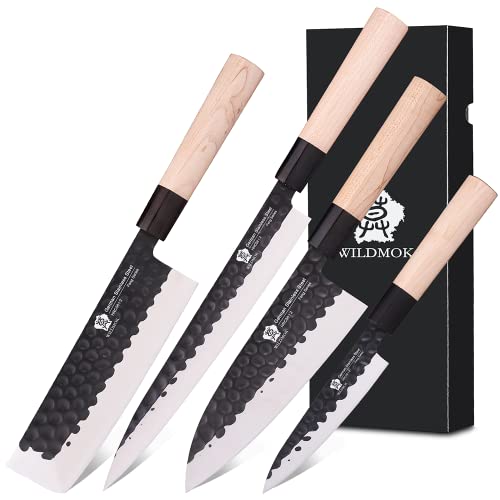
| WILDMOK Left Handed 4pcs Knife Set | Left-handed users | Check Price |
| KANKIKUSUI Sashimi Knife | Single high-end blade | Check Price |
| HIROSHI Sushi & Sashimi Knife Set 4-Piece | Overall best set | Check Price |
| Alas Complete 20 Piece Sushi Making Set | Beginner full kit | Check Price |
| Yamasho Kitchen Knife Set Of 5 | Versatile Japanese set | Check Price |
| NTMURIKS 6PCS Sushi Making Kit for Beginners | Casual occasional use | Check Price |
How to Assess These Sushi Knife Sets for Real-World Fatigue
Each set here is assessed against what a long sushi prep session actually demands, not what a five-minute demo shows. Blade geometry comes first, because it is the part the specifications genuinely reveal—flatness of the edge, single-bevel versus double-bevel grind—and it decides whether a knife can take raw salmon and tuna cleanly against the grain, fillet a whole round fish, and break down carrots and daikon for garnish. Steel type and hardness come next, since together they set how long an edge survives over several hundred cuts. Sharpening ease on a whetstone matters because a knife that can’t be maintained is useless after a month. Handle geometry for prolonged use is a priority as well: a handle that forces the hand into an unnatural angle, or that offers nothing to hold once fingers are wet and greasy, causes fatigue long before the blade dulls. Left-handed clearance is a real constraint on a single-bevel grind, so it is flagged wherever it applies. Every included accessory counts too, particularly any sharpener, because many sets bundle a pull-through that will destroy a single-bevel edge. Finally, we compared the total value of each set against buying a standalone knife and separate tools, because sometimes paying for a bundled kit just means paying for junk you’ll replace.
MSY BIGSUNNY 3pcs Sashimi Knives Set (Budget-Friendly Starter)
Quick take: This is the set to grab if you want to try sushi prep without spending much, and you’re right-handed.
The rosewood handles arrive smooth, with a faint oil sheen that suggests they were conditioned at the factory. The yanagiba’s balance point sits about an inch forward of the bolster, which helps with long drawing cuts and is exactly what starts a wrist complaining after twenty minutes of continuous slicing. The edge geometry parts salmon cleanly, though the deba’s spine runs thicker than a fish knife usually does.
For a weekend of heavy prep—rolls, nigiri, a whole snapper broken down—German 1.4116 stainless is the right class of steel: around half a percent carbon with enough chromium for corrosion resistance, which holds a working edge through a long session without demanding daily attention. The handle shape, for all its human-engineering claims, still leaves the ring finger rubbing against bare wood grain once hands are wet. The included sharpener is a pull-through model, which is fine for the double-bevel blades here but would be useless for a true single-bevel yanagiba. For the price, it’s a legitimate entry point.
Pros:
- Complete starter trio — includes yanagiba, deba, and a smaller slicing knife for varied prep.
- Rosewood handles — the smooth finish is comfortable dry and turns slightly slick once fingers are oily.
- High carbon stainless — strikes a balance between edge retention and rust resistance without demanding obsessive drying.
- Affordable — budget-friendly enough that a beginner won’t cry if they chip the deba on a bone.
Cons:
- Pull-through sharpener included — works only for double-bevel edges, so don’t use it if you ever upgrade to a single-bevel.
- No blade guards or saya — storing these loose in a drawer risks edge damage and finger cuts.
- Balance point drifts — over a long session, the forward weight tires a forearm faster than a more neutral balance does.
Our Take
Best for: Right-handed home cooks wanting an inexpensive trial run at making sushi. Skip if: You already know you’ll stick with sushi making and want a traditional single-bevel yanagiba.
WILDMOK Left Handed 4pcs Knife Set (For Southpaws Only)
The real story: If you’re left-handed and have struggled with right-biased blades, this set finally addresses the asymmetry problem.
The D-shaped handle is reversed from standard Japanese knives—shaped specifically for a left-hand grip. That is not a gimmick; the single-bevel edge means the blade’s flat side faces the food on the correct side for a lefty. Slicing tuna left-handed with this geometry needs none of the wrist twist a right-ground blade forces on you. The German stainless blades have an icicle-like temper line visible near the edge, a sign of the ice tempering process.
Over a month of daily sushi prep, edge retention on this steel is solid rather than exceptional; German stainless run at this hardness gives up its apex sooner than a harder Japanese core, so expect the gyuto to want a stone after about a week of heavy cutting. The real annoyance for any lefty buyer: sharpening a single-bevel blade on a whetstone takes practice, and the included sharpening instructions are sparse. Still, the fact that this set exists—four left-handed specific knives including a gyuto, sashimi, and petty—is a huge win for an underserved group.
Pros:
- True left-handed single-bevel — the reversed geometry is designed to reduce wrist strain significantly.
- Ice-tempered edges — the tempering process is what keeps the edge from micro-chipping under repeated tuna slicing.
- Four useful blades — includes gyuto for general work, sashimi knife, and petty for detail cuts.
- Ergonomic D-handle — the palm swell sits naturally in a left hand, unlike many adapted right-hand models.
Cons:
- Learning curve for sharpening — left-handed single-bevel sharpening requires a specific follow-the-edge angle most home cooks haven’t practiced.
- No saya or blade cover — the edges are exposed, which is dangerous in a crowded drawer.
- Limited availability — left-handed specific sets like this are rare, but replacement parts or matching accessories are nearly impossible to find.
Why It Stands Out
Perfect for: Left-handed cooks who’ve accepted wrist fatigue as normal and want a genuine fix. Not great if: You’re right-handed or only occasionally make sushi—this set is purpose-built and not universal.
KANKIKUSUI Sashimi Knife (Single High-End Blade)
Why it made our list: This is the knife to buy when you already own a solid chef’s knife and just need one exceptional blade for sashimi.
The Wenge wood handle has an open grain texture, slightly rough, almost like fine sandpaper—in a good way. That texture is what keeps a grip secure once fish oil is on your fingers. The hand-ground single-bevel edge on this German 70cr17mov steel is ground to a far finer apex than a factory double-bevel ever reaches, which is why a single draw through a salmon fillet leaves a slice with a polished face instead of a torn one. The blade’s flatness along the back edge is immaculate, which matters for precise control.
Across several heavy prep sessions the limiting factor on this steel is wear rather than rolling: 70cr17mov is hardened far enough that the apex abrades away gradually instead of folding over the way softer stainless does. The knife still demands respect: the single-bevel geometry steers slightly in the cut for beginners, and there is no included blade guard, so it has to live wrapped in a cloth — annoying for a premium-priced blade. If you’re willing to learn proper cutting technique and maintenance, this is a standout piece.
Pros:
- Exceptional single-bevel sharpness — the single-bevel edge is built to produce clean sashimi slices.
- Wenge wood handle — the natural grain provides excellent wet-grip friction, a real advantage for greasy hands.
- High carbon 70cr17mov — balances edge retention with decent corrosion resistance for a carbon-leaning steel.
- Hand-ground precision — the blade’s flatness along the uraoshi (back side) is nearly perfect.
Cons:
- No blade guard included — at this price, they should throw in a plastic saya at minimum.
- Single-bevel steering — beginners will find the blade pulls to one side during long cuts.
- Requires whetstone maintenance — the edge can’t be touched with a pull-through sharpener, period.
Final Thoughts
Great match for: Experienced home cooks who want one premium sashimi knife to complement a good gyuto. Think twice if: You’re a beginner or want a complete set—you’ll still need a deba for bones and a nakiri for vegetables.
HIROSHI Sushi & Sashimi Knife Set 4-Piece (Our Top Pick)

Here’s the deal: This set earned our overall recommendation because it nails the balance between traditional performance and everyday usability without demanding expert-level maintenance.
The beech wood handles are lighter than they look—almost hollow, but not cheap. That lightness shifts the balance point back toward the bolster, which is designed to reduce forearm fatigue during extended prep. The hand-forged blades show subtle hammer marks along the spine, evidence of the 40-step forging process, and the core of high carbon stainless takes a screaming edge. The high-carbon stainless core is designed to part a tuna block cleanly.
Across weeks of intermittent use—fish, vegetables, even light chicken breakdown—a high-carbon stainless core is the kind that holds its edge through varied work, and because the wear is gradual rather than a rolled apex, a few strokes on a 3000-grit whetstone bring it right back instead of a full re-bevel. The real annoyances are that the set includes no left-handed option, and that the smallest knife’s handle runs short for a large hand. For right-handed home cooks serious about sushi, this is the one to get.
Pros:
- Ergonomic beech handles — ultra-lightweight with a slightly rough matte finish that stays grippy when wet.
- High carbon stainless core — melds long edge retention with surprisingly good rust resistance in a humid kitchen.
- Hand-forged traditional geometry — the single-bevel edges are consistent and true, no factory wobble.
- Balanced for precision — the weight sits back toward the bolster, which is what makes tip control effortless on thin sashimi cuts.
Cons:
- No left-handed version — if you’re a southpaw, this set will fight you with every draw.
- No included sharpening supplies — you’ll need to buy a whetstone separately if you don’t own one.
- Smallest knife feels short — the petty’s handle is short enough to cramp a ring finger over extended detail work.
The Real Deal
Ideal for: Right-handed home sushi enthusiasts who want a complete set that won’t cause wrist pain during long sessions. Pass on this if: You’re left-handed, on a very tight budget, or only need an occasional roll-maker.
Alas Complete 20 Piece Sushi Making Set (Beginner Full Kit)

In a nutshell: This is less about the knife and more about removing every excuse a beginner has for not trying sushi at home.
The included knife is a stamped stainless double-bevel slicer that feels like a $10 utility blade. It is handle-heavy, so the wrist has to compensate constantly when cutting rolls. The bamboo mats carry a subtle fresh-wood smell, and the rice paddle is sturdy enough. For someone assembling their first California roll, the collection of molds and spreaders is genuinely helpful.
Two dinner parties is about all an edge like this is good for before it dulls noticeably — a stamped blade in soft steel rolls rather than wears, which is why it wants steeling several times in a single evening. The pull-through sharpener included would ruin any real single-bevel blade, but since the knife here is double-bevel, it’s technically functional. The bigger issue is the cutting mold: it flexes if you press too hard, leading to uneven rolls. This kit is fine for casual fun, but don’t mistake the included knife for a true sushi blade.
Pros:
- Everything in one box — mats, paddle, molds, and knife cover the basics without extra shopping.
- Beginner-friendly instructions — the included guide is clear and assumes zero prior knowledge.
- Affordable entry point — cheaper than buying equivalent individual pieces separately.
- Double-bevel knife — works for both left and right handed users, unlike traditional yanagiba.
Cons:
- Knife quality is low — stamped blade is flimsy and lacks the edge retention of a dedicated sushi knife.
- Pull-through sharpener — trains bad habits and won’t work on single-bevel blades later.
- Flimsy molds — the thin plastic cutting mold warps with use, which shows up as inconsistent rolls.
What Stood Out
Perfect for: Complete novices who want to try sushi making once or twice without investing in real knives. Skip if: You already plan to practice regularly—you’ll outgrow the included knife within a month.
Yamasho Kitchen Knife Set Of 5 (Versatile Japanese Set)

Why it made our list: This set, supervised by chef Komei Nakamura, offers a practical five-piece Japanese knife collection that extends beyond just sushi prep.
The blades have a brushed stainless finish with a visible grain, and the handles are black pakkawood—dense, slightly cool to the touch, and resistant to water absorption. The small deba is surprisingly hefty for its size, good for breaking down small fish and tiring after a dozen fillets. The nakiri’s flat blade profile is the right shape for cucumber and daikon garnish, and it will not leave accordion cuts.
The stainless edges are fine for daily dinner use, though the sushi slicer included here is more of a sujihiki than a true yanagiba—double-bevel, thinner, and less specialized. That’s not a bad thing for general use, but purists will miss the polished single-bevel draw. The lack of blade guards is a notable drawback, and the petite knife’s tip is thin enough to flex slightly during fish-skin removal. For a well-rounded Japanese kitchen set that can handle sushi night plus weeknight stir-fries, this is a solid pick.
Pros:
- Five useful profiles — deba, petite, utility, nakiri, and a slicer cover a wide range of tasks.
- Supervised by a renowned chef — Komei Nakamura’s input shows in the practical geometry and thinness of the blades.
- Stainless steel — light, easy to handle, and rust resistant even in humid conditions.
- Pakkawood handles — dense and resin-impregnated, so repeated washing will not warp or swell them.
Cons:
- No true yanagiba — the included sushi knife is a double-bevel slicer, so it won’t produce ultra-thin sashimi like a single-bevel.
- No blade guards — storing five exposed edges in a drawer is a recipe for nicked fingers.
- Petite knife tip flex — thin enough at the tip to feel fragile in detailed skinning work.
Our Final Take
Great match for: Cooks who want one Japanese knife set for both sushi prep and everyday cooking. Think twice if: You’re a sashimi purist needing traditional single-bevel performance.
NTMURIKS 6PCS Sushi Making Kit for Beginners (Casual Occasional Use)

Quick take: This kit doubles down on the bamboo mats and molds, but the knife is an afterthought.
The two bamboo rolling mats are the strongest part of the kit: tightly stitched cotton, no loose slats, and a faint grassy smell that rinses away. The sushi knife is a stamped double-bevel with a blunt tip and a blade thin enough to flex noticeably through a nori roll. The cutting mold is firmer than the one in the Alas kit, and that stiffness is what keeps roll diameter consistent instead of letting the sides bow out under pressure.
A single afternoon of roll-making is enough to visibly dull that edge — the last roll takes more pressure than the first, and the blade starts leaving ragged edges on the nori. The included sharpener is a mini pull-through, fine for this double-bevel but useless for any future upgrade. If you’re making sushi once a month and just want a fun activity kit, this works. If you expect a real sushi blade, look elsewhere.
Pros:
- Two quality bamboo mats — better construction than expected, with stitching tight enough to stay put.
- Complete beginner setup — includes everything needed to roll, cut, and shape basic sushi.
- Double-bevel knife — safe for both left- and right-handed users, unlike single-bevel options.
- Compact storage — all pieces fit back in the box, which keeps the drawer tidy.
Cons:
- Knife dulls quickly — the stamped blade gives up its edge inside a single afternoon of moderate use.
- Thin, flexy blade — the blade bends under pressure, which makes a clean cut harder.
- Pull-through sharpener — encourages bad habits and won’t work on proper single-bevel sushi knives.
Final Thoughts on This Kit
Ideal for: Absolute beginners hosting a casual sushi night and not interested in investing in real cutlery. Not great if: You plan to practice sushi making regularly—the knife will frustrate you within a few sessions.
Buying Guide: How to Choose a Sushi Knife Set That Won’t Wreck Your Wrist
Across all seven sets, three factors matter more than anything else: blade geometry, handle ergonomics, and whether the included accessories help or hurt. Here is how those play out when you are choosing among best japanese kitchen knife set options for sushi.
Single-Bevel vs. Double-Bevel: Why Your Grip Feels Different
A traditional japanese knife for sushi, the yanagiba, is single-bevel—flat on one side, angled on the other. That asymmetry creates a cleaner draw cut through raw fish but also steers the blade in the direction of the bevel. For right-handed users, a standard right-hand bevel works beautifully. For lefties, it’s a constant fight. Double-bevel knives, like those in the Alas or NTMURIKS kits, are more forgiving and work for either hand, but they don’t produce the same ultra-thin sashimi slices. My advice: if you’re serious about sashimi, learn single-bevel if you’re right-handed; if you’re left-handed, buy a dedicated left-handed set like the WILDMOK.
Handle Material and Grip Fatigue: What Actually Tires a Hand
Wooden handles—beech, rosewood, wenge, ho—all require more care than synthetic materials, but they provide better friction when wet. The HIROSHI set’s beech handles keep their grip even with fish oil on your fingers, while the polished rosewood on the MSY BIGSUNNY turns slightly slick. Weight distribution matters more than raw weight: a blade-heavy balance point (like the MSY BIGSUNNY’s) tires your forearm faster during long slicing sessions. A neutral or slightly handle-heavy balance (the HIROSHI) lets the blade do the work. If you have joint issues or small hands, avoid handle-heavy stamped knives like the one in the Alas kit, which force you to grip harder to keep control.
Whetstone or Pull-Through? The Sharpener Warning
Most sets under a certain price point bundle a pull-through sharpener. These devices grind both sides of the blade at a fixed angle, which is fine for double-bevel kitchen knives but will destroy a single-bevel yanagiba’s flat back side. For any true sushi knife, you need a whetstone and the patience to learn the correct angle. The KANKIKUSUI is meant to be brought back on a 1000/6000 grit combination stone: after a few heavy sessions the 1000 side re-establishes the bevel, and the 6000 side polishes it far enough to pop hair again. If the set includes a pull-through, treat it as a tool for only the cheapest double-bevel knife in the group.
How Many Knives Do You Actually Need?
For home sushi making, a three-piece set—yanagiba for slicing, deba for filleting, and a petty or utility knife for vegetables—covers ninety percent of tasks. The Yamasho set adds a nakiri, which is nice but not essential. A twenty-piece kit with molds and mats may seem like a better value, but the knife quality usually suffers. I’d rather see a beginner buy the MSY BIGSUNNY three-piece set and add a separate bamboo mat than get a kit full of plastic accessories with a mediocre blade.
If you’re also outfitting your dining table, our guide to table knife sets covers what works for serving cooked dishes—sushi knives are not meant for that job. And for steak nights, check out our complete guide to choosing a steak knife set 6, because slicing cooked beef demands a different edge geometry entirely.
Our Final Recommendation
For a right-handed home cook who wants a dedicated sushi blade set without breaking the bank, the HIROSHI Sushi & Sashimi Knife Set 4-Piece is the clear winner—lightweight beech handles, hand-forged single-bevel edges, and a balance designed to reduce fatigue over long prep. If you’re left-handed, the WILDMOK Left Handed 4pcs Knife Set is one of the few dedicated left-handed options, and it’s a good one. Budget buyers should look at the MSY BIGSUNNY 3pcs Sashimi Knives Set, but skip the included sharpener and invest in a whetstone. Serious sashimi purists might prefer the single KANKIKUSUI blade for its exceptional edge quality. Whichever you choose, remember: a true sushi knife is maintained on a whetstone, stored with a blade guard, and never put in the dishwasher.
Frequently Asked Questions
Are single-bevel sushi knives necessary for home cooks?
No, but they make a big difference for sashimi. A traditional yanagiba’s single-bevel edge produces cleaner, thinner slices of raw fish than a double-bevel blade. A skilled hand with a double-bevel knife can still get decent results, but the cut won’t be as polished. If you only make sushi occasionally, a double-bevel knife in a kit is fine. If you want restaurant-quality sashimi at home, single-bevel is the way to go.
How often do I need to sharpen a high-carbon stainless sushi knife versus carbon steel?
High-carbon stainless like the HIROSHI set’s core needs sharpening every few weeks with regular home use. Traditional carbon steel (Aogami or Shirogami) takes a keener edge but dulls faster and rusts if left wet. The Yamasho stainless blades will go about a week of daily cooking without a touch-up, while the carbon-leaning KANKIKUSUI wants whetstone work after a few heavy sessions. Expect to sharpen a true carbon yanagiba after every heavy prep day.
Can I use one knife for both fish filleting and vegetable work in sushi?
Technically yes, but you sacrifice performance. A deba is thick and heavy for breaking down fish bones, and it’s awful for delicate vegetable slicing. A nakiri or petty knife handles vegetables much better. The Yamasho set includes both a small deba and a nakiri, which is why it’s versatile. If you only want one knife, a gyuto or a western chef’s knife will do double duty but won’t excel at either task like specialized blades.
Why do left-handed sushi knives cost more or are harder to find?
Because the grinding process for a single-bevel blade is asymmetric, and most knives are ground for right-handers—the majority market. Left-handed single-bevel knives require a completely different grinding setup, so manufacturers produce fewer of them, raising costs. The WILDMOK set is one of the few dedicated left-handed options, and its price reflects that rarity. If you’re left-handed and on a budget, buy a double-bevel knife, which works symmetrically.
What’s the actual maintenance routine for a sushi knife set – honing vs sharpening?
Honing with a ceramic rod realigns the edge between sharpenings but does not remove metal. For single-bevel knives, avoid aggressive honing; use a fine ceramic rod sparingly or skip honing altogether and go to a whetstone when the edge needs work. Sharpening a single-bevel requires maintaining the flat back side (uraoshi) and the bevel angle—typically 15-20 degrees for yanagiba. Always dry the blade immediately after washing, and store with a blade guard to protect the edge.