Wooden Scrub Brush: Our Top Picks for Clean Dishes
Some links on this page are affiliate links. If you buy through them we may earn a commission, at no extra cost to you. It never changes which products we pick — see our affiliate disclaimer.
The fastest way to destroy a wooden scrub brush is leaving it submerged in soapy water overnight. Untreated beechwood absorbs moisture like a kitchen sponge, swells, and then cracks along the grain as it dries—which is precisely how most brushes die within a month. The second mistake? Reaching for stiff Palmyra bristles on a non-stick pan. Bristle stiffness matters more than anything else when you’re picking a brush for a specific surface, and most buyers never check it before hitting the buy button.
Out of six contenders, the REDECKER Tampico Fiber Wooden Scrub Brush is the one I would put my own money on. Its untreated beechwood, heat-resistant Tampico bristles, and German manufacturing discipline make it the most honest brush in this roundup—provided you respect the wood. If you just want to skip the research, that is the short answer. The long answer follows.
📌 This article contains affiliate links. As an Amazon Associate I earn from qualifying purchases, at no extra cost to you. Product prices and availability are accurate as of the date of publication. Full disclosure.
Naturolic All-Natural Wooden Scrub Brush Set (Dual-Stiffness Duo)


Comparison Table
| Product | Best For | Buy Link |
|---|---|---|
| Naturolic All-Natural Wooden Scrub Brush Set | Two-stiffness versatility | Check Price |
| REDECKER Tampico Fiber Wooden Scrub Brush | Traditional quality | Check Price |
| JJUNW 12 Packs Bamboo Dish Scrub Brushes | Dry-rotation system | Check Price |
| 4 Pack Nail Brush for Cleaning Fingernail | Hand and nail care | Check Price |
| KONEX Nylon Fiber Economy Utility Cleaning Hand Brush | Budget utility scrubbing | Check Price |
| Weiler 44026 Heavy Duty Deck Scrub Brush | Deck and floor work | Check Price |
How We Chose These Wooden Scrub Brushes
These picks come from comparing published specifications, materials, and documented features against what actually matters in this category: bristle material and stiffness relative to the intended surface, the wood type and whether the handle is treated or oiled, and heat/water resistance that determines dishwasher safety. A buyer gets it wrong when they pick a stiff Palmyra brush for delicate non-stick pans or ignore that an untreated beechwood handle will crack if left soaking. We weighted bristle stiffness most heavily because it determines whether a brush will protect or damage a given surface. Second was handle treatment—raw, oiled, or lacquered wood behaves completely differently over time. Third was the stated purpose: dish, deck, nail, or general utility. No single brush fits all tasks, and pretending otherwise is how you end up with scratched pans. Before ordering, check whether the listing names the wood species. Some of these products list it explicitly; others leave it vague, and that omission should influence your trust level.
Naturolic All-Natural Wooden Scrub Brush Set (Dual-Stiffness Duo)
Quick take: If you’ve ever scrubbed a cast iron skillet with a brush that was too soft—or scratched a non-stick pan with one that was too stiff—the two-brush Naturolic set exists for you.
Two brushes, two stiffness levels. That is the entire argument here. The Palmyra bristles handle the heavy lifting—baked-on grease, grill grates, the bottom of a stainless steel pot—while the Tampico bristles cover everyday dishes, glasses, and anything with a delicate surface. The peanut-shaped handle is designed to reduce hand fatigue, and the 1-inch-long flared bristles cover more area per stroke than a standard round brush. This is the classic technique-preservation approach: matching the tool to the task rather than forcing one bristle to fight every mess.
The annoyance here is informational. The listing never names the wood species of the handle, which means you cannot predict how it will age. REDECKER says ‘untreated beechwood’ right on the label. Naturolic does not. That matters. Untreated beechwood, bamboo, and oiled mystery wood all behave differently when they meet water. You can reason from the feature set that this is a well-conceived brush pair, but the silence on wood identity undercuts confidence.
Pros:
- Dual-bristle setup — Palmyra for aggressive scrubbing, Tampico for gentle cleaning without surface damage
- Peanut-shaped grip — reduces hand fatigue on longer scrubbing sessions, a design detail few budget brushes include
- 1-inch flared bristles — wider coverage per stroke means less back-and-forth motion on large pots
Cons:
- Unknown wood type — the listing never specifies beechwood, bamboo, or any other species, which matters for water resistance
- No explicit dishwasher-safety claim — without a heat rating on the handle, machine washing is a gamble
- Redundant for single-surface cooks — if you only ever need one stiffness level, this is more brush than necessary
The Real Deal
Best for: the cook who uses cast iron, stainless steel, and non-stick surfaces in the same week and wants the right stiffness for each. Skip if: you already have a dedicated brush that works, or you prefer the simplicity of one tool for everything.
REDECKER Tampico Fiber Wooden Scrub Brush (German-Made Classic)
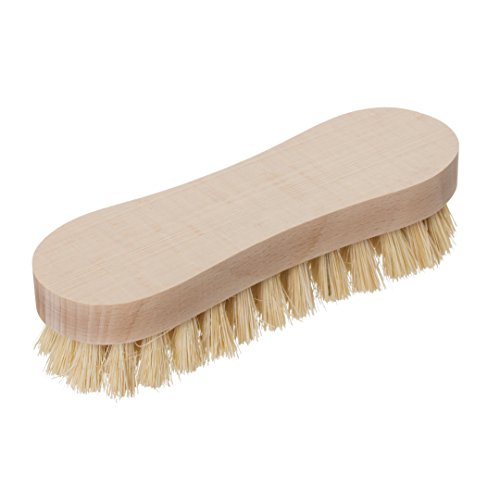
In a nutshell: This is the brush a traditional kitchen would have held a century ago—untreated beechwood, all-natural Tampico fiber, and an 8-shaped handle designed in Germany with the same strengths and the same demands.
Untreated beechwood is a deliberate choice. It will darken with use, developing a patina that no oiled or lacquered brush can match. The listing calls the Tampico bristles extra-strong and notes they withstand high heat, which is a meaningful distinction from nylon. Tampico is a plant fiber from the agave family, and it holds its shape in hot water far longer than nylon blends. This is a dishwashing brush with a wood handle in the truest sense—purpose-built, not mass-produced as an afterthought.
The real annoyance is the maintenance contract. Untreated wood demands drying after every use. Skip one session, leave it in a wet sink overnight, and the handle will eventually crack. REDECKER made an intentional trade-off: a brush that ages beautifully but requires routine care. Compared to the bamboo JJUNW twelve-pack, this is a single-brush commitment. If you are the type who leaves things soaking, this brush will punish you.
Pros:
- Heat-resistant Tampico bristles — hold their shape in hot water far longer than synthetic fibers
- Untreated beechwood handle — develops a natural patina and darkens gracefully with use
- German manufacturing — quality control standards that come with that origin
Cons:
- High-maintenance handle — requires drying after every single use or it risks cracking
- No oil finish included — you may need to oil the handle periodically yourself
- Single stiffness level — if Tampico is too soft for a task, you will need a second brush
Our Take
Best for: the technique-first cook who wants one honest, well-made tool and is willing to care for it. Skip if: you want a brush you can soak in the sink and forget about until tomorrow.
JJUNW 12 Packs Bamboo Dish Scrub Brushes (Rotation Army)
Why it made our list: Quantity has a quality all its own, and twelve bamboo dish scrub brushes mean you can rotate through them while others dry—which is the single most effective mold-prevention strategy in this category.
Bamboo is a meaningful step up from softwood in a wet environment. The listing describes the material as high-quality wood with a smooth, rounded handle that fits comfortably in hand, and bamboo is denser and more water-resistant than beechwood or pine. The twelve-piece quantity is the real feature. A wooden dishwashing brush thrives when it gets to dry fully between uses, and a rotation system makes that possible even in a busy household.
The annoyance is one of scale. Twelve brushes is a lot of wood to store, especially in a small kitchen. If you live alone, half of these will sit in a drawer for months—which is not a failure, but it is overkill. The listing also never specifies whether the handles are oiled or raw, so a buyer cannot predict long-term water resistance from the spec sheet alone.
Pros:
- 12-piece rotation system — lets brushes dry fully between uses, preventing mold and extending lifespan
- Bamboo handles — denser and more water-resistant than many softwoods used in budget brushes
- Ergonomic rounded handle — designed for comfortable daily use in a kitchen setting
Cons:
- Overkill for single-person households — a dozen brushes requires storage space and discipline
- Unspecified handle treatment — the listing never says if the bamboo is oiled, raw, or lacquered
- Lighter bamboo construction — less heft than beechwood, which some users find less satisfying for aggressive scrubbing
Here’s the Deal
Best for: families, shared kitchens, or anyone who wants a dry-brush rotation system. Skip if: you want a single heirloom-quality brush rather than a fleet of utility ones.
4 Pack Nail Brush for Cleaning Fingernail (Pocket-Sized Scrubber)

What stood out: At 3.7 x 1.8 x 1.3 inches, this is the smallest brush in the roundup—and the only one designed for human skin rather than cookware.
The fiber bristles are described as not too hard or too soft, which is exactly the balance a nail brush needs. Too stiff and you abrade the cuticles; too soft and dried dough or garden dirt stays buried under your nails. The non-slip effect on the wood is a practical touch—wet hands holding a tiny brush is a recipe for drops. The four-pack covers multiple bathrooms, workstations, or one for the kitchen and one for the garden shed.
The limitation is obvious from the dimensions. This is not a dish brush, not a utility brush, and certainly not a deck brush. It is a hand-and-nail tool, period. If you tried to scrub a pasta pot with a 3.7-inch brush, you would be there all afternoon. That is not a flaw; it is a scope boundary, and the listing is honest about it. Comparing it to the other brushes here is almost a category error.
Pros:
- Compact 3.7-inch size — fits easily in a pocket, toiletry bag, or apron pouch
- Balanced bristle stiffness — explicitly calibrated for nail beds, not cookware surfaces
- Four-pack value — covers multiple sinks, workstations, or travel bags
Cons:
- Not kitchen-task sized — far too small for scrubbing pots, pans, or baking sheets
- Unspecified wood species — no mention of beechwood, bamboo, or any oil treatment
- Strictly single-purpose — if you don’t do hands-on work, this brush has little to offer
Who This Is For
Best for: gardeners, mechanics, farm workers, and cooks who knead dough or mince garlic and want clean nails without a full shower. Skip if: you are shopping for a kitchen or surface-cleaning brush.
KONEX Nylon Fiber Economy Utility Cleaning Hand Brush (Budget Workhorse)

The real story: The KONEX is the budget-priced utility brush here—nylon fiber bristles on a peanut-shaped wood body that copies the ergonomic logic of the Naturolic set at a fraction of the price.
Nylon is the softest bristle material in this roundup. It is synthetic, petroleum-derived, and far less abrasive than Palmyra or even Tampico. That softness is a feature if you are cleaning surfaces you’re unsure about—glazed tile, sealed stone, some cookware—but it contradicts the listing’s claim of stiff bristles for heavy duty use. A nylon brush can be firm, but it will never bite the way a natural Palmyra brush does. Reading the spec sheet closely, this looks like an economy brush priced to move, and the wood handle scrub brush ergonomics are borrowed from the category leaders.
The annoyance is the environmental calculus. A wooden brush with nylon bristles is half of an eco-conscious purchase. If you are buying wood to reduce plastic waste, nylon eliminates that benefit. For buyers who care about the plant-based bristle story, this brush undercuts its own premise. For everyone else, it is a capable, cheap, almost disposable utility tool.
Pros:
- Nylon bristles — the safest default for surfaces you are unsure about, including some non-stick cookware
- Peanut-shaped wood body — same ergonomic grip concept as the pricier Naturolic set
- Budget-friendly positioning — marketed as an economy utility brush
Cons:
- Nylon is petroleum-derived — for eco-conscious buyers, this negates the purpose of choosing a wooden brush
- “Stiff bristles” claim conflicts with nylon’s inherent softness — do not expect Palmyra-level aggression
- Unspecified wood and finish — no mention of oil treatment or water resistance
Why It Stands Out
Best for: rental kitchens, college apartments, or anyone who needs a capable scratch-free brush at the lowest practical price. Skip if: you want plant-based bristles or genuinely aggressive scrubbing power.
Weiler 44026 Heavy Duty Deck Scrub Brush (The Floor Specialist)
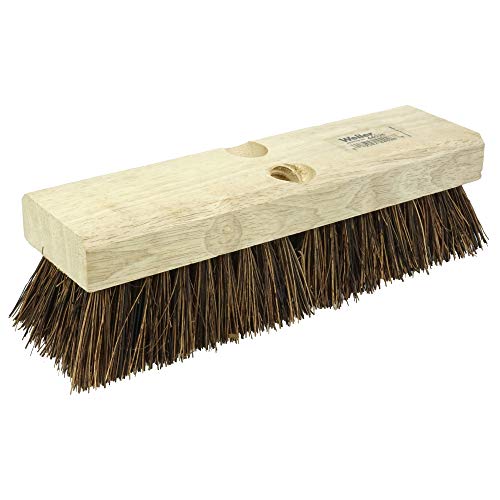
Final thoughts first: This is not a dish brush. Put that out of your head immediately. The Weiler 44026 is a deck scrub brush with natural Palmyra bristles and an unfinished wood block heavy enough to deliver real leverage on grimy surfaces.
The broom handle compatibility—sold separately, mind you—is the defining feature. Extending this brush to broom-handle length transforms it from a hand tool into a floor-cleaning implement for wood, concrete, and composite decks. The natural Palmyra fiber works in wet or dry applications and tolerates multiple cleaning agents, which matters if you are alternating between deck cleaner, soapy water, and plain elbow grease. The unfinished wood block is heavier than typical plastic blocks, and that heft is intentional: more downward pressure per stroke on stubborn grime.
The annoyance is the missing handle. The listing is explicit that it is sold separately, so this is not a hidden fee—but it is an extra purchase. If you are buying this for a one-time deck cleaning, factor in that additional cost. For indoor use, this brush is completely wrong: the Palmyra bristles and heavy block would damage countertops, sinks, and cookware in seconds. If you need a brush for kitchen duty, our guide to cleaning scrub floor brushes covers the right tools for each surface without the guesswork.
Pros:
- Broom handle compatibility — extends reach and leverage for floor-level deck, patio, and garage work
- Natural Palmyra bristles — the stiffest plant fiber widely available, built for heavy grime removal
- Heavier unfinished wood block — provides more downward pressure than plastic alternatives
Cons:
- No handle included — you will need to buy a broom handle or similar extension separately
- Overkill for indoor tasks — Palmyra bristles will damage countertops, sinks, and cookware
- Unfinished wood weathering — exposed to outdoor elements, the block will deteriorate faster than a treated alternative
The Real Deal
Best for: deck, patio, and garage owners tackling serious surface grime with floor-level leverage. Skip if: you want a brush for kitchen use or you do not already own a compatible handle.
Buying Guide: What Separates a Good Wooden Brush From a Bad One
Before you buy, understand that “wooden scrub brush” is an umbrella term covering tools with wildly different purposes. A nail brush, a dish brush, and a deck brush have almost nothing in common except the word “wood” in their handle. Here is how to think about the three decisions that actually matter.
Choosing Bristle Stiffness: Palmyra vs. Tampico vs. Nylon
Palmyra bristles are the stiffest natural fiber in this roundup—coarse, aggressive, and ideal for deck scrubbing or heavy-duty pot bottoms. They will scratch delicate surfaces. Tampico bristles occupy the middle ground: firm enough to remove baked-on food, soft enough to avoid damaging most cookware. Nylon is the softest and the only synthetic option here, making it the safest default for glazed surfaces and some non-stick pans. A wood brush that can clean tableware depends entirely on getting this stiffness right. The Naturolic set solves this problem by including both Palmyra and Tampico; the REDECKER commits to Tampico and bets that it is the correct all-purpose choice.
Wood Type and Handle Treatment: Why It Matters
Untreated beechwood, like the REDECKER, will age and darken with use—that is normal and even desirable for a tool you plan to keep. But untreated wood also demands drying after every use. Bamboo, used in the JJUNW set, is denser and more naturally water-resistant, which is part of why a twelve-pack bamboo rotation system works so well. The critical question is whether the handle is oiled or raw. An oiled handle repels water and resists cracking but feels different in the hand. A raw handle has more grip but requires more care. Several listings in this roundup never specify the treatment at all—and that omission should make you pause. If you are interested in a dishwashing brush with a wood handle, the REDECKER is the only one that tells you exactly what you’re getting.
Maintenance: Keep It Dry or Lose It
The number one rule of wooden brush ownership is simple: never let the handle soak. Rinse the bristles, shake off the excess, and store the brush bristle-side down in a dry rack or upright in a dry cup. If you struggle with remembering, the JJUNW twelve-pack rotation strategy is your best friend—use one brush while eleven others air-dry completely. For a deeper look at how to choose the right brush for sink-side cleanup, our complete guide to sink scrub brushes breaks down the alternatives. And if floor-level scrubbing is on your list, a scrub brush with a long handle offers reach that hand brushes simply cannot match.
Our Final Recommendation
For the budget-conscious buyer, the KONEX Nylon Fiber Utility Brush is the safest cheap pick—just know you’re trading plant-based bristles for nylon. For a premium experience, the Naturolic set offers genuine versatility with two stiffness levels. But the overall winner remains the REDECKER Tampico Fiber Wooden Scrub Brush. It is the only brush here that names every material, commits to traditional construction, and will still be scrubbing dishes a decade from now if you treat it right. If you want a wooden dish scrubber that respects the old ways, that is the one.
Frequently Asked Questions
What’s the difference between Tampico and Palmyra bristles?
Tampico is a medium-stiff plant fiber from the agave family. Palmyra is stiffer and more abrasive. For dishes and general kitchen cleaning, Tampico is usually the right call. For deck scrubbing, grill grates, or heavy grime, Palmyra—like the Weiler 44026 uses—is the tool you want. Using Palmyra on a non-stick pan is a mistake you will regret.
Can I put a wooden dish brush in the dishwasher?
Generally, no. Most wooden handles are not rated for the heat and moisture of a dishwasher cycle. Tampico bristles themselves often withstand high heat, per REDECKER’s listing, but the wood handle will crack or warp if machine-washed repeatedly. Hand-rinse the bristles, then air-dry the brush. That is the maintenance contract you sign when you buy wood.
How long does a wooden scrub brush last before it wears out?
A well-maintained wooden brush with natural bristles can last several years. The bristles will gradually soften and splay, and the wood will darken with use—both normal. The failure point is usually the handle cracking from water damage, not the bristles wearing down. Keep it dry between uses and the brush will outlast several plastic replacements.
Is a wooden dish scrubber actually better for the environment than plastic?
It depends on the bristles. A brush with plant-based bristles—Tampico, Palmyra, or sisal—is compostable at the end of its life and made from renewable material. A brush with nylon bristles on a wooden handle, like the KONEX, has half the equation right. Check the bristle material, not just the handle. FSC certification on the wood is also worth checking—the Forest Stewardship Council sets the standard for responsibly sourced timber.