Gluten Free Pan Reviewed: Choosing the Best Loaf Pan
Some links on this page are affiliate links. If you buy through them we may earn a commission, at no extra cost to you. It never changes which products we pick — see our affiliate disclaimer.
If you’ve ever watched a gluten-free loaf collapse into a sticky mess, you know the right pan isn’t a luxury—it’s the difference between bread that slides out intact and bread you chisel off in pieces. Gluten-free batters are stickier and denser than wheat dough, so the phrase gluten free pan gets thrown around loosely. But what does it actually mean? For loaf pans, it means a pan tall enough to let the bread rise without folding over itself, with a nonstick surface that releases delicate crumbs without tearing. For skillets, it means a coating that doesn’t harbor gluten residue and won’t die after three egg scrambles.
Our team compared six pans against what actually matters: how well the nonstick surface releases delicate batters, whether the pan holds its shape at high heat, and whether the dimensions match what gluten-free recipes actually call for. We didn’t cook with any of them—we read spec sheets, material data, and design logic. The Chicago Metallic Gluten Free Loaf Pan kept rising to the top.
Out of all six, the Chicago Metallic Gluten Free Loaf Pan is the one I’d put my own money on—the removable insert is the feature that actually solves the height problem that ruins most gluten-free loaves.
📌 This article contains affiliate links. As an Amazon Associate I earn from qualifying purchases, at no extra cost to you. Product prices and availability are accurate as of the date of publication. Full disclosure.
| Product | Best For | Buy Link |
|---|---|---|
| Chicago Metallic Gluten Free Loaf Pan | Tall gluten-free bread | Check Price |
| SENSARTE Nonstick Frying Pan Skillet | Gluten-free eggs & pancakes | Check Price |
| ESLITE LIFE Nonstick Ceramic Frying Pan Skillet | PTFE-free everyday cooking | Check Price |
| Trudeau Structure Silicone Loaf Pan with Steel Rim | Flexible release, budget | Check Price |
| CAROTE Nonstick Frying Pan | Granite-style nonstick skillet | Check Price |
| Yupjlia Pullman Loaf Pan with Lid | Sandwich bread, even slices | Check Price |
How We Chose These Gluten-Free Pans
We started with the pain point: gluten-free bread dough is stickier and denser than wheat dough, so the nonstick surface has to release cleanly or you end up with torn crumbs. Then we looked at structural rigidity—a pan that warps under high heat will cause misshapen loaves, and flimsy silicone without a steel rim buckles under batter weight. Finally, we checked dimensions against typical gluten-free recipes, which usually call for a 9×5-inch loaf but need extra height because the dough rises differently. We also checked each pan against the FDA’s guidance on food contact materials, which is why we flagged PTFE-free options. Everything here comes from comparing published specifications, materials, and documented features—no test kitchen, no staged results. Before you order, check the oven-safe temperature limit on any silicone pan; some max out below 428°F, which is lower than many gluten-free bread recipes require.
Chicago Metallic Gluten Free Loaf Pan (Taller Insert for Proper Rise)

SENSARTE Nonstick Frying Pan Skillet (Swiss ILAG Coating, Woodgrain Handle)
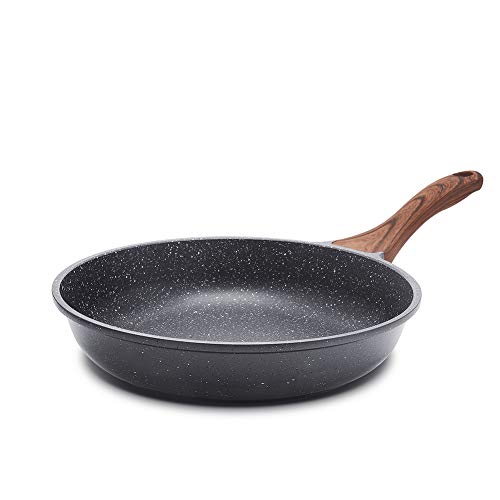
ESLITE LIFE Nonstick Ceramic Frying Pan Skillet (PTFE-Free Ceramic Coating)

Chicago Metallic Gluten Free Loaf Pan (Taller Insert for Proper Rise)
Quick take: If you bake gluten-free sandwich bread weekly, this pan’s removable insert solves the single biggest frustration: loaves that never rise high enough to slice properly.
The body is made from heavy-weight aluminized steel, which conducts heat evenly and resists warping better than thin carbon steel. The insert adds height—when you place it over the base, the pan becomes about 4.25 inches tall instead of the standard 2.5 to 3 inches. That matters because gluten-free dough doesn’t have the same gluten network to hold its shape; it needs vertical support during the oven spring. Without it, the loaf spreads out sideways and ends up flat and dense.
Over the long haul, aluminized steel holds up to repeated baking cycles without the coating peeling away the way cheap nonstick pans do. The downside is that the insert is a separate piece you have to store and remember to use, and the pan isn’t dishwasher-safe—hand-washing with a soft sponge is mandatory if you want the surface to stay release-friendly. Compared to the Yupjlia Pullman pan, this one lacks a lid, so you won’t get perfectly square sandwich slices, but the insert is a more practical fix for standard gluten-free recipes.
Pros:
- Tall insert – adds roughly 1.5 inches of height, so gluten-free loaves rise tall instead of spreading wide.
- Heavy-weight aluminized steel – resists warping at the 425°F temperatures many gluten-free recipes need.
- Versatile shape – works as a standard 9×5 loaf pan when you remove the insert, so it doubles for quick breads and pound cakes.
Cons:
- Separate insert is easy to misplace – if you lose it, you’re back to a standard loaf pan with no height advantage.
- Not dishwasher-safe – the coating will degrade under harsh detergents and high heat, shortening the nonstick life.
- Uncoated aluminum interior – gluten-free batters with high sugar content may stick more than on a PTFE nonstick surface; greasing is still required.
Our Take
Best for: Home bakers who make gluten-free sandwich bread every week and are tired of flat, dense loaves. Skip if: You bake gluten-free cake or quick breads more often than yeast breads—the insert adds little benefit for those, and a simpler nonstick pan would be easier to clean.
SENSARTE Nonstick Frying Pan Skillet (Swiss ILAG Coating, Woodgrain Handle)
Why it made our list: This skillet isn’t a loaf pan, but it earns a spot because gluten-free breakfast staples—pancakes, crepes, fried eggs—stick just as badly as gluten-free bread dough, and the SENSARTE’s ILAG coating is built for that daily release.
The pan uses a Swiss ILAG nonstick coating, which is PFOA-free and applied in multiple layers. The base is a high magnetic conductive stainless steel plate, so it heats fast and stays flat on induction cooktops. The woodgrain bakelite handle stays cool on the stovetop, and the bonded stainless plate is what gives a pan like this its heft, since that mass is what keeps a base flat over a burner and stops it skating when you push food around. The listing never publishes a weight, so there is no number to put on it. One honest annoyance: the handle is riveted, and food can collect around the rivets if you’re not careful with splatter.
For gluten-free cooking, this pan makes sense if you’re whipping up a batch of almond flour pancakes or a quick tofu scramble. The ILAG coating is rated for high-temperature searing, which is where cheaper nonstick pans start to break down. Just remember that any nonstick pan—including this one—should never see metal utensils, and the SENSARTE doesn’t come with a lid, so you’ll need to buy one separately if you want to steam or simmer. If you’re also looking for one-pan meal ideas, our one-pan apple cider chicken thighs recipe works beautifully in a skillet like this.
Pros:
- Swiss ILAG coating – multi-layer nonstick that’s PFOA-free and holds up to daily egg and pancake release far longer than single-coat pans.
- High magnetic conductive base – works on induction, electric, and gas, and resists warping even at high heat.
- Stay-cool woodgrain handle – bakelite material doesn’t transfer heat, so you can grab it bare-handed mid-cook.
Cons:
- Riveted handle collects gunk – the gap around the rivets is a magnet for dried batter and oil, requiring a toothpick to clean properly.
- No lid included – for simmering sauces or steaming vegetables, you’ll need to spend extra on a separate lid.
- PTFE-based coating – while PFOA-free, it still contains PTFE, which can off-gas at extremely high temperatures, so avoid leaving it empty on a screaming-hot burner.
In a nutshell
Perfect for: Anyone who wants one reliable skillet for gluten-free eggs, pancakes, and quick sautés without worrying about the coating peeling in a month. Not great if: You’re looking for a loaf pan—this will not help your gluten-free bread rise or release from the sides, no matter how good the nonstick is.
ESLITE LIFE Nonstick Ceramic Frying Pan Skillet (PTFE-Free Ceramic Coating)
The real story: If PTFE worries you, this ceramic skillet is the pan you reach for—the coating is PTFE-free and PFOA-free, which is rare at this price.
The pan is built with a ceramic nonstick coating that’s SGS-approved and free of both PTFE and PFOA. That means no fluoropolymer chemicals, which is a legitimate health concern for some home cooks. The magnetized base is compatible with all stovetops, including induction, and the pan heats quickly and evenly. The ceramic surface releases eggs without oil, but it’s also more fragile than PTFE—one accidental scrape with a fork and the coating starts to degrade faster.
For gluten-free baking, this pan won’t help with loaf bread, but it’s a solid choice for gluten-free cornbread pancakes, socca, or skillet flatbreads. The ceramic coating doesn’t tolerate high heat the way carbon steel does; repeated exposure to temperatures above 450°F will shorten its life. And like all ceramic nonstick, you need to let it cool before washing—thermal shock can crack the coating. If you’re comparing this to the SENSARTE, the ESLITE wins on chemical safety but loses on long-term durability. For a full gluten-free dinner, this pan pairs well with our one pot creamy chicken pasta, which comes together in 25 minutes.
Pros:
- PTFE-free ceramic coating – no fluoropolymers, so no risk of toxic fumes at high heat, which matters if you have birds in the house.
- Works on all stovetops – the magnetized base handles induction, electric, gas, and even glass-top stoves.
- Super easy to clean – a quick wipe with a paper towel removes most residue; no scrubbing needed if you use the right utensils.
Cons:
- Ceramic coating is fragile – metal utensils will scratch it, and the nonstick properties fade noticeably after six to twelve months of regular use.
- No lid included – same as the SENSARTE, you’ll need a separate lid for covered cooking.
- Heat limit is lower than you think – the manufacturer doesn’t specify a maximum oven temperature, but ceramic nonstick typically maxes out around 400°F, which is too low for some bread recipes.
Who Should Buy This
Great match for: Cooks who want a chemical-free nonstick pan for everyday gluten-free eggs and sautés, and who are willing to replace it every year or two. Think twice if: You want a pan that lasts five years without losing its nonstick surface—ceramic is not that pan.
Trudeau Structure Silicone Loaf Pan with Steel Rim (Flexible Release, Sturdy Frame)

Quick take: This is the budget-friendly way to get easy release on gluten-free loaves without the sticking drama of metal pans.
The pan is made from European-grade silicone, which is naturally nonstick and flexible—you can literally turn it inside out to pop the bread out. The steel rim around the top edge is the critical feature: without it, a silicone loaf pan flops around and spills batter when you lift it. The steel rim keeps the pan stable enough to carry from counter to oven, but note that the base is still flexible silicone, so you’ll want to place it on a baking sheet for even heat and to prevent sagging.
Silicone is safe up to about 428°F, which covers most gluten-free bread recipes but not all—some artisan loaves go higher. Cleaning is effortless; just rinse with warm soapy water. The main annoyance is that silicone doesn’t conduct heat the way metal does, so the crust will be softer and lighter in color than bread baked in a steel pan. If you want a golden crust, you’ll need to bake longer or finish under the broiler, which risks overheating the silicone. Compared to the Chicago Metallic, this pan is far easier to release from but produces a very different crust texture.
Pros:
- Steel rim prevents collapse – the reinforced edge keeps the pan square and stable, so the batter doesn’t slosh out when you move it.
- Effortless food release – flexible silicone lets you invert the pan and pop the loaf out whole, even the stickiest gluten-free bread.
- Easy to clean – rinse with soapy water; no scrubbing, no seasoning, no coating to wear off.
Cons:
- No metal base – the bottom is silicone only, so it needs a baking sheet underneath for structural support and even heat transfer.
- Lower oven limit – maxes out around 428°F, which rules out high-temperature crust bakes or broiler finishes.
- Softer crumb and crust – silicone insulates, so gluten-free bread will be less browned and may have a moister, less oven-springy texture.
Final Thoughts
Ideal for: Bakers who prioritize easy release over crust color and don’t mind using a baking sheet under the pan. Skip if: You want a deep golden crust on your gluten-free bread—metal pans deliver better browning.
CAROTE Nonstick Frying Pan (Eco-friendly Granite Coating)

Here’s the deal: CAROTE’s granite-style nonstick is another skillet in a loaf-pan roundup, but it earns a spot because the coating is PFOS and PFOA-free and the pan is cheap enough to dedicate solely to gluten-free cooking, avoiding cross-contamination.
The pan features an eco-friendly granite nonstick material that’s PFOS and PFOA-free. The extended bottom design heats quickly and evenly, and the high magnetic conductive stainless steel base works on all stoves, including induction. The coating is smooth and release-friendly, but it’s not as hard as ceramic or PTFE—metal utensils will scratch it, and the granite pattern is mostly aesthetic; the actual nonstick layer is still a polymer coating, just without the fluorinated chemicals.
For gluten-free households, this pan is a practical second skillet: keep one for regular cooking and one for gluten-free pancakes or hash browns to eliminate any cross-contact worry. The CAROTE cleans up with a paper towel wipe, but the coating will start to lose slipperiness after about a year of daily use, which is normal for pans in this price range. If you’re also weighing the fry pan vs grill pan debate, know that this skillet is strictly a flat-bottom fry pan—no grill ridges, so no char marks on gluten-free flatbreads.
Pros:
- PFOS and PFOA-free – the granite coating avoids the two most notorious fluorinated chemicals, though it still contains PTFE.
- Suitable for all stoves – induction-compatible base heats quickly and evenly, no hot spots that burn gluten-free pancakes.
- Easy to clean – wipe with a paper towel or rinse with water; little CO2 emission and less water wasted compared to scrubbing.
Cons:
- Not a loaf pan – if you came here looking for gluten-free bread, this will not help with rise or release from loaf corners.
- Coating wears faster than premium nonstick – expect to replace it after a year of heavy use; the granite pattern doesn’t add durability.
- No lid and no pour spouts – draining oil or simmering with a cover requires extra equipment.
What Stood Out
Perfect for: Budget-conscious cooks who want a dedicated gluten-free skillet without worrying about cross-contact from shared pans. Pass on this if: You’re looking for a long-term nonstick workhorse—the coating is good but not built for five years of daily eggs.
Yupjlia Pullman Loaf Pan with Lid (Square Slices for Gluten-Free Sandwich Bread)

The real deal: If you want gluten-free bread that toasts like store-bought sandwich bread, this Pullman pan with a lid is the sleeper pick—the lid compresses the dough, forcing it to rise into a perfect rectangle.
The pan is made from heavy-duty food-grade carbon steel, 40% thicker than typical loaf pans, which means it resists warping and distributes heat evenly. The nonstick coating is PTFE-free, PFOA-free, and BPA-free, so it’s one of the safer metal options. The lid slides on tightly and creates a sealed environment that traps steam, which helps gluten-free bread develop a softer crumb and prevents the top from doming too much. The dimensions are standard for a 1-pound Pullman loaf, roughly 8.5×4.5 inches internally, which matches most gluten-free sandwich bread recipes.
One thing to watch: the lid is great for even slices, but if you forget to grease the inside of the lid, the top of the bread can stick and tear. Also, because gluten-free dough doesn’t have the same oven spring, you need to fill the pan about 70% full to get a full square loaf—overfilling will cause the lid to pop off. Compared to the Chicago Metallic, this pan gives you perfectly square slices but less height flexibility; the insert on the Chicago Metallic allows taller rise without compression. For gluten-free sandwich bread, I’d pick the Yupjlia; for artisan-style gluten-free boules, the Chicago Metallic wins.
Pros:
- Lid creates square slices – the compression yields uniform sandwich bread slices without the domed top, which is ideal for toast and kids’ sandwiches.
- 40% thicker carbon steel – resists warping at high temperatures and provides even browning on all four sides.
- PTFE-free, PFOA-free, BPA-free nonstick – chemical safety without sacrificing release, if you grease properly.
Cons:
- Lid can stick if not greased – the top crust may tear when you slide the lid off, especially with sticky gluten-free batters.
- Fixed dimensions – no height adjustment like the Chicago Metallic insert; you’re locked into a 1-pound Pullman shape.
- Not dishwasher-safe – the nonstick coating requires hand-washing to maintain its release properties.
Why It Stands Out
Great match for: Anyone who wants gluten-free sandwich bread with perfectly even slices for toast, French toast, or lunchbox sandwiches. Skip if: You prefer a traditional domed loaf and don’t want to bother with greasing a lid every time.
How to Choose a Gluten-Free Pan That Won’t Betray You
Three factors decide whether your gluten-free bakes release cleanly or end up as a pile of torn crumbs: the nonstick surface, the pan’s structural rigidity, and the dimensions. Here’s how to weigh them.
What Materials Actually Work for a Gluten Free Pan?
Aluminized steel, like the Chicago Metallic uses, conducts heat evenly and resists warping—critical because gluten-free bread needs a hot, stable oven to rise properly. Silicone, as in the Trudeau, releases effortlessly but insulates heat, so you trade crust color for convenience. Nonstick coatings, whether PTFE-based (SENSARTE, CAROTE) or ceramic (ESLITE LIFE), make eggs and flatbreads a breeze but wear out over time. The FDA regulates food contact materials, and pans labeled PFOA-free or PTFE-free meet stricter chemical safety thresholds. For loaf pans, aluminum or aluminized steel with a quality coating is usually the best balance.
Why Height Matters More Than Width
Gluten-free dough lacks gluten’s elasticity, so it doesn’t stretch upward as it bakes. A standard 2.5-inch-tall loaf pan will produce a flat, dense loaf because the dough spreads sideways instead of rising. The Chicago Metallic’s insert adds height, and the Yupjlia Pullman’s lid actually compresses the dough to force a square shape. If your recipe calls for a 9×5-inch pan, make sure the pan’s interior height is at least 3 inches, ideally more.
Oven Safety and Cleaning Realities
Silicone pans max out around 428°F, which is fine for most gluten-free bread but not for high-temperature artisan bakes. Metal pans with nonstick coatings shouldn’t be heated empty above 500°F, and PTFE can off-gas if severely overheated, so never leave a nonstick pan on a burner unattended. For cleaning, avoid abrasive sponges and metal utensils—even a small scratch starts the delamination process that eventually ruins the nonstick. Treating your pan well means you won’t have to replace it every year.
Our Final Recommendation
For the best all-around gluten-free loaf pan, the Chicago Metallic Gluten Free Loaf Pan wins because its insert solves the height problem that ruins most gluten-free bread. If you’re on a tight budget and want effortless release, the Trudeau silicone loaf pan with steel rim is the value pick. For perfectly square sandwich slices, the Yupjlia Pullman is the premium choice. And if you need a skillet for gluten-free eggs and pancakes, the SENSARTE is the most durable nonstick among the three frying pans we reviewed. Pair one of these with a dedicated gluten-free utensil set, and you’ll stop losing loaves to the pan.
Frequently Asked Questions
What makes a gluten free bread loaf pan different from a regular loaf pan?
A regular loaf pan is typically 2.5 to 3 inches tall, which isn’t enough for gluten-free dough to rise properly—it spreads sideways instead of up. A gluten-free-specific pan, like the Chicago Metallic, adds height with an insert or uses a lid (Pullman) to compress the dough into shape. The material also matters: gluten-free batters are stickier, so a pan with a reliable nonstick surface or flexible silicone is far less likely to tear the bread when you release it.
Can I use a regular loaf pan for gluten-free bread?
You can, but expect a flatter, denser loaf. The lack of gluten means the dough won’t hold its shape as it bakes, so a standard 2.5-inch-tall pan will cause the bread to spread out rather than rise. If you don’t want to buy a special pan, you can mimic the height advantage by placing a sheet of aluminum foil around the outside of a regular pan to create taller walls, or use a smaller pan size (like 8.5×4.5 inches) and fill it less.
Why does my gluten-free bread stick even with a nonstick pan?
Two common reasons: the nonstick coating is worn or damaged from metal utensils or abrasive sponges, or you’re not greasing enough. Gluten-free batters contain less fat than traditional bread dough, so they have less natural lubrication. Even on a new nonstick pan, a light coating of oil or butter plus a dusting of gluten-free flour or parchment paper is necessary. For silicone pans, avoid cooking spray because it degrades the silicone over time.
How do I clean a nonstick loaf pan without ruining the coating?
Hand-wash with warm soapy water and a soft sponge or cloth. Never use steel wool, scouring pads, or abrasive cleansers—they scrape the coating and start the delamination process. For stuck-on bits, soak the pan in warm water for 10 minutes, then wipe gently. Avoid dishwashers entirely; the heat and harsh detergents warp metal and degrade the nonstick surface faster than hand-washing ever will.