You know those nights when you’re running on empty but still want something that tastes amazing?
That was me last Tuesday.
I had exactly 25 minutes before everyone needed to eat. I threw together this Mediterranean beef bowl, and honestly? My family went silent. The good kind of silent. The “too busy eating to talk” kind.
I’ve been making it every week since.
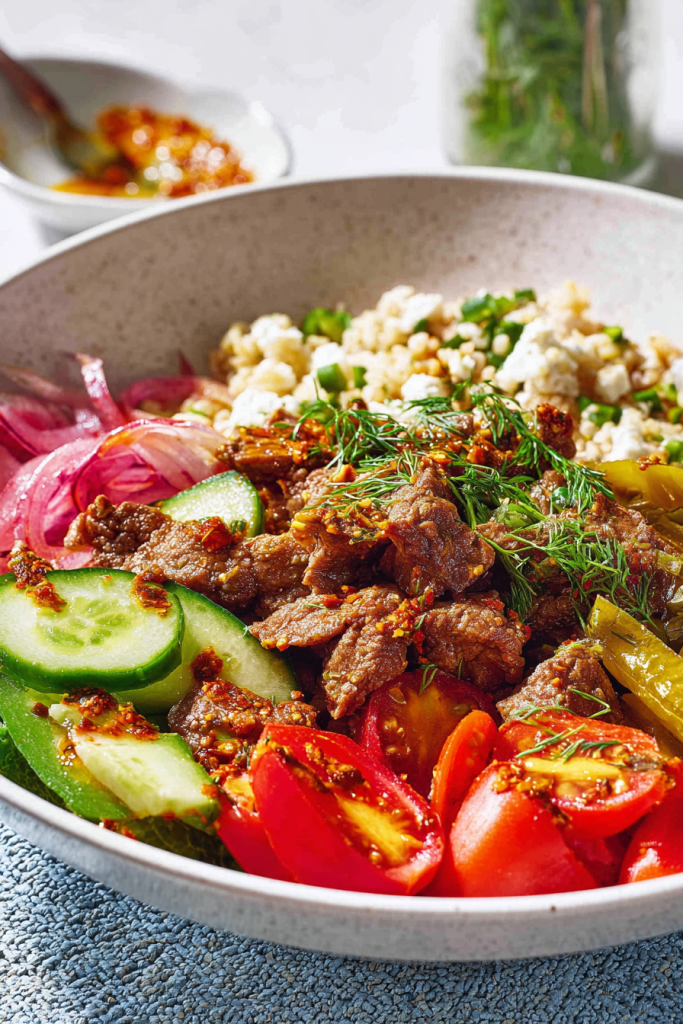
Here’s what makes this bowl different. You get warmth from Middle Eastern spices. Brightness from fresh veggies. And this incredible kick from homemade harissa oil.
Everything builds on everything else.
By the time you’re done, each component has made the others taste better. It’s like a flavor chain reaction happening right in your bowl.
I actually discovered this combination by accident. I was playing around with different Mediterranean flavors one night. Trying to figure out how to balance spicy oil with creamy sauce.
The contrast?
Mind-blowing.
Heat meets cool. Rich meets fresh. And you get this restaurant-quality meal that honestly just needs basic cooking skills and one good skillet.
Understanding Your Ingredients
Let me break down why each ingredient matters here.
The Flavor Foundation
Your aromatics are doing heavy lifting in this recipe.
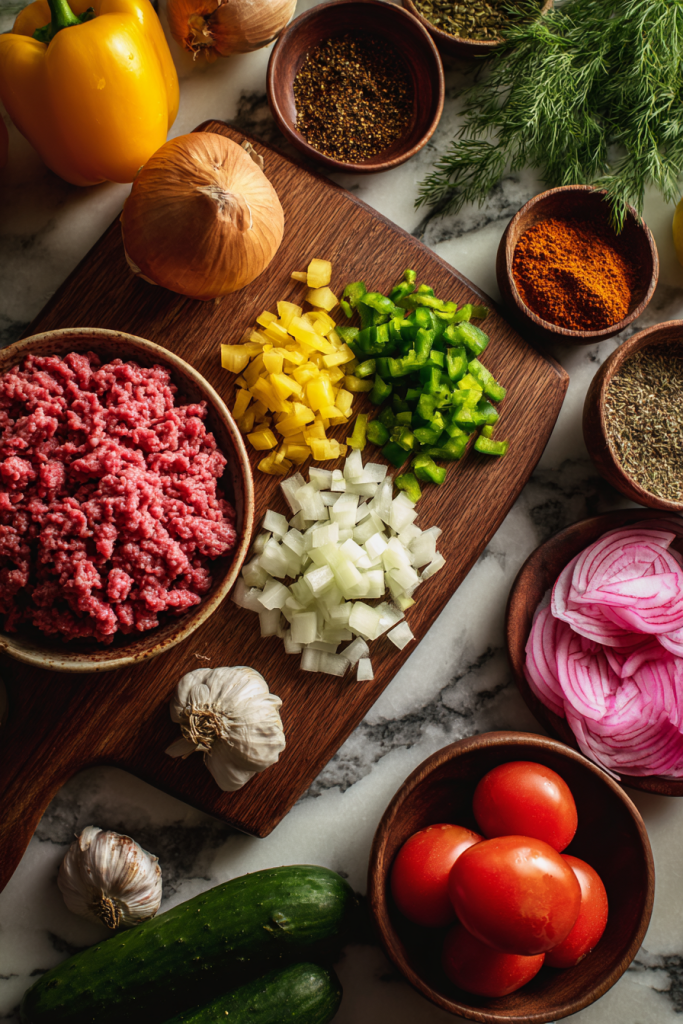
Yellow onion gives you natural sweetness. When it cooks, it caramelizes into something really special. Garlic adds that savory punch we all love. And green bell pepper? It brings this subtle vegetal thing that holds up beautifully under heat.
Now, about the olive oil.
It’s not just cooking fat. Think of it as a flavor carrier. Go with extra virgin—you’ll taste the difference. Those fruity, peppery notes show up everywhere. In the sautéed veggies. In the fresh toppings. Everywhere.
The Spice Cabinet Stars
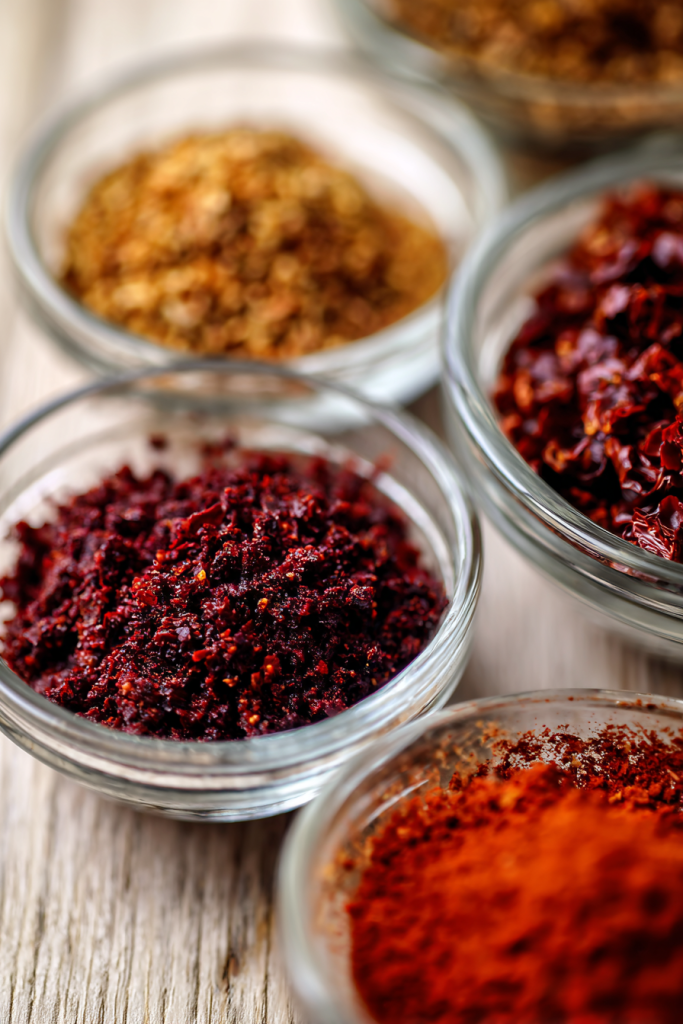
Okay, baharat deserves its own moment.
This Middle Eastern blend usually has cinnamon, cumin, coriander, and paprika. It takes boring ground beef and transforms it into something exotic. Something deeply satisfying.
Can’t find baharat?
Ras el hanout works great. It’s got its own complex thing going on, but it totally works with beef.
Smoked Spanish paprika adds smoky depth without taking over. It’s gentler than chipotle. More interesting than regular paprika. This small addition makes a big difference in the final dish.
Then there’s Aleppo pepper flakes.
They bring fruity heat. Less intense than those standard red pepper flakes you probably have in your cabinet. Mix them with harissa paste, and you get this oil infusion that adds serious warmth and complexity.
The Fresh Elements
Roma tomatoes and Persian cucumbers create a simple salad situation. They cut right through the richness of that seasoned beef.
I never cook these.
Their cool crunch provides essential textural contrast. You need that.
Radishes might seem weird here. But trust me. Their peppery bite adds another whole dimension to each mouthful. Slice them thin. They’ll integrate seamlessly with everything else.
And those fresh herbs?
Whether you use cilantro or parsley, they’re not garnish. They’re essential brightness that lifts the entire bowl.
Don’t skip them.
Building Your Base
Whole grains are your foundation here.
Bulgur cooks fast and has this pleasant, nutty chew. Farro offers more substantial texture—it holds up beautifully under saucy toppings. Barley brings earthiness. Brown rice gives familiar comfort.
My tip?
Cook your grains ahead of time. They reheat perfectly. Having them ready makes weeknight assembly ridiculously easy. Store them in the fridge for up to five days.
Your finishing sauce makes everything work together.
Tahini sauce offers nutty creaminess with subtle bitterness. It complements the spiced beef really well. Feta dressing brings tangy richness—perfect if you love Mediterranean flavors.
Choose whichever appeals to you. Both work beautifully.
| Ingredient Category | Key Components | Flavor Contribution |
|---|---|---|
| Aromatics | Onion, garlic, bell pepper | Sweet, savory base notes |
| Spices | Baharat, smoked paprika | Warm, complex depth |
| Heat Elements | Harissa, Aleppo pepper | Fruity, layered spiciness |
| Fresh Vegetables | Tomatoes, cucumbers, radishes | Cool, crisp contrast |
| Grains | Bulgur, farro, barley, rice | Hearty, nutty foundation |
| Finishing Touches | Herbs, olives, sauce | Bright, briny, creamy balance |
Let’s Cook This Thing
What You Need (And How to Prep It)
| Ingredient | Quantity | Preparation Notes |
|---|---|---|
| Extra virgin olive oil (harissa oil) | 2 tablespoons | Use quality oil for best flavor |
| Harissa paste | 2 tablespoons | Adjust for heat preference |
| Aleppo pepper flakes | 1 teaspoon | Substitute red pepper flakes if needed |
| Extra virgin olive oil (cooking) | 1/4 cup | Divided between steps |
| Yellow onion | 1 large | Finely chopped for even cooking |
| Garlic cloves | 3 large | Finely chopped, not crushed |
| Green bell pepper | 1 large | Diced into small pieces |
| Kosher salt | To taste | Season at each stage |
| Black pepper | To taste | Freshly ground preferred |
| Tomato paste | 3 tablespoons | Concentrated flavor base |
| Water | 1/4 cup | Helps incorporate tomato paste |
| Lean ground beef | 1 1/2 pounds | 90/10 blend recommended |
| Baharat | 1 1/2 teaspoons | Key spice blend |
| Smoked Spanish paprika | 1/2 teaspoon | Adds smoky notes |
| Roma tomatoes | 3 medium | Diced, kept fresh |
| Persian cucumbers | 3 small | Diced, not peeled |
| Radishes | 3 medium | Thinly sliced |
| Fresh cilantro or parsley | 1/2 cup | Roughly chopped |
| Olives | 1/2 cup | Castelvetrano or Kalamata |
| Cooked whole grains | 2 cups | Warmed before serving |
| Tahini sauce or feta dressing | As needed | Your choice of finishing sauce |
The Step-by-Step Process
Step 1: Make That Harissa Oil
This step is technically optional.
But seriously—don’t skip it.
Grab a small skillet. Put it over medium heat. Add two tablespoons of olive oil. Wait until the oil starts to shimmer.
Now stir in your harissa paste and Aleppo pepper flakes.
Keep the heat moderate here. You want to gently infuse the oil, not burn the spices. Stir everything together for about one minute.
Then?
Remove from heat immediately. Set it aside to cool.
The residual heat keeps developing those flavors while you work on everything else. It’s like free flavor development happening in the background.
Step 2: Build Your Aromatic Base
Heat a large nonstick pan over medium-high heat.
Add one-quarter cup of olive oil. Let it warm until you see subtle movement on the surface. That tells you the oil is ready to receive your aromatics without burning them.
Add your finely chopped onion first.
Spread it across the pan’s surface. Even cooking matters here. After about two minutes, add the chopped garlic and diced bell pepper.
Season generously with kosher salt and freshly ground black pepper.
Now here’s the thing.
Stir regularly. But don’t constantly mess with it. You want the vegetables to soften and develop some color. This takes about five minutes.
You’ll know they’re ready when the onion turns translucent and everything smells incredible.
Step 3: Add That Tomato Paste
Tomato paste can be tricky if you’re not careful.
Add it directly to your vegetables. Stir vigorously for about one minute. This step cooks out the raw tomato flavor and concentrates the sweetness.
Then add your quarter cup of water.
Stir until the paste fully incorporates into the mixture. No lumps. Just smooth, tomatoey goodness coating everything.
Step 4: Brown Your Beef
Add the ground beef to your pan.
Season with another pinch of salt. This seasons the meat itself, not just the vegetables beneath it. Use a wooden spoon or potato masher to break the beef into small crumbles.
Here’s a trick most people miss.
Cook without stirring for two minutes initially. This allows the bottom to brown, creating flavor through caramelization.
Then break everything up.
Continue cooking, stirring occasionally, for five to seven minutes total. The beef should lose all pink color.
See excess fat pooling?
Tilt the pan and carefully spoon it out. Lean beef typically doesn’t produce much fat. But better safe than greasy.
Step 5: Bloom Those Spices
Once your beef is fully cooked, reduce heat to medium.
Sprinkle in the baharat and smoked paprika.
Stir continuously for two minutes. This allows the spices to toast slightly and coat every piece of meat. This blooming process intensifies their flavors dramatically.
Taste your beef mixture now.
Does it need more salt? A touch more baharat?
Adjust accordingly before removing from heat.
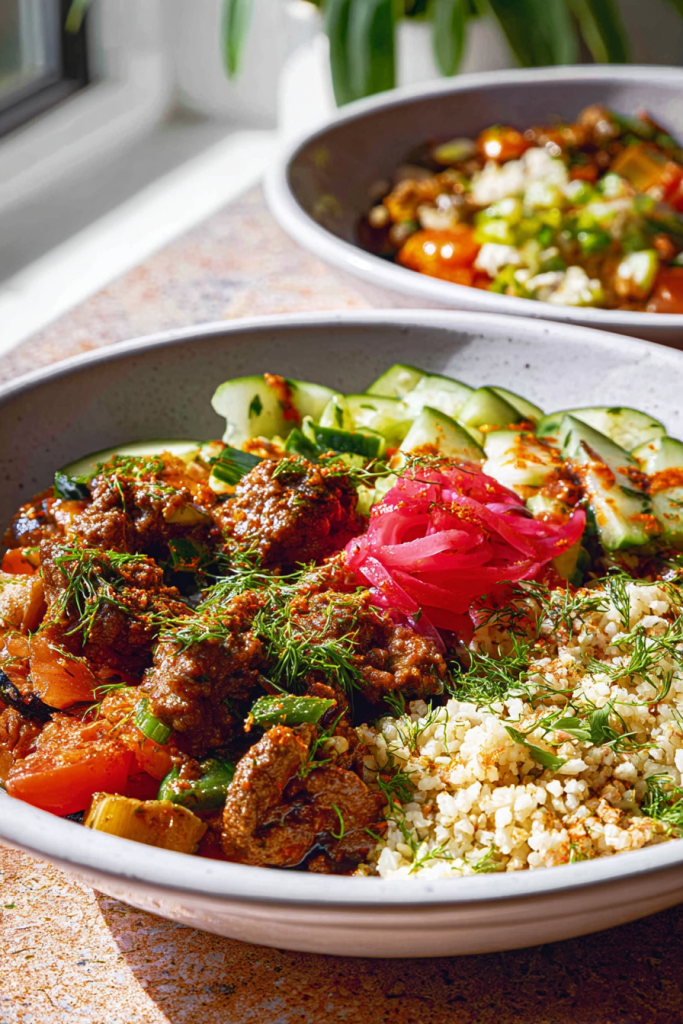
Step 6: Prep Those Fresh Toppings
While your beef rests, combine diced tomatoes and cucumbers in a small bowl.
Add a pinch of salt. A light drizzle of olive oil.
Toss gently and set aside.
These stay fresh and crisp because you’re not cooking them. That’s the whole point.
Slice your radishes thinly. A mandoline works perfectly if you have one. Chop your herbs roughly. Pit and halve your olives if they came whole.
Things I Wish Someone Had Told Me
Let your cooked grains sit at room temperature for five minutes before reheating.
Why?
This prevents them from becoming mushy when warmed. Small detail. Big difference.
Don’t overdress your bowls.
I mean it. Start with less sauce than you think you need. You can always add more. But you can’t remove it once it’s there.
Assemble bowls individually rather than mixing everything together.
This preserves distinct textures. Plus everyone gets to customize their portions. My kids love this part.
The harissa oil keeps well in the fridge for up to one week.
Actually, make a double batch. Use it on roasted vegetables. Scrambled eggs. Grilled fish. It’s basically liquid gold.
One more thing.
If you’re serving this to children, keep the harissa oil on the side. Let adults add heat according to their preference. Trust me on this one.
Putting It All Together
Assembly matters more than you’d think.
The order you layer components affects both presentation and how flavors interact on your palate.
How to Build Your Bowl
Start with warm grains as your foundation.
Divide two cups of reheated bulgur, farro, barley, or brown rice among four shallow bowls.
Create a slight well in the center.
This helps the beef nestle in rather than roll around. Small detail that makes eating easier.
Spoon your seasoned beef mixture generously over the grains.
Don’t be shy here. The beef is the star protein. It deserves prominent placement.
Now comes the fun part.
Drizzle your cooled harissa oil over the beef. A little goes a long way—start with one teaspoon per bowl.
Follow with your choice of tahini sauce or feta dressing.
Use a spoon to create attractive drizzle patterns. Make it pretty. You’re eating with your eyes first.
Arrange your fresh tomato-cucumber mixture around the edges.
Add sliced radishes for pops of color. Scatter olives throughout.
Finish with a generous handful of fresh herbs on top.
Ways to Switch It Up
Different Proteins
Ground lamb works beautifully with baharat.
The spices complement lamb’s natural richness perfectly. Ground turkey offers a leaner option. Though you might want to add an extra tablespoon of olive oil since turkey can be dry.
For plant-based eaters?
Cooked lentils make an excellent substitute. Use green or black lentils for best texture.
Different Flavor Directions
Skip the baharat and try Greek-style seasoning instead.
Use dried oregano, lemon zest, and fresh dill. Serve with tzatziki instead of tahini. Add crumbled feta directly into the beef while it’s still warm.
Want Moroccan flair?
Swap baharat for ras el hanout. Replace the harissa oil with chermoula. Add preserved lemon to your fresh vegetable mixture.
Different Grains
Cauliflower rice makes this bowl lighter and lower in carbs.
Quinoa adds protein while maintaining that pleasant grain texture. Even simple white rice works if that’s what you have available.
Make It Portable
Warm flatbread or lavash in a dry skillet.
Spread a thin layer of tahini or feta dressing down the center. Add beef, grains, and vegetables.
Roll tightly and slice in half.
Now you’ve got a portable meal.
Meal Prep Like a Pro
This recipe is perfect for meal prep.
Cook your beef mixture and grains on Sunday. Store them separately in airtight containers in your fridge.
Keep fresh vegetables and herbs unwashed in the crisper drawer.
Wash and chop them just before assembly. This maintains maximum freshness.
Your sauces stay fresh for up to five days when refrigerated.
The harissa oil actually improves with time as flavors meld together.
To assemble during the week?
Reheat grains and beef separately in the microwave. Build your bowl with fresh toppings and enjoy.
Questions You’re Probably Asking
Can I make this without the harissa oil?
Absolutely.
The harissa oil adds wonderful complexity. But it’s not essential. The baharat-spiced beef mixture provides plenty of flavor on its own.
If you skip the oil?
Consider adding a pinch of cayenne to your beef for a touch of heat.
What’s the best grain to use?
This depends on your preference and time constraints.
Bulgur cooks fastest—about 15 minutes. Farro and barley take longer but offer more substantial chew. Brown rice is most familiar to American palates.
My advice?
Try different grains until you find your favorite.
Can I use ground beef with higher fat content?
Yes.
But drain the excess fat after browning. Higher fat content (like 80/20) creates more flavorful beef. But it also adds unnecessary grease to your bowl.
Drain thoroughly before adding spices.
How do I store leftovers?
Store components separately for best results.
Here’s the breakdown:
- Cooked beef keeps for four days refrigerated
- Fresh vegetables should be stored unwashed
- Chop vegetables just before eating
- Grains stay fresh for five days
- Assemble bowls as needed rather than pre-assembling
What if I can’t find baharat?
Make your own.
Combine equal parts ground cinnamon, cumin, coriander, and paprika. Alternatively, use ras el hanout or even garam masala.
Each creates a slightly different flavor profile.
But all work well with beef.
Is this recipe spicy?
The base recipe has warmth rather than aggressive heat.
Most spiciness comes from the optional harissa oil. Serve it on the side so everyone can adjust according to their tolerance.
The Aleppo pepper provides fruity heat that’s milder than standard red pepper flakes.
Final Thoughts
Look, impressive meals don’t require complicated techniques or expensive ingredients.
With good spices, fresh vegetables, and careful layering, you create something that looks beautiful and tastes even better.
The recipe adapts easily to what you have available.
Short on time? Skip the harissa oil.
Want more vegetables? Add roasted eggplant or zucchini.
Craving different flavors? Experiment with spice blends from various cuisines.
But here’s what I love most about this dish.
It brings people together. There’s something about building your own bowl that makes dinner feel interactive and fun.
Kids enjoy choosing their toppings.
Adults appreciate the customizable heat levels.
Make this recipe your own. Adjust spices to your taste. Try different grains and vegetables. Add your favorite toppings.
That’s the beauty of bowl meals.
They welcome creativity while delivering consistent satisfaction.
Storage & Reheating Tips:
- Refrigerate beef mixture in airtight container for up to 4 days
- Store grains separately for up to 5 days
- Keep fresh vegetables unwashed until ready to use
- Harissa oil keeps refrigerated for 1 week
- Reheat beef and grains separately for best texture
Serving Suggestions:
- Pair with a crisp green salad dressed simply with lemon and olive oil
- Serve alongside warm pita bread or flatbread
- Offer additional tahini sauce and harissa oil on the side
- Garnish with extra fresh herbs and lemon wedges
- Provide small bowls of extra olives and sliced radishes
Enjoy your Mediterranean beef bowl adventure!
Mediterranean Beef Bowl with Harissa Oil
Ingredients
Harissa Oil
- 2 tablespoons extra virgin olive oil
- 2 tablespoons harissa paste adjust for heat preference
- 1 teaspoon Aleppo pepper flakes or red pepper flakes
Beef Mixture
- 1/4 cup extra virgin olive oil
- 1 yellow onion large, finely chopped
- 3 garlic cloves large, finely chopped
- 1 green bell pepper large, diced
- kosher salt to taste
- black pepper freshly ground, to taste
- 3 tablespoons tomato paste
- 1/4 cup water
- 1 1/2 pounds lean ground beef 90/10 blend recommended
- 1 1/2 teaspoons baharat or ras el hanout
- 1/2 teaspoon smoked Spanish paprika
Fresh Toppings
- 3 Roma tomatoes medium, diced
- 3 Persian cucumbers small, diced
- 3 radishes medium, thinly sliced
- 1/2 cup fresh cilantro or parsley roughly chopped
- 1/2 cup olives Castelvetrano or Kalamata
Base & Finishing
- 2 cups cooked whole grains bulgur, farro, barley, or brown rice, warmed
- tahini sauce or feta dressing for serving
Instructions
- Heat a small skillet over medium heat. Add 2 tablespoons olive oil and let it shimmer. Stir in harissa paste and Aleppo pepper flakes. Cook for 1 minute, stirring constantly. Remove from heat and set aside to cool.
- Heat a large nonstick pan over medium-high heat. Add 1/4 cup olive oil and let it warm. Add chopped onion and cook for 2 minutes. Add garlic and bell pepper. Season with salt and pepper. Cook for 5 minutes, stirring regularly, until vegetables soften and onion turns translucent.
- Add tomato paste to the vegetables and stir vigorously for 1 minute. Add 1/4 cup water and stir until paste fully incorporates with no lumps.
- Add ground beef to the pan and season with salt. Break beef into small crumbles with a wooden spoon. Cook without stirring for 2 minutes to allow browning. Then break up and continue cooking for 5-7 minutes total until beef loses all pink color. Drain excess fat if needed.
- Reduce heat to medium. Sprinkle baharat and smoked paprika over the beef. Stir continuously for 2 minutes to bloom the spices and coat the meat. Taste and adjust seasoning. Remove from heat.
- Combine diced tomatoes and cucumbers in a small bowl. Add a pinch of salt and drizzle of olive oil. Toss gently. Slice radishes thinly, chop herbs, and prepare olives.
- Divide warmed grains among 4 shallow bowls, creating a slight well in the center. Spoon seasoned beef generously over the grains. Drizzle cooled harissa oil over the beef (about 1 teaspoon per bowl). Add tahini sauce or feta dressing in attractive drizzle patterns.
- Arrange tomato-cucumber mixture around the edges. Add sliced radishes and scatter olives throughout. Finish with a generous handful of fresh herbs on top. Serve immediately.