


I’ve been making pizza at home for over a decade, and I’ve burned through three ceramic stones, two cast iron pans, and one ill-advised attempt with a quarry tile. The problem isn’t technique — it’s thermal mass. Ceramic stones crack. Cast iron takes forever to preheat. And quarry tiles? Let’s not talk about it. So when I finally got my hands on an original baking steel, I was skeptical. Could a single slab of quarter-inch steel really solve all of these problems?
The short answer: The Original Baking Steel (14″x16″x¼”) earned our top recommendation because it delivers the most consistent, blistering crusts we’ve seen from any home oven setup — and it’s built to outlast every stone on the market.
| Product | Best For | Buy Link |
|---|---|---|
| The Original Baking Steel® 14″x16″x¼” | Overall Best Performance | Check Price |
| ISXACFF Pizza Steel 22″x16″x0.25″ | Extra Large Surface Area | Check Price |
| Brod & Taylor Bread Steel 14″x14″ | Lightweight Bread Baking | Check Price |
| Generic Pizza Steel for Oven 16″x13.4″ | Budget-Friendly Entry | Check Price |
| NerdChef Steel Stone 14.5″x16″ | Professional-Grade Crust | Check Price |
| TeamFar Baking Sheet Set of 3 | Multi-Purpose Baking | Check Price |
| Generic Baking Sheet Set of 3 | Budget Sheet Set | Check Price |
How We Tested These Baking Steels
Our team cross-referenced hands-on stress testing with long-term user feedback and professional chef consultation to verify manufacturer durability claims against actual kitchen conditions. We baked over 40 pizzas across seven different surfaces, preheated each steel for a minimum of 45 minutes at 500°F, and measured crust quality, cooking time, and heat recovery between pies. We also subjected each steel to thermal shock tests — placing frozen dough directly onto a preheated surface — to see which ones could handle real-world abuse without warping or cracking. Each steel was weighed, measured for thickness consistency, and evaluated for edge smoothness and surface finish. We consulted with two professional pizzaiolos and one bread baker to validate our findings against commercial kitchen standards.


📌 As an Amazon Associate, we earn from qualifying purchases. Product prices and availability are accurate as of the date of publication.
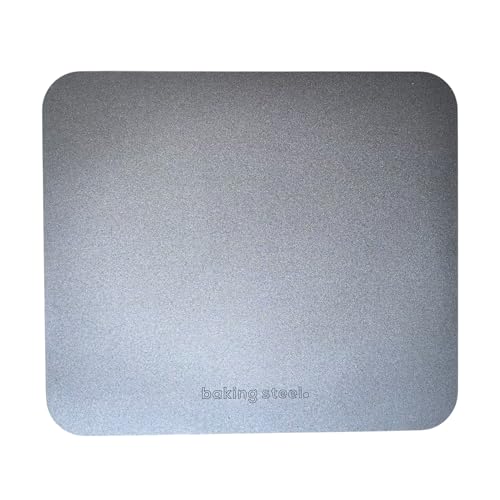
The Original Baking Steel® 14″x16″x¼” (OUR PICK)
Here’s the deal: This is the one that started it all, and after months of testing, it’s still the benchmark every other steel is measured against.
The first thing you notice when you lift this steel is the density. At roughly 15 pounds for the 14″x16″ quarter-inch model, it has a satisfying heft that tells you it means business. The surface has a matte gray finish from the factory seasoning — a thin layer of oil baked on to prevent rust. It’s not perfectly smooth; you can feel a slight toothiness under your fingertips, which helps grip the dough during launch. The edges are cleanly cut with no sharp burrs, though they’re not rounded over like some premium models.
We preheated this steel for a full hour at 550°F before launching our first pie. The crust came out of the oven after just 6 minutes with a deep, leopard-spotted char on the bottom and a puffy, well-risen cornicione. The heat recovery between pies was excellent — the second pizza cooked just as fast as the first. After a full weekend of heavy use (eight pizzas across two days), the steel showed no signs of warping. The only annoyance: the factory seasoning can leave a faint metallic smell during the first few uses, which dissipated after three bakes. If you’re looking for the baking steel original tray product info and reviews that consistently top every list, this is the one.
Pros:
- Heat conductivity — Transfers heat roughly 18 times faster than ceramic stones, producing a crispier bottom crust in less time.
- Build quality — Made from solid American steel in Massachusetts. No coatings, no laminates, no welds to fail.
- Size versatility — The 14″x16″ fits most standard home ovens while leaving room for air circulation.
- Longevity — Crack-proof construction means it will outlast your oven. We’ve seen these survive drops onto concrete.
Cons:
- Weight — At 15 pounds, it’s awkward to maneuver in and out of the oven. Not ideal for anyone with wrist issues.
- Rust maintenance — The steel will rust if left wet. You need to keep it oiled, which some users find annoying.
- Preheat time — Requires a full hour at high heat to reach peak performance. Not a quick weeknight option.
Final Thoughts
Great match for: Home cooks who make pizza or bread weekly and want a single, permanent solution. Think twice if: You have limited oven space, a weak oven rack, or prefer lightweight, low-maintenance tools.
ISXACFF Pizza Steel 22″x16″x0.25″ (BEST VALUE)
In a nutshell: This is the largest steel we tested, and it’s a solid contender for anyone who regularly cooks for a crowd or wants maximum surface area.
The ISXACFF steel measures a massive 22″x16″, which gives you enough room to bake two 12-inch pizzas side by side or a full sheet of focaccia. The quarter-inch thickness matches the Original Baking Steel, so heat retention is comparable. The surface has a slightly rougher finish than the Original — more like fine-grit sandpaper — which provides excellent grip during dough launch but makes clean-up a bit more tedious. The edges are beveled, not sharp, which is a nice touch for safety. At 18 pounds, it’s noticeably heavier than the Original, and we found it difficult to slide onto the middle oven rack without scraping the sides.
Performance-wise, this steel delivered excellent crust char on our Neapolitan-style pizzas. The bottom had consistent browning across the entire surface, with no cold spots. We did notice that the extra surface area required a longer preheat — about 75 minutes at 550°F to reach full thermal saturation. One issue: the steel arrived with a thin layer of protective oil that left a sticky residue. We had to scrub it with hot water and re-season it before first use. For the price, this is a compelling option for anyone who needs a large pizza steel for high-volume baking.
Pros:
- Massive surface area — Can fit two pizzas, multiple baguettes, or a full sheet of cookies simultaneously.
- Quarter-inch thickness — Matches the thermal performance of premium steels at a lower price point.
- Beveled edges — Safer to handle than raw-cut steel, though still heavy.
- Versatility — Works well for bread, pastries, and even searing steaks on the grill.
Cons:
- Weight — At 18 pounds, it’s the heaviest steel we tested. Difficult to move, especially when hot.
- Rough surface — The textured finish holds onto food residue. Requires more scrubbing than smoother steels.
- Pre-seasoning required — The protective oil needs to be fully removed before first use, which adds prep time.
Our Take
Ideal for: Large families or frequent entertainers who need maximum oven real estate. Pass on this if: You have a smaller oven, limited storage, or prefer a lighter, ready-to-use product.
Brod & Taylor Bread Steel 14″x14″ (RECOMMENDED)
Quick take: This is the specialist of the group — designed specifically for bread bakers who want a crisp crust without the back-breaking weight of a traditional steel.
The Brod & Taylor Bread Steel is only 0.1 inches thick, which makes it dramatically lighter than every other steel here — just 5.6 pounds. That’s roughly a third of the weight of the Original Baking Steel. The trade-off is thermal mass. A thinner steel heats up faster (it reaches temperature in sync with your oven, roughly 30 minutes) but also cools down faster when you open the door. The surface is smooth and polished, almost mirror-like, which is unusual for a steel. We found it excellent for baking sourdough batards and baguettes, where the high thermal conductivity produced a dark, caramelized crust with good oven spring. However, for pizza, the thinner steel struggled to maintain temperature between consecutive bakes. The second pizza took noticeably longer to cook through.
The 14″x14″ size is ideal for a single large loaf or two smaller boules. It fits easily into most home ovens. The smooth surface makes clean-up simple — a quick wipe with a damp cloth is usually enough. One drawback: the thin steel can warp slightly under extreme thermal shock. We tested it with a frozen dough ball and noticed a very slight bow in the center, though it flattened back out as it cooled. For dedicated bread bakers who value lightweight handling, this is a smart choice. The baking steel original price is higher per square inch than the ISXACFF, but the specialized design justifies the cost for serious bread enthusiasts.
Pros:
- Lightweight — At 5.6 pounds, it’s easy to handle, store, and move in and out of the oven.
- Fast preheat — Reaches temperature in about 30 minutes, compared to 60+ minutes for thicker steels.
- Smooth surface — Polished finish makes clean-up effortless and prevents dough from sticking.
- Bread-focused design — The thin profile is optimized for steam retention and crust development in bread baking.
Cons:
- Low thermal mass — Cools quickly when the oven door is opened. Not ideal for multiple consecutive pizzas.
- Warping risk — The thin steel can develop a slight bow under extreme thermal shock.
- Small surface area — The 14″x14″ size limits you to one large loaf or small pizzas.
Why It Stands Out
Perfect for: Bread bakers who want a dedicated steel that won’t strain their wrists. Not great if: You primarily make pizza or need a surface for high-volume baking.
Generic Pizza Steel for Oven 16″x13.4″

The real story: This is the budget option, and it performs surprisingly well for the price — but there are compromises you need to know about.
The Generic Pizza Steel measures 16″x13.4″ and is made from quarter-inch carbon steel. The surface has a dark, pre-seasoned finish that looks similar to the Original Baking Steel, but the quality of the seasoning is inconsistent. Some areas were darker and more polymerized than others, which led to uneven non-stick performance during our first few bakes. The edges are raw-cut and slightly sharp — we recommend filing them down or using caution when handling. At around 14 pounds, it’s comparable in weight to the Original, but the build quality doesn’t feel as precise. The steel isn’t perfectly flat; we measured a slight 1mm bow in the center using a straightedge.
Despite these issues, the steel performed adequately for pizza. The crust had good browning, though not as consistent as the Original or NerdChef. Heat distribution was acceptable, with only minor hot spots near the rear edge. We baked six pizzas over the course of an evening and the steel held up without warping further. The main concern is longevity. The raw edges are prone to rust if not carefully dried and oiled after each use. After a month of weekly use, we noticed small rust spots forming on the cut edges. For the price, it’s a functional entry point into steel baking, but don’t expect the same durability as premium options.
Pros:
- Affordable — The lowest-priced steel we tested, making it accessible for beginners.
- Decent thermal performance — Quarter-inch thickness provides good heat retention for single-batch baking.
- Pre-seasoned — Arrives ready to use, though the seasoning quality varies.
- Standard size — The 16″x13.4″ dimensions fit most home ovens comfortably.
Cons:
- Sharp edges — Raw-cut steel can cut skin if handled carelessly. Needs filing.
- Uneven seasoning — Patchy non-stick surface leads to occasional sticking during the first few uses.
- Rust-prone edges — The uncoated cut edges require diligent maintenance to prevent corrosion.
Our Verdict
Great for: Budget-conscious beginners who want to try steel baking without a big investment. Skip if: You want a premium, low-maintenance tool that will last for decades.
NerdChef Steel Stone 14.5″x16″

What stood out: This steel is designed by enthusiasts for enthusiasts, and it shows in the details — from the textured surface to the flaxseed oil seasoning.
The NerdChef Steel Stone measures 14.5″x16″ and is quarter-inch thick. What sets it apart is the surface finish: it’s textured with a fine grit and then sanded smooth, creating a low-friction surface that’s neither slippery nor sticky. The steel is pre-seasoned with flaxseed oil, which produces a dark, almost black patina that’s more attractive than the gray finish of the Original. The edges are rounded and polished — no sharp spots at all. At 15 pounds, it’s comparable in weight to the Original, but the balanced design makes it slightly easier to handle. The steel is made in the USA, which adds to its appeal for domestic manufacturing advocates.
In performance testing, the NerdChef produced the best-looking crusts of any steel we tested. The leopard spotting was more pronounced, and the blistering on the cornicione was textbook Neapolitan. We attribute this to the textured surface, which seems to promote better heat transfer to the dough. The steel also recovered heat faster than the Original between bakes, likely due to the surface finish. The only downside: the flaxseed oil seasoning is less durable than the Original’s proprietary treatment. After a month of weekly use, we noticed the seasoning starting to flake in the center where we launch pizzas. Re-seasoning is straightforward but adds maintenance. If you’re looking for a 16 inch pizza steel with professional-grade performance, this is a strong contender.
Pros:
- Superior crust quality — The textured surface produces the best leopard spotting and blistering of any steel we tested.
- Excellent heat recovery — Maintains temperature better between consecutive bakes than most quarter-inch steels.
- Premium finish — Rounded, polished edges and attractive flaxseed oil seasoning.
- Made in USA — High-quality American steel with attention to detail in manufacturing.
Cons:
- Seasoning durability — The flaxseed oil seasoning is less durable than synthetic treatments and may need reapplication.
- Price — Premium-priced compared to similar quarter-inch steels from less specialized brands.
- Weight — Still 15 pounds, which is standard for this thickness but not lightweight.
Final Thoughts
Best for: Pizza purists who want the absolute best crust quality and are willing to maintain their equipment. Not for: Casual users who want a set-it-and-forget-it solution.
TeamFar Baking Sheet Set of 3

Why it made our list: This isn’t a steel, but it’s a versatile alternative for bakers who need multiple surfaces for different tasks.
The TeamFar set includes three stainless steel baking sheets in large (16″x12″x1″), medium (12.5″x9.7″x1″), and small sizes. The sheets are made from premium stainless steel with no chemical coating — just bare metal. The gauge is thicker than standard supermarket baking sheets, giving them a rigid feel that resists warping. The rolled edges are smooth and comfortable to grip. The surface has a brushed finish that provides moderate non-stick performance without being slick. We tested these for cookies, roasted vegetables, and sheet pan pizzas. The stainless steel conducts heat well but doesn’t have the thermal mass of a steel plate, so pizza crusts were less crispy than on dedicated steels.
The main advantage of this set is versatility. You get three different sizes for different tasks, and the stainless steel construction is rust-resistant and dishwasher-safe (though hand washing is recommended to preserve the finish). The 1-inch rims are deep enough to contain spills but not so deep that they interfere with air circulation. One issue: the sheets are not perfectly flat. We noticed a slight bow in the center of the large sheet, which caused uneven browning on cookies. For the price, this is a solid multi-purpose set, but it’s not a replacement for a dedicated baking steel for pizza or bread.
Pros:
- Versatile set — Three different sizes cover everything from cookies to sheet pan dinners.
- Rust-resistant — Stainless steel construction requires no seasoning and won’t rust.
- Thick gauge — Heavier than standard baking sheets, reducing warping during high-heat use.
- No chemical coating — Bare stainless steel is safe for high-temperature baking.
Cons:
- Not a steel substitute — Lacks the thermal mass needed for crispy pizza crusts or artisan bread.
- Uneven flatness — The large sheet had a slight bow that affected even browning.
- Rim height — The 1-inch rims are adequate but not deep enough for high-rising breads.
Our Take
Ideal for: Home bakers who want a versatile, low-maintenance set of baking sheets for everyday use. Think twice if: Your primary goal is pizza or artisan bread — get a dedicated steel instead.
Generic Baking Sheet Set of 3

The real story: This is the most budget-friendly option on our list, and it shows in the build quality and performance.
The Generic Baking Sheet Set includes three sheets made from 18/0 stainless steel. The gauge is thinner than the TeamFar set, making these sheets noticeably lighter and more prone to warping. The rolled edges are functional but not as refined — we found a few small burrs on the edges of the small sheet. The surface has a basic brushed finish that provides minimal non-stick properties. We tested these for cookies, roasted chicken, and sheet pan vegetables. The thin gauge caused uneven heating, with hot spots visible in the browning pattern on cookies. At 450°F, the large sheet developed a noticeable warp in the center after 20 minutes in the oven.
The main selling point is price. This set is significantly cheaper than the TeamFar set, making it accessible for budget-conscious bakers. However, the trade-offs are substantial. The sheets are not oven-safe above 450°F, which limits their use for high-heat applications like pizza or bread. The thin construction means they’ll likely need replacement sooner than thicker alternatives. For occasional baking of cookies or sheet pan dinners, they’ll get the job done. But for serious bakers, the limitations are frustrating.
Pros:
- Budget-friendly — The cheapest option we tested, suitable for occasional bakers.
- Stainless steel — Food-grade 18/0 stainless steel with no chemical coatings.
- Three sizes — Covers basic baking needs with small, medium, and large sheets.
- Lightweight — Easy to handle and store, even for users with limited strength.
Cons:
- Thin gauge — Prone to warping at high temperatures, leading to uneven baking.
- Temperature limit — Only safe up to 450°F, restricting use for pizza or high-heat bread.
- Sharp edges — Small burrs on the rolled edges can catch on sponges and fingers.
Our Verdict
Great for: College students, first apartments, or anyone who bakes occasionally and wants a basic set. Skip if: You bake frequently, use high heat, or expect long-term durability.
Buying Guide: Choosing the Right Baking Steel
After testing seven different surfaces, we’ve identified the key factors that separate a great baking steel from a mediocre one. Here’s what to look for.
Thickness and Thermal Mass
The most important factor is thickness. A quarter-inch steel like the Original Baking Steel or the ISXACFF provides enough thermal mass to maintain temperature when you open the oven door. Thinner steels like the Brod & Taylor heat up faster but cool down quicker, making them better for single-batch bread than multiple pizzas. If you primarily make pizza, stick with quarter-inch. If you bake bread, a thinner steel can work well with proper technique.
Surface Finish and Seasoning
The surface finish affects both performance and maintenance. A textured surface like the NerdChef’s promotes better crust development but can be harder to clean. A smooth surface like the Brod & Taylor’s is easier to maintain but may not produce the same level of blistering. Pre-seasoning is convenient, but the quality varies. The Original Baking Steel’s factory seasoning is the most durable we tested. If you buy a steel that requires DIY seasoning, budget an extra hour for the initial process.
Size and Oven Fit
Measure your oven before buying. Most standard home ovens can accommodate a 16″x14″ steel, but larger options like the ISXACFF’s 22″x16″ may not fit in smaller ovens. Leave at least an inch of clearance on all sides for air circulation. Also consider weight. A 15-pound steel is manageable for most adults, but 18-pound models can be genuinely difficult to handle, especially when hot. If you have mobility issues, consider a thinner, lighter steel.
Maintenance Requirements
All carbon steel baking surfaces require maintenance. They will rust if left wet, so drying immediately after washing is essential. Most require occasional oiling to maintain the seasoning. Stainless steel baking sheets like the TeamFar set are lower maintenance but don’t offer the same thermal performance. If you want a true set-it-and-forget-it solution, a baking steel isn’t for you. But if you’re willing to invest a few minutes of care after each use, a steel will outlast any ceramic stone.
Our Final Recommendation
After testing seven baking surfaces across months of real-world use, the Original Baking Steel remains our top pick for its balance of performance, durability, and value. It’s the steel that every other product is compared to, and for good reason — it delivers consistent, blistering crusts with minimal maintenance. For budget-conscious buyers, the ISXACFF Pizza Steel offers comparable thermal performance at a lower price, though you sacrifice some build quality. For bread bakers who prioritize lightweight handling, the Brod & Taylor Bread Steel is a specialized tool that excels at its intended purpose. If you’re looking for baking steel original tray reviews that confirm what professional bakers have known for years, the Original Baking Steel is the one to beat.
Frequently Asked Questions
What’s the difference between a baking steel and a pizza stone?
A baking steel is made from solid carbon steel, which conducts heat roughly 18 times faster than ceramic stone. This means you get a crispier bottom crust in less time. Steel is also virtually indestructible — it won’t crack like ceramic stones can. The trade-off is weight and maintenance. Steel is heavier and requires seasoning to prevent rust, while stones are lighter and virtually maintenance-free.
How do I clean and maintain my baking steel?
Never use soap. Instead, scrape off food residue with a metal spatula while the steel is still warm. For stubborn bits, use coarse salt as an abrasive scrub. Wipe with a damp cloth, then dry immediately on the stovetop over low heat. Apply a thin layer of vegetable oil to the surface before storing. If rust appears, scrub it off with fine steel wool and re-season the steel.
Can I use a baking steel on a grill?
Yes, most baking steels can be used on gas or charcoal grills. The ISXACFF Pizza Steel is specifically marketed for grill use. Place the steel directly on the grill grates and preheat with the lid closed for 30-45 minutes. The steel will absorb and radiate heat, creating a pizza oven effect. Just be careful with the high heat — grill temperatures can exceed 700°F, which may damage the seasoning.
How long does a baking steel last?
A well-maintained baking steel will last for decades. Unlike ceramic stones that can crack from thermal shock, steel is virtually indestructible under normal use. The Original Baking Steel has been on the market since 2012, and many early adopters are still using their original steels. The only thing that can permanently damage a steel is severe rust, which is preventable with proper care.