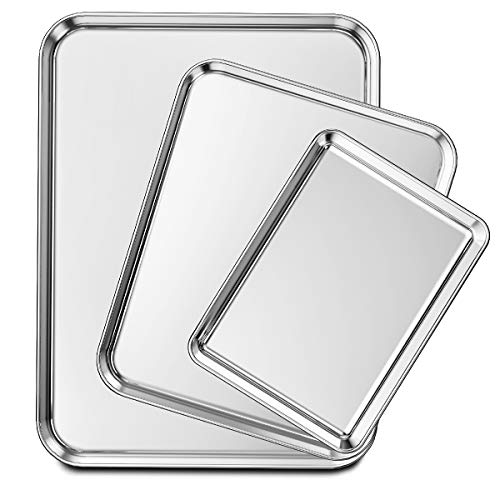
Most home ovens sabotage crust before the dough even hits the pan. I’ve tested hundreds of kitchen products over the years. The ones that last are never the flashiest — they are always the simplest, heaviest, and most boring-looking tools in the entire drawer. That truth hits you hardest when you slide a thin aluminum pan from the oven and find pale, soggy bottoms. Understanding the different baking sheet varieties is the first step toward controlling heat and building a crust worth eating.
Key Takeaways
- Heavy-gauge, uncoated aluminum and thick steel plates deliver the thermal mass needed for deep caramelization and crisp bottoms.
- Insulated, dark, and thin baking sheets trade heat control for speed or color, often leading to burnt edges and raw centers.
- Preheating a dense baking surface — like a cast iron griddle or steel plate — transforms a home oven into a professional workhorse that rivals restaurant crust.
Beginner’s View: The Four Common Baking Sheet Types You’ll See Everywhere
Walk into any kitchen store and you’ll be confronted by stacks of pans, each promising perfect results. Most of these fall into a handful of basic categories, defined by material, coating, and weight. I judge them not by how they look, but by thermal mass, hot-spot elimination, and the crust they produce.
Light-Colored Aluminum Sheets
These are the workhorses of home kitchens — inexpensive, dishwasher-safe, and responsive. The light finish reflects heat rather than absorbing it, which prevents cookies from over-browning on the bottom. That sounds great until you realize you’re intentionally limiting browning. For a high-heat searing purist, this is a compromise I rarely make. If you want pale, soft-baked goods, fine. But if you crave a deep golden crust or caramelized roasted vegetables, light aluminum fights you every step of the way.
Dark / Nonstick Coated Sheets
Dark surfaces, whether nonstick or chemically darkened, absorb heat aggressively. This can shave a minute or two off baking times and produce darker bottoms — but control falls off a cliff. The coating degrades under high temperatures (above 450°F), releasing fumes and losing nonstick properties. From a searing standpoint, these pans are a liability. They create hot spots, warp easily, and simply lack the thermal mass to hold temperature when a cold sheet of dough hits the surface.
Insulated Baking Sheets
An insulated sheet sandwiches a layer of air between two thin sheets of metal. The air pocket acts as a buffer, evening out heat but dramatically slowing energy transfer. Cookies on these pans come out uniformly pale with no contrast. Great for delicate meringues, useless for crust. I keep one around for specific low-temp tasks, but it never touches anything I want to sear or caramelize.
Aluminized Steel Sheets
Here we start getting serious. Aluminized steel — a steel core bonded with an aluminum-silicon coating — marries the toughness of steel with the corrosion resistance of aluminum. These sheets resist warping, distribute heat more evenly than plain aluminum, and can handle high temperatures without breaking down. The surface is still relatively light, but a heavier gauge (12- or 13-gauge) brings enough thermal mass to begin delivering a respectable crust. I call this the entry point for anyone who wants to move beyond disposable pans.
Many home bakers rely exclusively on one of these four types and wonder why their pizza never rivals the neighborhood trattoria. The gap between a sheet pan and a true crust-building tool becomes painfully obvious when you move beyond the beginner stage. For a deeper look at how we test these exact differences, see our tested baking and cookie sheet roundup.

Intermediate Tools: Understanding Thermal Mass and When a Pan Becomes a Cooking Surface
At this level, you stop treating a baking sheet as a mere container and start thinking of it as a cooking surface, much like a cast iron skillet. The physics is the same: more mass equals more stored heat energy. When a heavy pan encounters cold dough, its temperature drops only a few degrees instead of plunging, which means instant surface searing and rapid oven-spring.
The Role of Gauge and Metal Density
Sheet pans aren’t all constructed equally. Commercial kitchens favor 10- or 12-gauge aluminum or steel sheets that weigh several pounds each. That heft does two things: it resists warping outright, and it eliminates hot spots by conducting heat laterally across the entire surface. When a thin pan warps, the buckled areas lift away from the oven rack, receiving air instead of direct conduction. You end up with well-done spots and raw dough in the same batch.
A dense sheet also radiates heat back up into the food. That overhead and under-crust heat wraps the item, delivering a more even bake. Achieving a restaurant-quality crust on a cookie or bread relies on this 360-degree heat assault.
Preheating for Crust: The Cast Iron and Steel Advantage
The single biggest upgrade you can make is preheating your baking surface. Slide a room-temperature pan into a hot oven, and the pan never catches up until the last minutes of baking. But place a thick steel plate or cast iron griddle in the oven during preheat, let it soak for 30 to 45 minutes at 500°F, then launch your dough onto it — that is searing. The immediate conductive blast mimics a brick oven floor. You get leopard-spotted undercarriages, tall oven-spring, and shatteringly crisp edges.
If you’ve been struggling with soggy-bottomed artisan loaves or pale pizza, a different approach to your baking surface solves most of the problem. Techniques used for cookies often translate directly to breads, which we cover in our guide to baking cookies on a baking stone.
Advanced Heavy-Hitter Sheets: The Tools That Deliver a Restaurant-Quality Crust
Now we step into my territory. For me, a baking sheet must perform like a grill or a cast iron pan — high thermal mass, zero coating, and the ability to hold 500°F without flinching. The pans I reach for are rarely called “baking sheets,” but they serve the exact same purpose with more authority.
Solid Steel Baking Plates (Baking Steel)
A flat slab of raw steel, typically ¼ to ⅜ inch thick and weighing 15 to 25 pounds, this is the gold standard for home pizza and artisan bread. The extreme thermal conductivity and mass mean it transfers heat to dough almost three times faster than a ceramic stone. I preheat it at 550°F for an hour, then slide a thin-crust pizza directly onto the bare metal. In 4 minutes, I have a charred, chewy, bubbled crust that a wood-fired oven would envy.
This surface also excels for sheet-pan dinners, flatbreads, and even cookies if you can maneuver the heavy beast. Season it with flax oil and treat it like raw cast iron — it will develop a nearly nonstick seasoning over time.
Cast Iron Griddles and Flat Pans
A seasoned cast iron rectangular griddle (sometimes 10×20 inches) functions identically to a baking sheet but with monstrous heat retention. I use it for roasted chicken parts, smashed potatoes, and skillet cookies. The slow release of stored heat means food continues searing even after you pull it from the oven. No thin aluminum pan can match that afterburner effect.
Heavy-Duty Uncoated Aluminum Slabs
Some commercial bakeries use solid ¼-inch thick aluminum slabs — lighter than steel but still massive. They offer excellent conductivity without rust risk. For home use, these are rare but represent the ultimate aluminum pan: no coatings, no warp, just raw metal that sings at 450°F. I’ve found that using one changes how biscuits and scones rise, creating a crisp lower crust against a tender interior.
Stoneware and Cordierite Baking Slabs
While traditionally called pizza stones, these slabs serve as baking sheets for any dough-based food. Cordierite, specifically, handles thermal shock well and preheats evenly. They excel at managing moisture, wicking it away from dough for a crisp bottom. However, they lack the raw heat punch of steel. I keep a ½-inch cordierite slab for hearth breads that need a slower, gentler bake.
Each of these heavy-hitter surfaces demands a small learning curve — usually regarding preheat time and oven-spring behavior — but the payoff is undeniable. If you’re still relying on warped, coated sheets, you’re leaving crust quality on the table.
Choosing among these advanced tools often depends on what you bake most. For delicate pastries, even a thin aluminum sheet might suffice. But if, like me, you chase the darkest, most caramelized crust possible, you’ll soon see that the simplest, heaviest, and most boring-looking tool is the one that earns a permanent spot in your oven. Our sister guide on mini cake baking pans shows how similar principles of material and thickness apply when scaling down.
Managing High Heat Without Ruining Your Baking Sheet
If you’re going to push pans toward 500°F and beyond, you need to know how materials fail. Nonstick coatings break down starting around 450°F to 470°F, releasing potentially harmful fumes and permanently damaging the slick surface. Thin aluminum can oxidize, warp, or even melt if oven hot spots spike. Even heavy steel can be damaged if you thermally shock it — never plunge a hot slab into cold water. Let it cool gradually, then scrub with a sturdy brush and hot water.
Temperature limits: Uncoated aluminum generally safe to 500°F, but some alloy sheets weaken above that. Raw carbon steel and cast iron can handle 700°F+ without issue. Aluminized steel resists warping up to about 550°F before the coating may degrade. Always check the manufacturer’s max temperature.
For my sear-focused kitchen, I treat every baking surface like a skillet. I preheat, I season, I avoid soap (for raw steel and cast iron), and I periodically reseason with a thin layer of high-smoke-point oil baked on at 425°F. This maintenance not only prevents rust but also builds a nonstick polymerized surface that browns food better than any spray-on coating ever could.
Frequently Asked Questions
What are the main differences among baking sheet types when it comes to crust formation?
The primary distinction lies in thermal mass and surface emissivity. Light, thin aluminum reflects heat and loses temperature rapidly on contact, yielding soft, pale crusts. Dark-coated pans absorb heat and can over-brown, but poor mass causes unevenness. Heavy steel or cast iron holds so much energy that dough sears instantly, creating a deep, even crust. For serious browning, pick a sheet weighing at least 2 to 3 pounds.
Can a baking sheet ever replace a pizza stone or baking steel for crusty bread?
Only if it’s a heavy, dense sheet like a steel plate or thick cast iron griddle. Standard rimmed baking sheets cannot store enough heat to replicate the radiant burst of a preheated stone or steel. But preheating a massive uncoated sheet at 500°F for 45 minutes can come close, giving you a respectable rustic loaf with a well-set bottom crust.
Why do my cookies burn even when I use a light-colored aluminum sheet?
Light aluminum reduces absorption, but if your oven runs hot, the pan still radiates heat from its edges and conducts upward. Hot spots in the oven can localize heat, and thin pans warp, making some areas sit closer to the heating element. Upgrade to a heavier-gauge (13-gauge or thicker) aluminum or aluminized steel sheet, rotate halfway, and drop the oven temperature by 15°F to reduce edge charring.
Is it safe to use a dark nonstick baking sheet at 400°F for roasting vegetables?
Most nonstick coatings are rated safe up to 450°F under ideal conditions, but repeated cycles near that limit degrade the polymer surface. At 400°F you’re likely safe short-term, but I avoid nonstick for any high-heat roasting. An uncoated thick aluminum or cast iron pan delivers far better browning without chemical concerns, and lasts a lifetime.
How do I prevent warping in my baking sheets during high-heat cooking?
Choose a pan with a thick gauge — 13-gauge aluminum or 12-gauge steel at minimum. Avoid sudden temperature changes: never run a hot pan under cold water. For rimmed sheets, look for rolled edges or encapsulated rims that add structural rigidity. Preheating the pan gradually inside the oven, rather than placing a cold pan into a scorching hot cavity, also minimizes thermal shock and warp.