
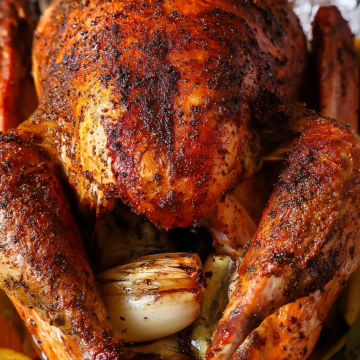
Roasted Cajun Turkey
A stress-free holiday centerpiece featuring a savory dry brine, rich herb-packed compound butter, and a magical cheesecloth trick for the juiciest turkey ever.
Ingredients
Turkey & Roasting Base
- 1 Fresh Turkey 12-15 lb. Plan for about 1 lb per person.
- 1 tbsp Kosher Salt per 5 lbs of turkey, for the overnight dry brine
- 2 Yellow Onions Chopped large. Sweet onions work too.
- 3 Large Carrots Roughly chopped for the pan and cavity.
- 4 Celery Stalks Roughly chopped.
- 2 Lemons Quartered.
- 16 oz Chicken or Turkey Stock Fresh stock is best.
- 4 oz Apple Juice or Cider
Compound Butter
- 2 lbs Unsalted Butter Must be at room temperature.
- 1 tbsp Fresh Rosemary Chopped very fine.
- 1 tbsp Fresh Oregano Chopped very fine.
- 1 tbsp Fresh Thyme Chopped very fine.
- 1 tbsp Fresh Sage Chopped very fine.
- 1 tbsp Cajun Seasoning Adjust slightly if you prefer less salt.
- 1 tbsp Smoked Paprika
- 1 tbsp Fresh Lemon Juice Squeezed fresh.
- 1 tsp Black Pepper Freshly cracked.
Instructions
- The Crucial Dry Brine: The night before roasting, remove the turkey from packaging and pat completely dry. Calculate your salt (1 tbsp Kosher salt per 5 lbs). Rub generously all over the turkey. Place uncovered in the refrigerator for at least 6 hours, preferably overnight. Do not rinse the next day.
- Crafting the Compound Butter: Take the turkey out of the fridge 2 hours before cooking. In a large bowl, mash the room-temperature butter with rosemary, oregano, thyme, sage, Cajun seasoning, smoked paprika, black pepper, and fresh lemon juice until perfectly blended.
- Buttering the Bird: Preheat oven to 400°F. Carefully separate the skin from the turkey breast with your fingers. Massage half of the compound butter directly onto the meat underneath the skin, and smear the rest over the outside (legs, wings, back).
- Stuffing and Prepping the Pan: Stuff half of the chopped carrots, onions, celery, and lemons into the main cavity. Tie the legs together with kitchen twine. Place the remaining vegetables and lemons into a roasting pan, pour the stock and apple juice over them, set a wire rack inside, and place the turkey on top.
- The Initial Hot Roast: Roast the turkey uncovered at 400°F for exactly 45 minutes to jumpstart skin crisping. Then, lower the oven temperature to 325°F.
- The Cheesecloth Trick and Injection: Melt the remaining half of the compound butter in a saucepan. Soak a clean cheesecloth in it. Use a meat injector to inject the melted butter deep into the breast, thighs, and legs (about 8 spots).
- Low and Slow Roasting: Drape the butter-soaked cheesecloth snugly over the entire turkey. Return to the 325°F oven and roast for another 2 to 3 hours. Check internal temperature every 45 minutes. Leave the cheesecloth on.
- The Finish Line: The turkey is done when the thickest part of the breast reaches 165°F (avoiding bones). Remove from oven, discard the cheesecloth, and let the turkey rest for at least 1 full hour before carving.
Notes
Note on Pre-Brined Birds: If you bought a turkey that is already pre-brined or pre-seasoned, skip the dry brining step entirely to avoid an overly salty bird. Make Ahead: You can prepare the compound butter up to 3 days in advance and keep it in the fridge. Bring it to full room temperature before applying.