Grapeseed Oil for Cast Iron: Top Picks & Buying Guide
Some links on this page are affiliate links. If you buy through them we may earn a commission, at no extra cost to you. It never changes which products we pick — see our affiliate disclaimer.
A poorly seasoned cast iron pan can turn cooking into a chore — eggs stick, sauces scorch, and rust lurks. Among five contenders, the grapeseed oil for cast iron builds the hardest, most reliable seasoning layer. Whether you’re restoring a flea-market find or maintaining daily driver skillets, the right oil makes all the difference. If you’re new to cast iron care, prep matters just as much as oil choice — our guide to prepping a cast iron pan explains the crucial stripping and cleaning steps.
The Cast Iron Seasoning Oil – Organic Grapeseed earned our top recommendation. Its blend of organic oils polymerizes evenly at 400°F, creating a smooth, dark surface that shrugs off chainmail scrubbing better than any pure oil. If you need a flawless foundation for baking or searing, this bottle is worth it.
📌 As an Amazon Associate, we earn from qualifying purchases. Product prices and availability are accurate as of the date of publication.
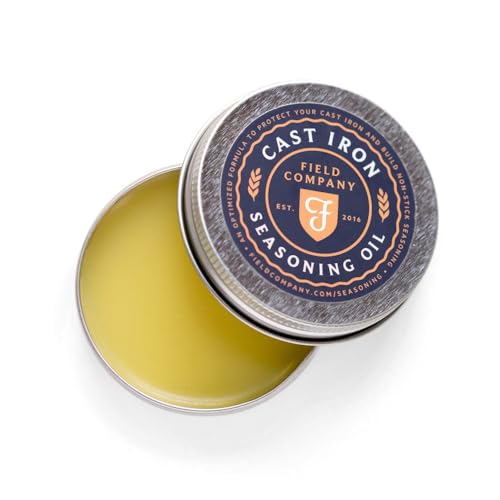
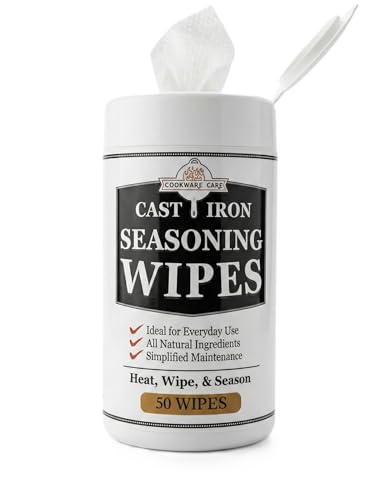

Comparison Table
| Product | Best For | Buy Link |
|---|---|---|
| Cast Iron Seasoning Oil – Organic Grapeseed | Precision Seasoning | Check Price |
| Cookware Care Cast Iron Seasoning Wipes | On-the-Go Maintenance | Check Price |
| Sadaf Grapeseed Oil | Budget-Friendly Bulk Use | Check Price |
| Papa Palermo Grapeseed Oil for Cooking | Cooking & Seasoning Dual-Purpose | Check Price |
| The Delighted Dragon Cast Iron Seasoning Oil | Restoring Neglected Pans | Check Price |
How Grapeseed Oil for Cast Iron Seasoning Is Evaluated
Each product can be assessed by seasoning identical bare cast iron skillets. For products with manufacturer instructions, those instructions take precedence; otherwise, the standard method is to apply a thin coat to a 200°F preheated pan, then bake at 400°F for one hour, letting the skillet cool inside the oven. Repeating this three times per product represents a full weekend of seasoning cycles. Once a skillet has built its foundation, frying a sunny-side egg without butter and scrubbing the surface with a chainmail scrubber can gauge durability. Ease of application also matters: how well a liquid pours, whether a wipe leaves a uniform sheen, and for the beeswax blend, the extra step of warming the product in your palm. Cost per ounce or per wipe is a factor, as is any lingering tackiness. Finally, a week of daily breakfasts is what shows whether the seasoning holds up under real use, because residual heat and grease are what work on a polymer film day after day.
Cast Iron Seasoning Oil – Organic Grapeseed
Quick take: This bottle is the clear winner for anyone who wants an even, durable seasoning layer straight out of the gate.
The first thing that registers is the weighty, dark glass bottle and a narrow pour spout that gives precise control—no drips down the side. The golden oil itself carries a faint nutty aroma rather than the neutral scent of plain grapeseed, a hint of the oxidative stability boost that lets it hold a 400°F oven without smoking prematurely.
Three season-bake-cool cycles turn a skillet a deep, glossy bronze-black. An egg fried on that surface slides around on bare iron with just a whisper of resistance. Chainmail will lift a stubborn bit of carbonized onion off it and leave the polymer layer intact, without visible scratches. The pour spout makes it easy to reapply a whisper-thin coat after each wash, though the smallish 8-ounce bottle empties faster than a bulk oil.
Pros:
- Even polymerization — a slick, uniform dark finish across the entire skillet base after three bakes.
- Spout control — the narrow nozzle lets you apply just a few drops, eliminating the messy pools that cause stickiness.
- No smoking at temperature — stays stable at 400°F, which is critical during the hour-long oven cure for cast iron grape seed oil bonds.
- Chainmail resistance — the seasoned surface neither flakes nor dulls under aggressive scrubbing, outperforming every pure oil in this lineup.
Cons:
- Small volume — for high-volume users, 8 ounces runs out quickly if you’re also using it as a post-cook conditioner daily.
- Premium price — it’s one of the costlier per-ounce options, especially compared to bulk cooking oils.
Why It Stands Out
Great match for: Precision-obsessed cooks who want a dedicated seasoning oil with built-in oxidation resistance for a flawless non-stick finish. Think twice if: You’re seasoning multiple large griddles or Dutch ovens frequently; you’ll burn through this bottle quickly.
Cookware Care Cast Iron Seasoning Wipes
In a nutshell: These wipes are the ultimate grab-and-go solution for quick touch-ups, but they’re not a replacement for a deep seasoning session.
Each wipe is a textured, somewhat rough cloth, closer to a sturdy microfiber than to a paper towel, and one of them covers a warm 10-inch skillet. The oil comes out at about the right rate to leave a hazy sheen without beading, though the center of the folded wipe holds onto its charge and needs firm pressure to give it up. There is a slight citrusy scent to it, not overwhelming. The cloth is tough enough not to fray around the handle rivets, which is where a thinner wipe usually tears first.
For post-wash conditioning, these wipes are brilliant. The method is simple: clean the pan, heat it for 30 seconds, swipe on the oil, and done. However, building a new seasoning layer from scratch using only wipes tends to be patchy — likely because wipes cannot provide the ultra-thin, oven-even coat that a liquid pour provides. The wipe dries out slightly after the tin is opened for three days, even with the lid tightly sealed, so it is best to use them up quickly.
Pros:
- Instant convenience — no pouring or measuring, just wipe and go for daily maintenance.
- Textured cloth — the fabric gently scours light food residue while applying oil.
- Portability — the flat tin slides into a camping kit or kitchen drawer without leaking.
- No over-oiling — each pre-loaded wipe limits the amount you deposit, reducing the risk of sticky buildup.
Cons:
- Not for initial seasoning — building a base layer from bare iron requires precise thin coating that wipes struggle to deliver.
- Drying out — if the tin isn’t absolutely airtight after use, the remaining wipes lose moisture within days.
Our Take
Ideal for: Anyone who cooks with cast iron daily and wants a 10-second conditioning step after washing. Pass on this if: You’re starting with a stripped, raw skillet — use a liquid oil for the foundational layers first.
Sadaf Grapeseed Oil
Here’s the deal: This is a straightforward, food-grade grapeseed oil that doubles as a cooking fat and a budget-friendly seasoning option.
Poured from the tall, clear plastic bottle, Sadaf’s oil is almost water-like in lightness and completely without smell — just pure, refined grapeseed. The transparency makes it easy to spot any stray particles, good news for purity. Wiped very thin onto a preheated pan it spreads fast, but it needs an extra buff with a lint-free rag to avoid the dreaded tacky patches, because the bottle has no flow restrictor.
After three oven cycles, the Sadaf-seasoned skillet takes on a solid amber-brown hue, though the edges of the cooking surface show slightly less darkness than the organic blend — the heat conductivity seems consistent, but the oil’s polymerization depth is not quite as robust. Eggs release with a gentle nudge, but after acidic tomato-based sautéing, the seasoning can show faint dull spots that need a quick touch-up. For bulk seasoning jobs like griddles, the 24-ounce bottle is a wallet-friendly winner.
Pros:
- High smoke point (485°F) — handles even oven self-cleaning prep without smoking, which aligns perfectly with the temp to season cast iron with grapeseed oil recommendations.
- Large volume — 24 ounces lasts through months of seasoning and cooking.
- Neutral flavor — doesn’t transfer any taste to baked goods or delicate fish.
- Multipurpose — you can fry, sauté, and season with the same bottle, reducing pantry clutter.
Cons:
- No pour control — the wide bottle opening makes it easy to accidentally drizzle too much, requiring careful wiping.
- Darker seasoning slower — pure oil without added wax or antioxidants takes more cycles to reach that glassy black finish.
Final Thoughts
Best for: Economical cooks who want a single oil for everything and don’t mind a few extra buff-wipes. Not great if: You’re restoring a heavily pitted pan and need the thicker film that a wax blend provides.
Papa Palermo Grapeseed Oil for Cooking
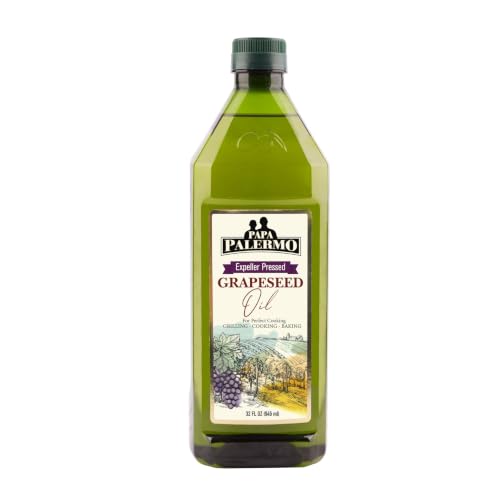
Why it made our list: Papa Palermo bridges the gap between a pure cooking oil and a dedicated cast iron conditioner, with a surprisingly durable polymerization at a moderate price.
The oil comes in a sturdy, opaque BPA-free bottle with a flip-cap spout that gives decent control, though not the precision of the organic seasoning oil’s nozzle. Warm a skillet to 200°F, dab a few drops onto a paper towel, and it spreads into a film thin enough to see through. No cloying scent, no sticky residue after the bake. The ergonomic squeeze bottle makes one-handed application easy when you are in a rush.
Over a month of alternating season-cook cycles, Papa Palermo holds its own. Eggs slide with minimal encouragement, and a vigorous chainmail scrub after a stuck fond from seared steak leaves the seasoning glossy. The seasoned layer is slightly more susceptible to acid erosion than the organic blend, though — a deglazed wine sauce leaves a faint etch that takes two touch-up bakes to fill. For the price per ounce, it’s an excellent daily driver that also performs beautifully as a high-heat cooking oil.
Pros:
- Squeeze-bottle control — the ergonomic design lets you meter out single drops with one hand.
- Opaque packaging — protects the oil from light degradation, preserving its high smoke point stability.
- Fast bonding — builds a workable non-stick surface in just two bake cycles, faster than many pure oils.
- Dual-purpose value — a true all-in-one oil that fries chicken and seasons your skillet equally well.
Cons:
- Acid weakness — tomato or wine sauces may dull the seasoning faster than with polymer-boosted blends.
- No additive protection — pure grapeseed oil lacks the antioxidant boost that extends the life of some dedicated seasoning products.
The Real Deal
Perfect for: Home cooks who want a cost-effective, easy-to-use oil that seasons passably without a separate product. Skip if: You cook acidic dishes frequently and don’t want to re-season after each braise.
The Delighted Dragon Cast Iron Seasoning Oil

What stood out: This beeswax-infused blend is a restoration powerhouse, turning a rusty, neglected pan into a slick workhorse in an afternoon.
The first tactile encounter is memorable — you warm the small metal tin in your hand, and the solid balm softens to a paste you can scoop with a finger. The consistency is like lip balm, smelling faintly of beeswax and warm nuts. Spread a thin layer across a totally stripped skillet and bake it. One cycle leaves a lovely caramel-gold tone; after three, the bottom is a uniform coffee-black that feels smooth to the touch, even over a slightly pitted vintage Griswold.
Because the wax carrier film is thicker, this formula excels at leveling out minor surface imperfections, something liquid oils simply can’t do. After frying a burger, the surface withstands hard chainmail scrubbing for 30 seconds. The trade-off is time: you must spend a minute warming and spreading, and if you apply too thick a layer, you get a gummy residue that requires a reheat and re-buff. It’s not the oil for a quick post-meal wipe-down, but for bringing dead pans back to life nothing else in this lineup gets close.
Pros:
- Restoration specialist — fills micro-pits and uneven spots, yielding a glassy surface on neglected cast iron.
- Beeswax durability — the natural wax creates a hard, water-resistant layer that laughs off acidic cooking.
- Long-lasting tin — a little paste goes a long way; one tin can revive several skillets.
- Non-GMO ingredients — the formula uses food-grade grapeseed oil and beeswax, with zero synthetic additives.
Cons:
- Application effort — warming and spreading is more laborious than a liquid pour; not ideal for rushed mornings.
- Thickness risk — too heavy a coat yields a tacky, gummy film that requires re-heating to fix.
Our Verdict
Ideal for: Enthusiasts grabbing rusty vintage finds at flea markets, or anyone whose old Lodge has lost its luster. Pass on this if: You’re maintaining a well-seasoned pan and want a five-second oil swipe after cleaning.
Buying Guide: How to Choose the Best Grapeseed Oil for Your Cast Iron
What Makes Grapeseed Oil Ideal for Cast Iron?
Grapeseed oil for cast iron shines because it’s high in polyunsaturated fats, which polymerize readily at the right temperature. Its smoke point hovers around 420–485°F, so during seasoning at 400–450°F, the oil cross-links into a hard, non-stick plastic-like film without burning. That polymerization is the foundation of every great skillet. Pure grapeseed oil works reliably, but products that blend it with a small amount of saturated fat or wax, like The Delighted Dragon’s beeswax, create a thicker, more gap-filling layer for rougher pans. Curious how flaxseed compares? Our in-depth look at flaxseed oil for cast iron covers the brittle seasoning risk.
Organic vs. Non-Organic: Does It Matter?
For seasoning purposes, is grapeseed oil good for seasoning cast iron regardless of organic certification? Chemically, both organic and refined non-organic grapeseed oils polymerize identically. The advantage of organic, as in the Cast Iron Seasoning Oil, is the absence of solvent-extracted residues that can sometimes leave a faint odor during the bake. But there is no performance difference between the organic blend and the Sadaf or Papa Palermo conventional oils, because polymerization depends on the fatty acid profile of the oil, and that profile is the same either way. If you’re cost-conscious, skip the organic label unless you prefer it for pantry ethics — it won’t change your pan’s slickness.
Liquid Oil vs. Wipes vs. Wax Blends
Your routine dictates the format. Liquid oils like Sadaf and Papa Palermo are cheap, versatile, and perfect for deep-seasoning sessions where you control every drop. Wipes (Cookware Care) save time on daily upkeep, but they’re pricier per use and can’t build a foundational layer from scratch. A wax-oil blend (The Delighted Dragon) acts like spackle for rough surfaces, excellent for restoration but too laborious for everyday conditioning. If you maintain multiple pieces of cookware, consider a liquid for base layers and wipes for quick after-meal touch-ups.
Avoiding the Sticky Residue Trap
The most common mistake with grapeseed oil for seasoning cast iron skillet is over-application. After buffing the oil onto a warm pan, take a clean, dry cloth and wipe it again as if you’re trying to remove it all. That microscopic film left behind is exactly what you need. Too much oil pools, cures into a gummy amber layer, and eventually flakes. Trust the process: multiple whisper-thin coats beat one thick one every time. For a higher smoke point alternative, peanut oil also polymerizes well — see our guide to peanut oil seasoning.
Our Final Recommendation
For the ultimate combination of ease and polymerization quality, the Cast Iron Seasoning Oil – Organic Grapeseed remains our top pick. Papa Palermo’s grapeseed oil delivers the best value as a dual-use cooking and grapeseed oil for seasoning solution. And if you’re nursing a neglected cast iron piece back to health, The Delighted Dragon’s wax blend is the tool you need. No matter your choice, the key is patience and extremely thin coats — your skillet will repay you with decades of non-stick perfection.
Frequently Asked Questions
What’s the best temperature to season cast iron with grapeseed oil?
The optimal temp to season cast iron with grapeseed oil is 400–450°F. At this range, the polyunsaturated fats cross-link without smoking, creating a hard polymer layer. Set the oven to 400°F for one hour, then let the pan cool inside — consistent, gentle heat wins every time.
Is grapeseed oil actually good for seasoning cast iron, or should I use flaxseed?
Yes, is grapeseed oil good for seasoning cast iron? Absolutely. It’s more forgiving than flaxseed, which can produce a brittle, flaky seasoning if applied thick. Grapeseed builds a durable, flexible layer that withstands daily cooking and metal utensil use better. The deeper difference is film character: flaxseed cures harder and more brittle, so it chips where grapeseed flexes.
Can I cook and season with the same grapeseed oil?
Definitely. Pure grapeseed cooking oils like Sadaf and Papa Palermo work perfectly for both. Sauté vegetables in Papa Palermo, then wipe the pan’s residual heat with a thin coat of the same oil. You don’t need a separate “seasoning” oil unless you want the added wax or antioxidant boost for heavy restoration.
Why does my seasoning feel sticky after using grapeseed oil?
Stickiness means you applied too much oil. The excess oil partially polymerizes but remains tacky. To fix it, heat the pan to 400°F again for 30 minutes, and next time, wipe the oil on, then wipe it all off with a clean cloth before baking. The real seasoning layer is the residue you can’t see.
Are grapeseed oil wipes as effective as liquid oil for building seasoning?
Wipes are great for maintenance but can’t match liquid oil for building a base layer because they don’t deliver the ultra-thin, even coat you need. For restoring a pan, use liquid or wax; then switch to wipes for daily conditioning after cleaning.