


Peanut oil polymerizes into a hard, slick coating that rivals traditional flaxseed treatments. Through years of daily cooking and product testing, I have learned that most kitchen failures trace back to rushing setup. The extra 30 seconds to check your tools before you start saves hours of cleanup or genuine regret afterward. The same principle applies to seasoning cast iron — haste leads to sticky, uneven layers.
Using peanut oil for seasoning cast iron works because of its high smoke point and balanced fatty acid profile. It creates a durable, non-toxic finish that improves with each use. Here is exactly how to do it right.
Key Takeaways
- Peanut oil has a smoke point of 450°F (232°C), making it ideal for seasoning without burning off prematurely.
- Apply a microscopically thin layer — excess oil causes sticky, gummy patches that ruin the finish.
- Bake at 450°F for one hour, then let cool inside the oven to complete polymerization.
Why Peanut Oil Works for Seasoning Cast Iron
Seasoning is a chemical process called polymerization. Heat breaks down oil molecules, which then bond to the iron surface and to each other, forming a plastic-like film. Peanut oil contains a high percentage of unsaturated fats — mostly oleic and linoleic acids — which polymerize readily at high temperatures.
The smoke point matters because you need to heat the oil past its smoking temperature to trigger polymerization. Peanut oil smokes at 450°F, which is hot enough to drive the reaction but low enough to avoid burning the oil into a brittle, flaky layer. Oils with lower smoke points, like butter or olive oil, burn before they polymerize, leaving a sticky residue.
I have tested dozens of oils on identical cast iron skillets in my kitchen. Peanut oil consistently produces a hard, dark brown finish that withstands metal spatulas and acidic foods better than vegetable shortening or canola oil. The seasoning bonds tightly to the iron and does not chip off during heavy use.
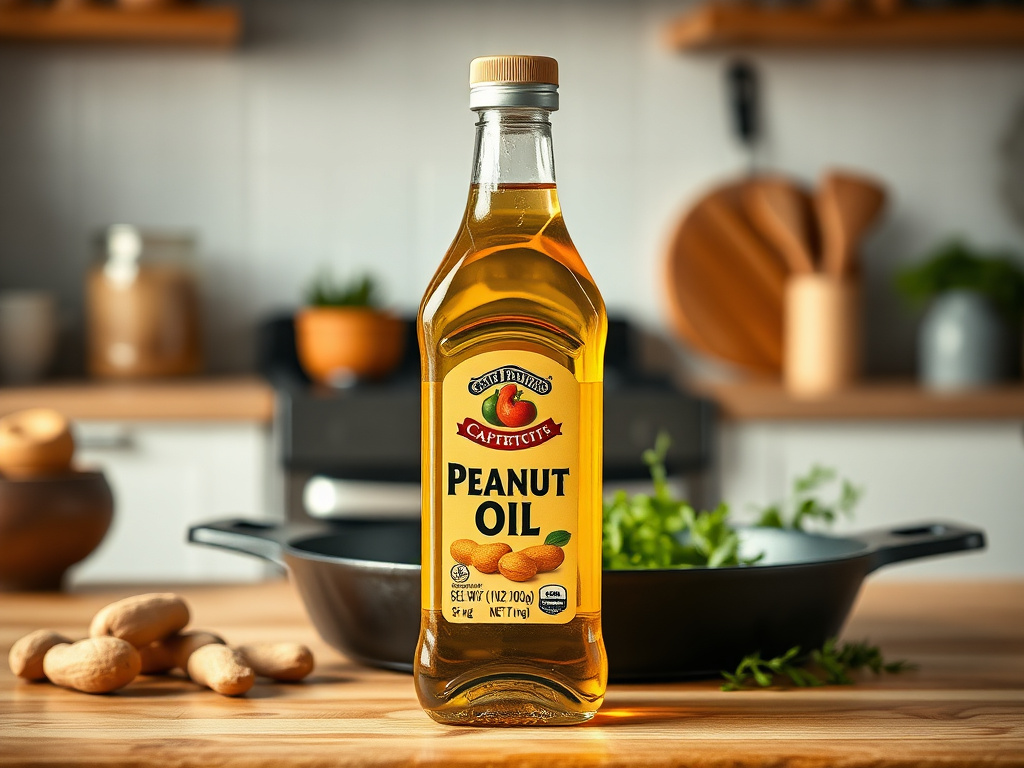
How to Season Cast Iron with Peanut Oil
This process works for new pans straight out of the box or for re-seasoning old pans that have lost their non-stick surface. Follow each step carefully — shortcuts create problems that take hours to fix later.
Step 1: Clean and Dry the Pan
Wash the cast iron with hot water and a stiff brush. Use a small amount of mild dish soap if needed — modern soaps do not damage seasoning. Dry thoroughly with a lint-free towel, then place the pan on a burner over medium heat for two minutes to evaporate any remaining moisture. Rust forms fast on wet iron.
If you are re-seasoning an old pan, remove all existing seasoning first. Scrub with steel wool and a paste of coarse salt and water, or use a self-cleaning oven cycle. Rinse and dry completely.
Step 2: Apply a Thin Layer of Peanut Oil
Pour a teaspoon of peanut oil onto the pan. Rub it over the entire surface — inside, outside, handle, and bottom — using a paper towel or lint-free cloth. Then take a clean paper towel and wipe off as much oil as you can. The pan should look almost dry, with only a faint sheen. Excess oil forms droplets that turn into sticky, uneven spots during baking.
I use refined peanut oil for seasoning because it has a neutral flavor and a consistent smoke point. Unrefined or cold-pressed peanut oil contains particles that burn at lower temperatures and produce off-flavors. Stick with standard grocery store peanut oil for best results.
Step 3: Bake at 450°F for One Hour
Preheat your oven to 450°F. Place the pan upside down on the middle rack with foil on the lower rack. Bake for exactly one hour. Do not open the oven door during baking — temperature fluctuations interrupt polymerization and create weak spots in the seasoning layer.
After one hour, turn off the oven and let the pan cool completely inside. This slow cooling phase is critical. Removing the pan while it is still hot shocks the seasoning and can cause micro-cracks that lead to flaking later. I leave mine in the oven overnight.
Step 4: Repeat for a Stronger Layer
One coat of peanut oil creates a functional but thin seasoning. For a truly non-stick surface, repeat the oil application and baking cycle three to four times. Each layer builds on the previous one, filling microscopic pores in the iron and creating a smooth, glossy finish.
I season new pans five times before first use. The extra effort pays off immediately — eggs slide around without butter, and pancakes release cleanly on the first flip. If you are in a hurry, three coats is the minimum for decent performance.
Maintaining the Seasoning After Cooking
Proper maintenance keeps the seasoning strong and prevents the need for frequent re-seasoning. After each use, wash the pan with hot water and a brush. Dry it on the stove over medium heat for two minutes. While the pan is still warm, rub a tiny amount of peanut oil over the cooking surface with a paper towel. This adds a thin maintenance layer that reinforces the existing seasoning.
I keep a small squeeze bottle of peanut oil next to my stove for this purpose. It takes ten seconds and makes a noticeable difference in how the pan performs over months of use. Avoid using soap on the pan every time — a hot water rinse and a dry scrub is usually enough. Reserve soap for when the pan has cooked something sticky or greasy.
Comparing Peanut Oil to Other Seasoning Oils
Peanut oil sits in the middle of the smoke point spectrum. It is hotter than vegetable oil (400°F) and canola oil (400°F) but cooler than avocado oil (520°F) and grapeseed oil (490°F). In practice, the difference between 450°F and 490°F matters less than the oil’s fatty acid composition. Peanut oil contains more linoleic acid than avocado oil, which polymerizes into a harder film.
Flaxseed oil has the highest linoleic acid content of any common cooking oil, which is why it creates the hardest seasoning. But flaxseed oil is expensive, has a short shelf life, and can turn rancid on the pan if not used frequently. Peanut oil offers 90% of the hardness at half the cost and with much better stability. For most home cooks, peanut oil is the practical choice.
If you are looking for the right pan to start with, our The Best GE Cast Iron Griddle of 2026 roundup has our top tested picks. A well-made pan makes the seasoning process easier and the results more consistent.
Troubleshooting Common Seasoning Problems
Sticky or Gummy Surface
Stickiness means you applied too much oil. The excess did not polymerize fully and remains as a tacky residue. Fix it by scrubbing the pan with hot water and a stiff brush, then re-seasoning with a much thinner oil layer. Remember: wipe off as much oil as you put on.
Flaking or Peeling Seasoning
Flaking happens when the seasoning layer is too thick or was applied over a dirty surface. The polymerized film cannot bond to grease or dust particles, so it lifts off in sheets. Strip the pan completely with steel wool and start fresh with a clean, oil-free surface.
Uneven Color or Patchy Finish
Uneven color is usually caused by temperature hot spots in the oven or by oil pooling in low spots. Rotate the pan halfway through the baking cycle to distribute heat evenly. Ensure the pan is level on the rack — a tilted pan causes oil to run to one side and create thick patches.
For more details on fixing seasoning issues, read How to Fix Carbon Build Up on Cast Iron. Carbon buildup is a different problem but often gets confused with seasoning failures.
Peanut Oil Safety and Storage
Refined peanut oil has a shelf life of about two years when stored in a cool, dark pantry. Heat and light accelerate oxidation, which turns the oil rancid. Rancid oil smells like crayons or old nuts and should be discarded — it will not polymerize properly and can impart off-flavors to food.
Peanut allergy is a serious concern. If anyone in your household has a peanut allergy, do not use peanut oil for seasoning. The oil can linger on the pan even after cooking, and trace amounts may transfer to food. Use grapeseed or canola oil instead for a similar seasoning result.
I store my peanut oil in a dark glass bottle away from the stove. The heat from the oven and burners accelerates spoilage, so keep the bottle in a cabinet or pantry. If you buy in bulk, transfer smaller amounts to a daily-use bottle and keep the rest sealed in the pantry.
Frequently Asked Questions
Can I use peanut oil to season cast iron if I have a peanut allergy in the house?
No. Even refined peanut oil can contain trace protein residues that trigger allergic reactions. The seasoning layer may trap these proteins, and they can leach into food during cooking. Use grapeseed, canola, or vegetable oil instead — they polymerize similarly and are safe for peanut-allergic households.
How many coats of peanut oil do I need for a non-stick surface?
Three coats is the minimum for decent non-stick performance. Five coats produces a mirror-smooth surface where eggs and fish release cleanly. Each coat must be baked at 450°F for one hour and cooled completely before the next application. Rushing the process creates a weak, patchy seasoning.
Does peanut oil make cast iron seasoning smell bad?
No. Refined peanut oil has a very mild, neutral odor during baking. Some people detect a faint nutty scent, but it dissipates quickly. Unrefined peanut oil has a stronger smell and can leave a lingering aroma in the kitchen. Stick with refined oil for odor-free seasoning.
Can I season a red cast iron frying pan with peanut oil?
Yes. The process is identical regardless of the pan’s color. The red enamel coating on some pans does not affect the seasoning chemistry. For guidance on maintaining the enamel and seasoning the cooking surface, see The Complete Guide to a Red Cast Iron Frying Pan.