


A Show-Stopping German Classic with Honeyed Almond Crunch and Dreamy Custard Filling
Here’s the humanized version of the article:
| Prep Time | Cook Time | Total Time | Servings |
| 40 minutes | 60 minutes | 2 hrs 30 min | 12 slices |
| Difficulty | Best Served With |
| Intermediate – worth every step! | Coffee, tea, or warm milk |
Why I Fell Head Over Heels for Bee Sting Cake
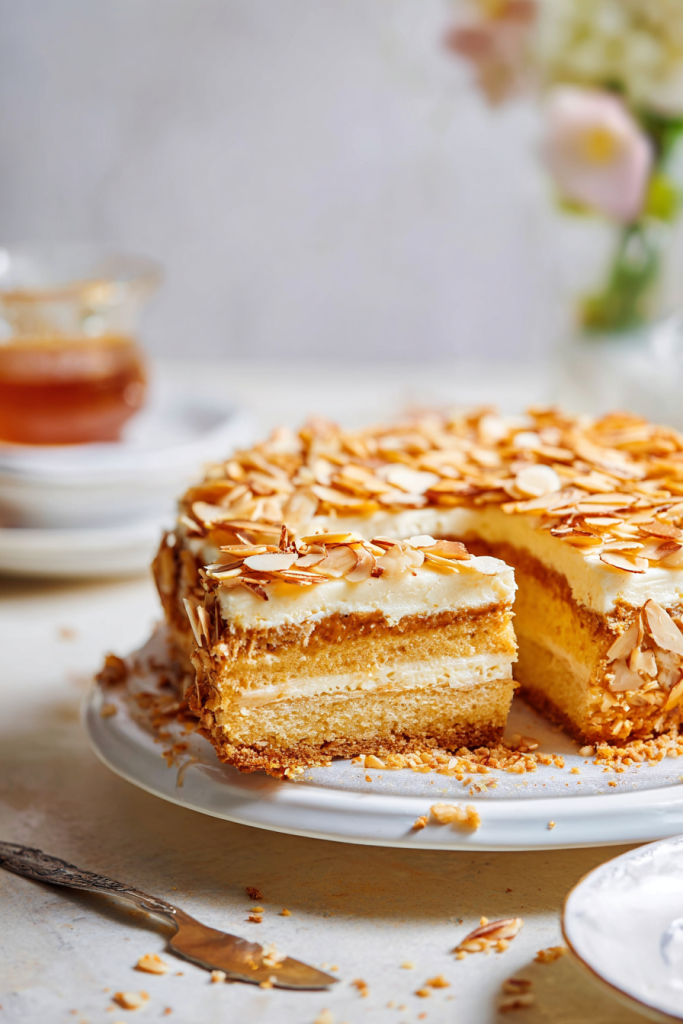
I remember the first time I tasted Bienenstich. I was standing at a tiny bakery counter with nowhere to sit and coffee that had gone cold. But that cake? That made everything else irrelevant.
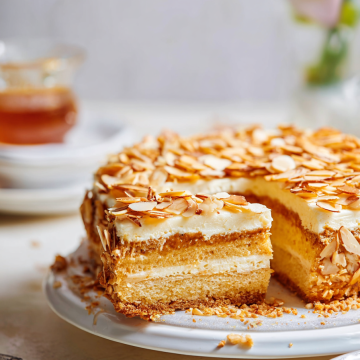
One bite and I was done. Buttery almond sponge. Silky vanilla custard. A crunchy honey-glazed almond crown on top. I went home and immediately started figuring out how to make it myself.
Bee Sting Cake, or Bienenstich in German, has a fun backstory. One legend says a baker got stung by a bee that was drawn to the honey topping he had just prepared. Another story goes back to the 15th century, when German villagers drove away raiders by dropping beehives on them, then celebrated with this very cake. Whatever the true origin, the name stuck. And so will the memory of your first slice.
Here is what makes this cake special. It has three distinct components working together:
- The almond sponge: Moist, fragrant, and made with ground almonds for extra richness.
- The honey almond topping: A caramelized, bubbling glaze that bakes directly onto the cake.
- The custard cream filling: A slow-cooked, old-fashioned custard beaten into a thick, buttery cream.
Three-component cakes can sound intimidating. They really are not. Each part is simple on its own. The trick is working through them in the right order and taking your time. Read through the full recipe before you start baking. That one step saves most people from confusion later on.
Follow this through and you will bring one of the most impressive cakes you have ever made to your table. I promise.
What You Will Need
| Ingredient | Quantity | Notes |
| FOR THE ALMOND SPONGE | ||
| Soft unsalted butter | 125g | Room temperature |
| Caster sugar | 125g | Fine-grained for even mixing |
| Almond extract | 1 tsp | Pure extract preferred |
| Large eggs | 4 | Room temperature |
| Milk | 125ml | Full-fat for richness |
| Self-raising flour | 200g | Sifted |
| Baking powder | 1/2 tsp | Adds extra lift |
| Fine sea salt | 1/2 tsp | Balances sweetness |
| Ground almonds | 150g | Adds moisture and nutty depth |
| FOR THE HONEY ALMOND TOPPING | ||
| Unsalted butter | 55g | |
| Caster sugar | 55g | |
| Clear honey | 75g | Good-quality runny honey |
| Double cream | 2 tbsp | |
| Flaked almonds | 100g | |
| FOR THE CUSTARD FILLING | ||
| Custard powder (not instant) | 25g | Traditional variety only |
| Milk | 150ml | |
| Caster sugar | 100g | |
| Soft unsalted butter | 100g | Room temperature |
| Double cream or milk | 2 tbsp | Cream gives richer result |
| Vanilla bean paste or extract | 1 tsp | Bean paste gives best flavour |
Pro Tip: Bring your butter and eggs to room temperature at least 30 minutes before you start. Cold butter will not cream properly, and cold eggs can cause the batter to curdle.
A Few Ingredient Notes
Ground almonds are the secret weapon in this sponge. They replace some of the flour, giving the cake a moist, slightly dense crumb that holds up beautifully under the weight of the custard filling. Do not skip them.
Custard powder (the traditional, non-instant kind) is essential for the filling. It thickens slowly over low heat, giving you a proper, glossy, set custard with real depth of flavour. Instant varieties do not cook out the same way and tend to leave a starchy aftertaste.
Clear honey is best for the topping. A runny, light-coloured honey lets the natural almond flavour come through. Darker or strongly-flavoured honeys can overpower the other elements.
Almond extract adds a concentrated, fragrant note to the sponge. A little goes a long way. One teaspoon is exactly right here.
Step-by-Step: How to Make Your Bee Sting Cake
I always break this recipe into three clear stages. That way it never feels overwhelming. You can even make the custard filling the day before. It keeps well in the fridge and is actually easier to work with once fully chilled.
Stage One: The Almond Sponge
- Preheat your oven to 180 degrees C (fan 160 degrees C, gas mark 4). Grease a 20cm springform tin and line both the base and sides with baking paper.
- Add all of the sponge ingredients into one large mixing bowl: soft butter, caster sugar, almond extract, eggs, milk, self-raising flour, baking powder, fine sea salt, and ground almonds. Using an electric hand mixer or stand mixer, beat everything together on medium speed for 2 to 3 minutes until the batter is smooth and creamy.
- Spoon the batter into your prepared tin and smooth it to the edges with a spatula. Bake for 50 to 55 minutes, until the cake is almost completely set in the centre. A skewer inserted into the middle should come out with just a few moist crumbs. Not wet batter. Just crumbs.
Pro Tip: Do not open the oven door during the first 45 minutes of baking. The almond sponge needs stable heat to rise evenly without sinking in the centre.
Stage Two: The Honey Almond Topping
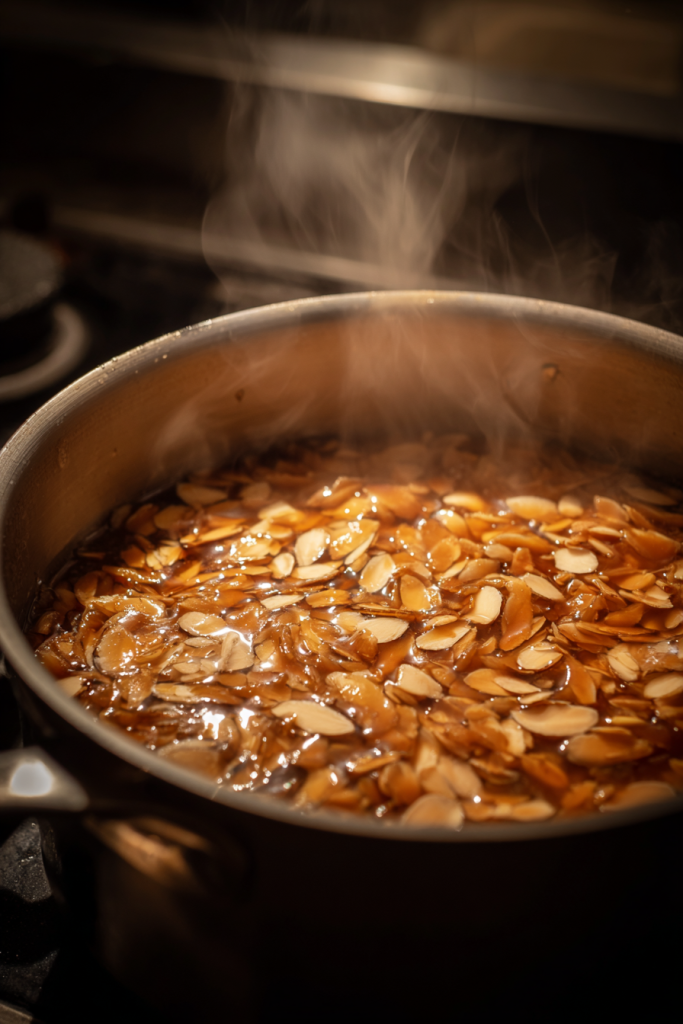
- While the sponge bakes, get the topping ready. You want it finished the moment the cake comes out of the oven. In a small saucepan, combine the butter, caster sugar, honey, and double cream. Add a pinch of salt. Heat over a medium-low flame, stirring gently, until the sugar dissolves completely.
- Raise the heat slightly and let the mixture bubble for about 4 minutes. Watch it closely. You are looking for a colour shift from pale yellow to a soft, warm beige. That is your caramel developing. Take the pan off the heat and stir in the flaked almonds until each one is coated.
- The moment the cake passes the skewer test, carefully pour the almond topping evenly over the surface. Work fast. The topping will start to firm as it cools.
- Slide the cake back into the oven for a further 7 to 8 minutes, until the almond topping is golden and the caramel around the nuts is bubbling. Remove from the oven and leave the cake in the tin for at least 15 minutes before unmoulding. Then cool completely on a wire rack before you cut or fill it.
Pro Tip: If the almond topping starts to set before you can spread it, return the pan to a very low heat and stir gently for 30 seconds to loosen it again. Have the cake out of the oven and within arm’s reach before you even start the topping. Speed is everything here.
Stage Three: The Custard Cream Filling
- Measure the custard powder into a small saucepan. Gradually whisk in the 150ml of milk until completely smooth with no lumps. Add half the caster sugar, which is 50g, to the pan.
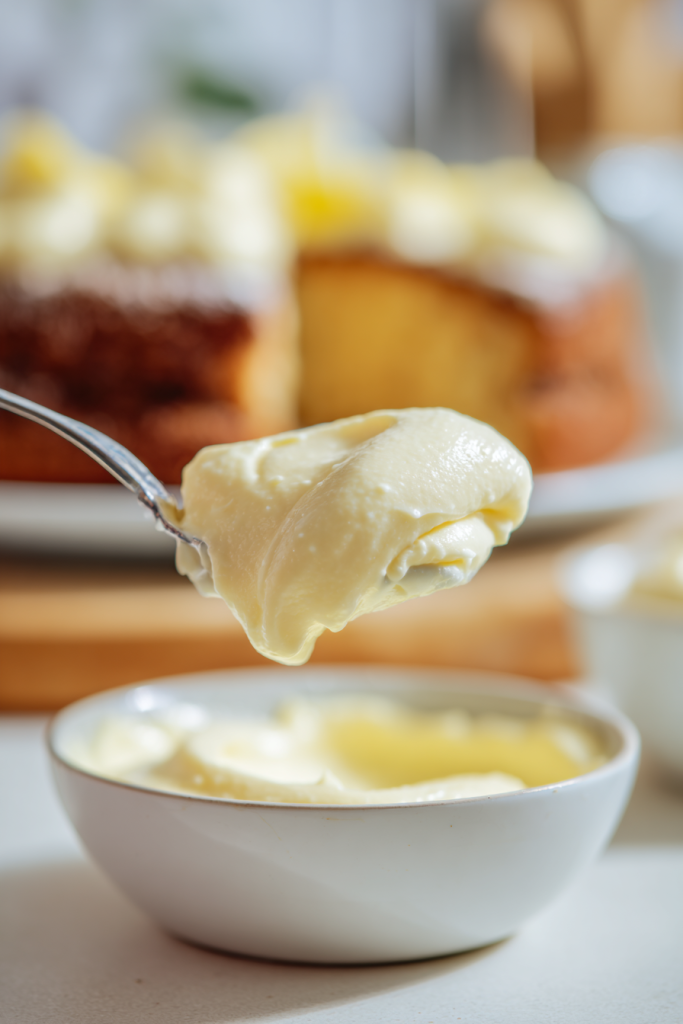
- Place the pan over a low heat and stir continuously as the mixture slowly comes to the boil. This custard thickens fast and can catch on the bottom if you stop stirring. Cook gently for 3 full minutes once it starts to bubble, stirring all the while. The custard should be very thick and glossy when done.
- Pour the hot custard into a bowl and press a sheet of cling film directly onto the surface. This stops a skin forming. Leave it to cool completely to room temperature. If making ahead, refrigerate once it has cooled.
- In a separate bowl, beat the soft butter with the remaining 50g of caster sugar until very light and creamy. This takes about 3 to 4 minutes with an electric mixer. Add the double cream (or milk) and the vanilla bean paste or extract, then mix to combine.
- Add the cooled custard to the butter mixture in two or three additions, beating well after each one. The filling should be smooth, silky, and hold its shape. If it looks a little curdled, keep beating. It will come together.
Pro Tip: The custard must be at room temperature before you add it to the beaten butter. Even slightly warm custard will melt the butter and the filling will turn greasy and loose.
Assembling the Cake
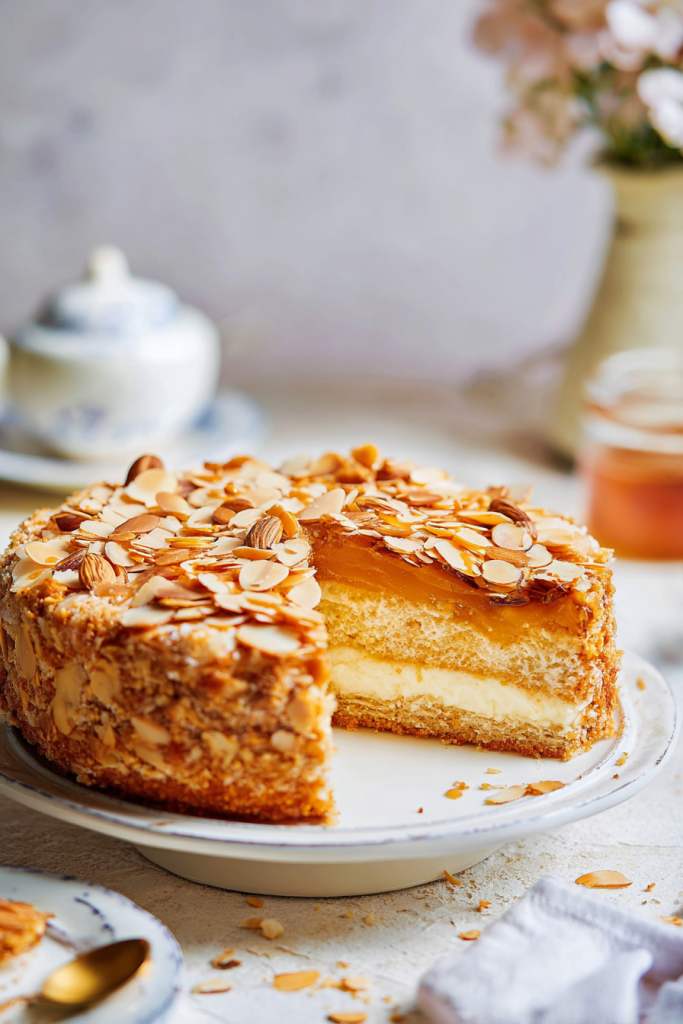
- Place the fully cooled cake on a stable board or serving plate. Using a long, sharp serrated knife, slice carefully through the middle horizontally to create two even layers.
- Here is the technique that makes clean slicing possible: cut the almond-topped half into individual serving wedges before assembling the cake. Once the caramel fully hardens, pressing a knife through it at the table can crush the cream underneath. Pre-cutting prevents that mess entirely.
- Spread the custard filling generously and evenly over the cut face of the bottom sponge layer. Do not hold back. You want a thick, satisfying layer of cream.
- Position the pre-cut almond-topped wedges back onto the filling, reassembling them into the round shape of the cake. Press very gently so the wedges settle without sinking into the cream.
- Refrigerate the assembled cake for at least 30 minutes before serving. This helps the custard firm slightly and makes the whole cake much easier to handle at the table.
Tips, Variations, and Everything You Need to Know
Storage and Make-Ahead Notes
Good news. This cake stores really well. Keep it in an airtight container for up to one week. After a few days, the almond topping softens as it absorbs moisture from the filling. It becomes more chewy than crunchy. Still completely delicious.
For the best texture and appearance, assemble the cake on the day you plan to serve it. That said, you can bake the sponge and prepare the custard filling up to two days ahead. Store them separately in the fridge. Before assembling, bring the filling to room temperature and beat it briefly to loosen it up.
Once assembled, keep the cake refrigerated. It is best eaten within three days of filling.
Variations Worth Trying
- Gluten-free version: Swap the self-raising flour for a gluten-free self-raising blend and add half a teaspoon of xanthan gum with the dry ingredients. The ground almonds already make this a very moist cake, so the swap works beautifully.
- Extra honey filling: Stir a tablespoon of warm honey into the finished custard filling for a stronger honey flavour running right through the centre of the cake.
- Fruit layer: Add a thin layer of fresh raspberries or sliced strawberries on top of the custard before placing the almond-topped layer back on. The tartness cuts beautifully through the richness.
- Mini bee sting cakes: Divide the sponge batter between a 12-hole muffin tin, scale the topping down accordingly, and bake for 20 to 25 minutes. Fill each split muffin-cake with a spoonful of custard for individual portions.
Frequently Asked Questions
Can I use instant custard powder instead of traditional custard powder?
No, and it is worth being clear on this. Traditional custard powder is made to be cooked with milk and sugar over heat. That cooking process is what gives you a thick, stable, sliceable custard. Instant custard powder is pre-thickened and designed to dissolve in cold or warm liquid. It will not set firmly enough for this filling, and the raw starchy flavour will not cook out properly. Stick with the traditional variety.
My caramel almond topping set before I could spread it. What do I do?
Return the pan to a very low heat and stir gently for about 30 to 40 seconds until the mixture loosens again. The real fix, though, is preparation. Have the cake out of the oven and within arm’s reach before you even start making the topping. Speed and setup are everything with this step.
Can I make this cake without a springform tin?
A springform tin is strongly recommended. The caramelized almond topping bonds to the sides of the tin as it bakes, so releasing the cake cleanly is much easier with a springform. If you only have a standard cake tin, line it very generously with baking paper so that it extends above the rim on all sides, then use the paper to lift the cake out carefully.
Why did my custard filling turn grainy or separate?
The most common reason is adding warm custard to the butter. Even custard that feels slightly above room temperature will melt the fat and break the emulsion. If your filling does separate, keep beating vigorously for another two minutes. It often comes back together. You can also try placing the mixing bowl briefly over a bowl of ice while you beat.
Can I freeze the bee sting cake?
Yes, but freeze the components separately, not the assembled cake. The almond topping loses its crunch after freezing, and the custard can weep as it thaws. Instead, wrap the cooled, unfilled sponge tightly in cling film and freeze for up to one month. Thaw overnight at room temperature and then assemble with freshly made filling before serving.
Happy baking!
Bee Sting Cake (Bienenstich)
Ingredients
Almond Sponge
- 125 g soft unsalted butter room temperature
- 125 g caster sugar
- 1 tsp almond extract pure extract preferred
- 4 large eggs room temperature
- 125 ml full-fat milk
- 200 g self-raising flour sifted
- 1/2 tsp baking powder
- 1/2 tsp fine sea salt
- 150 g ground almonds
Honey Almond Topping
- 55 g unsalted butter
- 55 g caster sugar
- 75 g clear runny honey good-quality
- 2 tbsp double cream
- 100 g flaked almonds
Custard Cream Filling
- 25 g traditional custard powder not instant
- 150 ml full-fat milk
- 100 g caster sugar divided — 50g for custard, 50g for butter
- 100 g soft unsalted butter room temperature
- 2 tbsp double cream or milk; cream gives richer result
- 1 tsp vanilla bean paste or extract bean paste gives best flavour
Instructions
- Stage 1 — Almond Sponge: Preheat your oven to 180°C (fan 160°C, gas mark 4). Grease a 20cm springform tin and line the base and sides with baking paper.
- Add all sponge ingredients — butter, caster sugar, almond extract, eggs, milk, self-raising flour, baking powder, salt, and ground almonds — into one large bowl. Beat with an electric mixer on medium speed for 2 to 3 minutes until smooth and creamy.
- Spoon the batter into the prepared tin and smooth to the edges. Bake for 50 to 55 minutes until almost set in the centre. A skewer should come out with just a few moist crumbs. Do not open the oven door during the first 45 minutes.
- Stage 2 — Honey Almond Topping: While the sponge bakes, combine butter, caster sugar, honey, and double cream in a small saucepan with a pinch of salt. Heat over medium-low, stirring, until the sugar dissolves.
- Raise the heat slightly and bubble for 4 minutes until the mixture turns a soft warm beige. Remove from heat and stir in the flaked almonds until fully coated.
- As soon as the sponge passes the skewer test, pour the almond topping evenly over the surface. Work quickly. Return the cake to the oven for a further 7 to 8 minutes until the topping is golden and bubbling.
- Remove from the oven and leave in the tin for at least 15 minutes. Then cool completely on a wire rack before cutting or filling.
- Stage 3 — Custard Cream Filling: Whisk the custard powder with 150ml milk in a small saucepan until completely smooth. Add 50g of the caster sugar. Stir continuously over low heat until the mixture comes to a boil and thickens. Cook gently for 3 minutes, stirring throughout.
- Pour the hot custard into a bowl and press cling film directly onto the surface. Cool completely to room temperature before using. (Can be refrigerated if making ahead.)
- In a separate bowl, beat the soft butter with the remaining 50g caster sugar for 3 to 4 minutes until light and creamy. Add the double cream and vanilla, then mix to combine.
- Add the cooled custard to the butter mixture in two or three additions, beating well after each one until smooth and silky. If it looks curdled, keep beating — it will come together.
- Assembly: Using a long serrated knife, slice the fully cooled cake horizontally into two even layers. Pre-cut the almond-topped half into 12 serving wedges before assembling.
- Spread the custard filling generously over the cut face of the bottom sponge layer. Reassemble the pre-cut almond-topped wedges on top, pressing gently. Refrigerate for at least 30 minutes before serving.
