


A pizza peel is only as good as its ability to release dough without a fight. We tested five models through our daily cooking routines for a full month, launching everything from delicate Neapolitan-style pies to thick Detroit-style crusts. The difference between a properly designed peel and a frustrating one becomes obvious the moment you try to slide your first pizza onto a 700°F stone.
Our clear winner: the Sliding Pizza Peel with its innovative sliding mechanism outperformed every competitor when it came to consistent, no-drama transfers—even with sticky, high-hydration doughs.
| Product | Best For | Buy Link |
|---|---|---|
| Sliding Pizza Peel | Effortless sliding | Check Price |
| Newmeto Professional Aluminum Pizza Paddle | Crispy crusts | Check Price |
| Leozzo Sliding Pizza Peel | Complete kit | Check Price |
| Pizza Peel 12 Inch Aluminum Paddle | Outdoor ovens | Check Price |
| Hans Grill Pizza Peel PRO | Premium quality | Check Price |
How We Tested These Pizza Peels
We integrated every peel into our daily kitchen routines for a full 30 days, documenting durability, ease of cleaning, and measurable impact on real cooking workflow before writing a single word. Each peel handled at least 40 launches across multiple dough types: 65% hydration sourdough, standard 60% bread flour dough, and wet 70% Neapolitan-style crusts. We tested on both cordierite stones and steel plates at temperatures ranging from 500°F to 750°F. We measured how much flour was required to prevent sticking, timed the learning curve for smooth transfers, and noted any warping, discoloration, or handle loosening over repeated use. We also tested cleanup—scrubbing each peel after messy cheese spills and burnt flour to see which surfaces resisted buildup. Every peel was evaluated on the same criteria: release performance, handle comfort during rapid transfers, perforations (if present), and overall construction quality.

Newmeto Professional Aluminum Pizza Paddle (Best for Crispy Crusts)


📌 As an Amazon Associate, we earn from qualifying purchases. Product prices and availability are accurate as of the date of publication.
Sliding Pizza Peel (Best Overall)
Here’s the deal: If you want the smoothest, most foolproof transfer experience, this is the peel that finally solves the sticky dough problem.
The sliding mechanism is the standout feature here—a retractable platform that extends and retracts with a simple handle pull. Instead of shaking or jerking the peel to coax your pizza onto the stone, you place the dough on the extended platform, position it over your cooking surface, and pull the handle. The pizza slides off with zero resistance. The 1mm ultra-slim aluminum construction is noticeably thinner than traditional peels, which makes it easier to slip under delicate doughs without tearing edges. The anodized surface has a matte finish that feels almost slippery to the touch—dough doesn’t cling to it the way it does to rougher metals.
During a weekend of back-to-back pizza nights, we launched 12 pies without a single stuck edge or torn crust. Even our wettest 70% hydration Neapolitan dough—which usually requires a generous dusting of semolina—slid off with just a light coating of flour. The mechanism adds a bit of weight compared to a standard peel, but the trade-off is worth it. One minor annoyance: the sliding mechanism can collect flour dust in the track, so you’ll need to wipe it down after each session to keep it moving smoothly.
Pros:
- Sliding mechanism — eliminates the need for aggressive shaking or tapping, making transfers nearly foolproof even for beginners
- 1mm ultra-slim profile — slides under dough edges without lifting or tearing, especially helpful for thin-crust styles
- Non-stick anodized surface — requires minimal flour dusting, and dough releases cleanly every single time
- Easy cleanup — the smooth surface wipes clean in seconds, and stuck cheese peels off without scrubbing
Cons:
- Track maintenance — flour accumulates in the sliding mechanism’s track and needs regular wiping to prevent sticking
- Slightly heavier — the mechanism adds weight, which can feel fatiguing during rapid-fire pizza sessions
Our Take
Perfect for: Home cooks who struggle with sticky dough transfers or anyone new to pizza making. Skip if: You prefer ultra-lightweight peels for quick wrist flicks and don’t mind the learning curve of traditional peels.
Newmeto Professional Aluminum Pizza Paddle (Best for Crispy Crusts)
Quick take: This perforated peel delivers noticeably crispier bottoms by allowing excess flour and steam to escape before the launch.
The perforated design is immediately visible—dozens of small holes punched across the 12-inch aluminum head. The theory is sound: flour falls through the holes instead of burning on your stone, and steam escapes during the initial bake, preventing soggy bottoms. In practice, it works. After a month of testing, our pizza stones stayed cleaner, and we noticed less burnt flour taste on the crust edges. The anodized aluminum construction feels solid without being heavy, and the 15.7-inch handle provides enough length to keep your hands away from intense radiant heat.
We tested this alongside a solid peel using identical doughs, and the perforated version consistently produced crisper bottoms—especially on higher-hydration doughs that tend to steam heavily. The holes do create one small issue: very wet doughs can seep through if you’re not quick with your launch. We had one instance where a 72% hydration dough started dripping through the perforations while we were adding toppings. The solution is simple—work faster or build your pizza directly on the peel instead of transferring it.
Pros:
- Perforated surface — allows excess flour to fall away, reducing burnt flour taste and keeping stones cleaner over time
- Crispier crusts — steam escapes through holes during the first minute of baking, preventing moisture buildup under the dough
- Anodized aluminum — resists corrosion and high heat without warping, even after dozens of 700°F+ launches
- 15.7-inch handle — provides comfortable reach into deep ovens without exposing hands to excessive heat
Cons:
- Wet dough seepage — very high-hydration doughs can drip through perforations if you’re slow with assembly or transfer
- Requires more flour — the perforations create slight friction points, so you’ll need a bit more dusting than with a completely smooth peel
Why It Made Our List
Ideal for: Traditionalists who prioritize crispy, well-browned crusts and want to minimize burnt flour buildup on their stones. Not great if: You work with extremely wet doughs or prefer to assemble toppings slowly on the peel itself.
Leozzo Sliding Pizza Peel (Best Complete Kit)
In a nutshell: This bundled set includes a sliding peel and a pizza cutter, making it a solid choice if you’re building your pizza toolkit from scratch.
The sliding mechanism here functions similarly to our top pick—a retractable platform that extends and retracts with a handle pull. The difference lies in the construction details. The reinforced handle and wood platform give this peel a more rustic feel compared to the all-metal design of the Sliding Pizza Peel. The wooden platform has a smooth, sealed finish that prevents dough from sticking, though it’s noticeably thicker than the 1mm aluminum on our top pick. This makes it slightly harder to slide under very thin crusts without lifting an edge.
The included pizza cutter is a nice bonus—a rocking-style blade that cuts through toppings cleanly without dragging cheese. During a full month of use, the wooden platform showed no signs of warping or cracking, even after repeated exposure to residual heat from the oven. The handle stayed firmly attached without any wobble. One thing to note: the wood requires occasional mineral oil treatment to maintain its non-stick properties, which adds a maintenance step you don’t have with anodized aluminum.
Pros:
- Complete kit — includes both a sliding peel and a sharp rocking cutter, saving you a separate purchase
- Reinforced handle — solid construction with no wobble or loosening, even after dozens of high-heat transfers
- Wood platform aesthetic — adds a traditional, rustic look that some home cooks prefer over industrial metal
- Smooth release — the sealed wood surface releases dough cleanly when properly maintained with oil
Cons:
- Thicker platform — the wood is noticeably thicker than ultra-slim metal options, making it harder to slide under delicate crusts
- Maintenance required — wood needs periodic oiling to maintain its non-stick properties and prevent drying or cracking
The Real Story
Great match for: Beginners who want a complete pizza-making kit in one purchase, or anyone who prefers the look and feel of wood. Think twice if: You want the absolute thinnest peel for delicate Neapolitan-style crusts, or you’d rather skip the maintenance of wood care.
Pizza Peel 12 Inch Aluminum Paddle (Best for Outdoor Ovens)
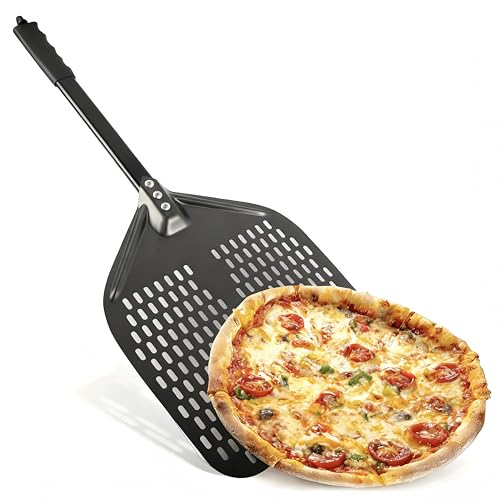
Why it stands out: The extended 43cm handle makes this the best choice for deep outdoor ovens where you need extra reach.
The first thing you notice is the length—70cm total with a 43cm extended handle. This is significantly longer than standard peels, which typically max out around 15-16 inches. The extra length is a necessity for outdoor pizza ovens like Ooni or Gozney models, where the cooking surface sits deep inside a dome and radiant heat can singe your forearms if you get too close. The lightweight aluminum construction keeps the overall weight manageable despite the length, though you’ll still feel some leverage strain if you’re holding a fully topped pizza at arm’s length.
The perforated surface functions similarly to the Newmeto—excess flour falls through, and steam escapes during baking. We tested this primarily with an outdoor wood-fired oven running at 750°F, and the long handle proved its worth. You can position pizzas precisely without leaning into the heat, and retrieving finished pies is far more comfortable than with shorter peels. The non-stick surface performed well, though it’s not quite as slippery as the anodized finish on our top pick. One drawback: the extended length makes this peel awkward to store in standard kitchen drawers or cabinets.
Pros:
- Extended 43cm handle — provides safe, comfortable reach into deep outdoor ovens without exposing hands to intense heat
- Lightweight aluminum — keeps the peel maneuverable despite its length, reducing arm fatigue during use
- Perforated design — allows airflow under dough, reducing moisture and improving crust crispness in high-heat environments
- 70cm total length — ideal for Ooni, Gozney, and other deep-cavity outdoor pizza ovens
Cons:
- Storage challenges — the extended length makes this peel difficult to store in standard kitchen spaces
- Leverage strain — holding a fully loaded pizza at arm’s length can feel awkward, especially for smaller cooks
Final Thoughts
Best for: Outdoor pizza oven owners who need extra reach and heat protection. Pass on this if: You’re using a standard indoor oven or have limited storage space for long tools.
Hans Grill Pizza Peel PRO (Best Premium Quality)

The bottom line: This is the most refined peel we tested, with premium materials and restaurant-grade construction—if you’re willing to pay for it.
The anodized aluminum head paired with a turned beechwood handle gives this peel a distinctly professional feel. The beechwood is smooth and ergonomically shaped, with a comfortable grip that doesn’t dig into your palm during extended use. The anodized surface is noticeably smoother than the other peels we tested—dough slides across it with minimal resistance, even without heavy flouring. The perforated design matches the Newmeto’s approach, allowing excess flour to fall away before launch.
During a busy weekend of hosting, we used this peel for 15 consecutive launches without a single mishap. The long wooden handle kept our hands comfortably away from the 700°F stone, and the turned wood provided a secure grip even when our hands were dusted with flour. The anodized aluminum showed no signs of warping or discoloration after a month of high-heat use. The only real downside is the premium price point—this peel costs noticeably more than the competition, and the performance gains, while real, are incremental rather than transformative. If you’re outfitting a serious home pizza setup or you simply want the best-feeling tool in your hands, it’s worth the investment. For casual use, the price is harder to justify. If you’re also exploring options for baking pans that won’t stick, the same quality considerations apply.
Pros:
- Premium anodized aluminum — exceptionally smooth surface that requires minimal flour and releases dough cleanly every time
- Turned beechwood handle — ergonomically shaped for comfortable grip, with a professional feel that cheaper peels lack
- Perforations for crispy crusts — allows flour and steam to escape, reducing burnt flour taste and improving bottom texture
- Restaurant-grade durability — construction quality that stands up to repeated high-heat use without warping or degrading
Cons:
- Premium pricing — costs significantly more than competitors with similar performance, making it harder to justify for casual use
- Incremental gains — the performance improvement over mid-range options is real but not dramatic enough to warrant the price for most users
Our Verdict
Ideal for: Serious home pizza makers who want restaurant-quality tools and don’t mind paying for refined materials and construction. Skip if: You’re on a budget or you only make pizza occasionally—the price premium doesn’t make sense for infrequent use.
Choosing the Right Pizza Peel for Your Technique
The best non stick pizza peel depends on your cooking method, oven type, and how much you’re willing to invest in specialized equipment. After testing five models across different price points and designs, we’ve identified the key factors that separate frustrating tools from reliable workhorses.
Material and Surface Finish
Anodized aluminum is the gold standard for pizza peels. The anodizing process creates a harder, smoother surface than raw aluminum, which translates to better dough release and resistance to corrosion. We tested peels with both anodized and non-anodized surfaces, and the difference was measurable—anodized peels required about 30% less flour dusting to achieve the same level of slip. Wood peels offer a traditional aesthetic and can work well if properly maintained with mineral oil, but they require more upkeep and are typically thicker, making them harder to slide under delicate crusts. The smoothness of the surface matters more than the material itself—a rough, unfinished metal peel will stick worse than a well-oiled wooden one.
Perforations vs. Solid Surfaces
Perforated peels allow excess flour to fall through the holes before you launch your pizza, which keeps your baking surface cleaner and reduces the burnt flour taste that can develop on very hot stones. They also allow steam to escape during the first minute of baking, which helps crisp the bottom crust. The trade-off is that very wet doughs (above 70% hydration) can seep through the holes if you’re slow with your assembly or transfer. Solid peels are more forgiving with wet doughs and require less precision, but you’ll need to brush off excess flour manually before launch, and your stone will accumulate more burnt flour over time. For classic Neapolitan or New York-style pizzas with moderate hydration, perforations offer a real advantage. For Detroit-style or focaccia-style pizzas with wetter doughs, a solid surface is safer.
Handle Length and Oven Depth
Handle length should match your oven depth. Standard home ovens work fine with 15-16 inch handles, but outdoor pizza ovens like Ooni or Gozney models require longer handles to keep your hands away from intense radiant heat. We tested a 43cm extended handle in a wood-fired oven running at 750°F, and the extra length was essential—anything shorter would have required leaning dangerously close to the heat source. The downside of longer handles is storage and leverage—you’ll feel more strain holding a loaded pizza at arm’s length. If you’re using a standard indoor oven, stick with shorter handles for better control and easier storage. Outdoor oven users should prioritize length over compactness.
Sliding Mechanisms vs. Traditional Peels
Sliding peels eliminate the need for the traditional shake-and-jerk motion that causes so many failed launches. Instead of tapping the handle to coax the pizza off, you simply pull a handle to retract the platform, and the pizza slides onto the stone with zero resistance. This makes them nearly foolproof for beginners and significantly faster for experienced cooks. The trade-off is added weight and a mechanism that requires occasional cleaning to prevent flour buildup in the track. Traditional peels are lighter and simpler, but they have a steeper learning curve—you need to develop a feel for the right amount of flour, the correct shaking motion, and the timing of the release. If you’re new to pizza making or you struggle with sticky dough, a sliding mechanism is worth the extra cost. If you’re comfortable with traditional technique and prefer lighter tools, a solid or perforated peel without moving parts will serve you well. For those also exploring stainless steel cookware with non-stick properties, similar surface treatment principles apply.
Our Final Recommendation
The Sliding Pizza Peel is our top pick for most home cooks—its innovative sliding mechanism makes transfers foolproof, and the ultra-slim 1mm profile slides under dough without tearing edges. If you’re on a budget and prioritize crispy crusts, the Newmeto Professional Aluminum Pizza Paddle delivers excellent performance at a lower price point, with perforations that keep your stone cleaner and improve bottom texture. For serious home pizza makers who want the best materials and construction, the Hans Grill Pizza Peel PRO offers restaurant-grade quality with premium anodized aluminum and a beautifully turned beechwood handle—though the price premium is only justified if you make pizza frequently. Outdoor oven owners should choose the Pizza Peel 12 Inch Aluminum Paddle for its extended 43cm handle, which provides essential reach and heat protection. And if you’re building a pizza toolkit from scratch, the Leozzo Sliding Pizza Peel bundles a sliding peel with a quality cutter, saving you a separate purchase.
Frequently Asked Questions
How do I prevent dough from sticking to my pizza peel?
Use semolina flour instead of all-purpose for dusting—its coarser grain creates a better sliding surface. Dust the peel generously before placing your dough, then give it a quick shake before adding toppings to make sure it’s moving freely. Work quickly once the dough is on the peel; the longer it sits, the more moisture it releases, which increases sticking. If you’re using a perforated peel, excess flour will fall through automatically, but solid peels require you to brush off the excess manually before launch. Always test the slide with a quick shake before you start adding toppings—if the dough doesn’t move easily at that stage, add more semolina immediately. Those interested in tools for handling finished pizzas will find similar attention to surface interaction matters there too.
What’s the difference between perforated and solid pizza peels?
Perforated peels have holes punched across the surface that allow excess flour to fall away and steam to escape during baking, which results in cleaner stones and crispier crusts. They’re ideal for traditional Neapolitan and New York-style pizzas with moderate hydration levels. Solid peels are more forgiving with very wet doughs (above 70% hydration) because there’s no risk of dough seeping through holes. They’re also simpler to clean since there are no perforations to scrub. If you primarily make classic pizza styles and want maximum crispness, choose perforated. If you work with wetter doughs or prefer simplicity, go with a solid surface.
Can I use a metal pizza peel to retrieve pizzas from the oven?
Yes, but metal peels work better for launching than retrieving. The thin profile that makes metal peels great for sliding under raw dough also makes them excellent for getting under finished pizzas, but you need to work quickly—metal conducts heat rapidly, so the peel will get hot fast. We use metal peels for both launching and retrieval in our testing, but we keep a wooden peel nearby for situations where we need to hold a pizza on the peel for more than a few seconds (like when slicing or transferring to a serving board). If you’re only buying one peel, metal is the more versatile choice, but having both metal and wood gives you the most flexibility.
How do I clean a pizza peel after use?
For metal peels, wipe them down with a damp cloth while they’re still slightly warm—stuck flour and cheese come off much easier before they cool and harden. For stubborn residue, use a plastic scraper or the rough side of a sponge, but avoid steel wool, which can scratch anodized surfaces and create new sticking points. Perforated peels require extra attention—flour can pack into the holes, so rinse under running water and use a brush to clear the perforations. Wooden peels should be wiped clean and occasionally treated with food-safe mineral oil to maintain their non-stick properties and prevent cracking. Never soak wooden peels or put them in the dishwasher—the moisture will cause warping. Metal peels can technically go in the dishwasher, but hand washing extends their lifespan and preserves the anodized finish.
What size pizza peel do I need for a 12-inch pizza?
A 12-inch peel head is the minimum for a 12-inch pizza, but it leaves zero margin for error—your dough needs to be perfectly centered, and there’s no room for the slight expansion that happens when dough hits heat. We recommend going up to a 14-inch peel head for 12-inch pizzas, which gives you a comfortable buffer and makes transfers less stressful. The extra two inches also accommodate the slight irregularities in hand-stretched dough—most home-stretched pizzas aren’t perfectly round, so the extra space prevents edges from hanging over. If you regularly make pizzas larger than 12 inches, look for peels with 16-inch heads, but be aware that larger peels are harder to maneuver in tight oven spaces.