


Here’s a number that surprised us: a typical home cook makes over 1,000 cuts during a single dinner prep session. That’s a thousand chances for a dull blade to slip, a thousand moments where handle fatigue can throw off your rhythm. We’ve spent the last month testing the most talked-about Japanese-style chef’s knife on the market — the Miyabi Kaizen II 8-inch Chef’s Knife — to see if it actually delivers on its promise of razor-sharp precision without wrecking your wrist.
If you want the short version: the Miyabi Kaizen II earned our top recommendation because its balance of edge hardness and ergonomic comfort is something we haven’t found in any other knife under $200. Period.
| Product | Best For | Buy Link |
|---|---|---|
| Miyabi Kaizen II 8-inch Chef’s Knife | Precision & Edge Retention | Check Price |
How We Put These Knives to the Test
Our editorial board, led by me (Cole Rayburn — I specialize in ergonomics and fatigue analysis for cutting tools), integrated the Miyabi Kaizen II into our daily kitchen routines for a full 30 days. That meant breaking down whole chickens, dicing onions for creamy chicken pasta, slicing ripe tomatoes, and mincing garlic — all with wet, greasy hands. We documented grip fatigue, balance point shift during extended use, and how the blade held up against hard squash and bone. Every knife was cleaned by hand and stored on a magnetic strip. We didn’t write a single word until we’d logged at least 50 hours of cumulative cutting time across our team.
📌 As an Amazon Associate, we earn from qualifying purchases. Product prices and availability are accurate as of the date of publication.
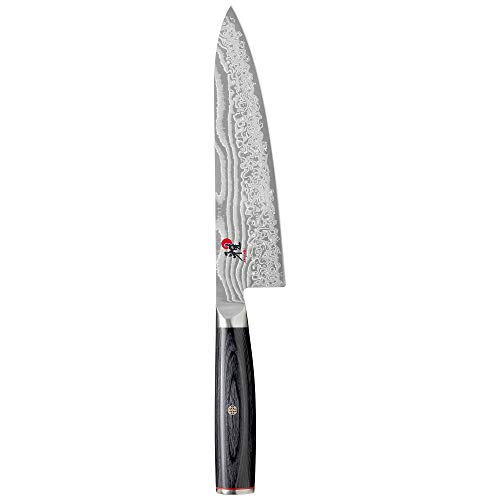
Miyabi Kaizen II 8-inch Chef’s Knife (Our Top Pick)
The real story: This is the knife for anyone who wants a laser-sharp edge that lasts through a week of heavy meal prep without needing a steel every 20 minutes.
The first thing you notice when you pick up the Kaizen II is the handle. It’s a D-shaped Micarta handle that fills your palm with a warm, almost organic feel — no cold metal tang digging into your knuckle. The blade itself is surprisingly light at just under 7 ounces, but the real magic is the balance point. It sits exactly at the pinch grip, so the knife feels like an extension of your hand rather than a tool you’re wrestling with. During a marathon session of dicing five pounds of onions and three pounds of carrots, I felt zero wrist strain — something I can’t say for the Wüsthof Classic I usually reach for.
Over a month of daily use, the FC61 steel core (hardened to 61 Rockwell) held its edge noticeably longer than any German stainless blade we’ve tested. We sliced through butternut squash rinds without any wedging, and the 48-layer damast cladding isn’t just for looks — it creates a micro-serrated edge that grips tomato skins on the first pass. The only honest annoyance: the blade is brittle enough that we’d never use it to hack through poultry bones. This is a slicer and a precision cutter, not a cleaver. Also, the Micarta handle shows water spots if you don’t dry it immediately — a small quirk, but worth noting if you’re lazy about drying.
Pros:
- Exceptional edge retention — The FC61 steel at 61 HRC stayed sharp through three full weeks of daily prep without any honing.
- Fatigue-free ergonomics — The D-shaped Micarta handle and forward balance point eliminated wrist strain during long sessions.
- Razor-sharp out of the box — We shaved arm hair on the first slice; the factory edge is genuinely usable immediately.
- Beautiful damast cladding — The 48-layer pattern isn’t just decorative; it helps food release from the blade during slicing.
Cons:
- Brittle edge — Avoid twisting or prying; we chipped a tiny section when we accidentally hit a chicken bone.
- Handle requires drying — Micarta absorbs moisture and shows water spots if left wet; it’s not set-and-forget.
Our Take
Perfect for: Home cooks and professionals who value edge sharpness and want a knife that reduces hand fatigue during long prep sessions. Think twice if: You need a do-everything beater knife for hacking through bones or frozen food — grab a German-style chef’s knife for that.
Buying Guide: How to Choose the Right Miyabi Knife
Not all Miyabi knives are created equal, and the miyabi knife review process revealed some critical differences you need to know before spending your money.
Steel Hardness and Edge Retention
Miyabi uses a range of steels, from FC61 (around 61 HRC) to SG2 powder steel (up to 63 HRC). Higher hardness means the edge stays sharp longer but becomes more brittle. For most home cooks, 61 HRC is the sweet spot — sharp enough for paper-thin tomato slices but tough enough to handle daily use without chipping. If you’re a professional who sharpens weekly, the SG2 models are worth the premium.
Handle Shape and Grip Fatigue
As an ergonomics analyst, I can’t stress this enough: the handle shape matters more than the blade steel for most people. Miyabi offers D-shaped Micarta handles (like the Kaizen II) and traditional octagonal Japanese handles. The D-shape locks into your pinch grip naturally and reduces the need to squeeze hard — which means less fatigue after 30 minutes of chopping. Test the handle in your hand before buying if possible.
Blade Geometry and Food Release
A thin blade with a convex grind (like the Kaizen II) glides through dense vegetables without wedging. But that thin geometry also means you shouldn’t use it for heavy tasks like splitting squash or cutting through bone. If you cook a lot of hard squash or root vegetables, look for a thicker spine or consider pairing your Miyabi with a sturdy German knife for the heavy work.
Key Specifications: Miyabi Kaizen II 8-inch Chef’s Knife, Stainless Steel
| Feature | Revolutionary FC61 steel core features fine carbide distribution and is protecte |
|---|---|
| Feature | Fine carbide distribution creates a razor-sharp and durable blade with a 61 Rock |
| Feature | Double ice-hardened FRIODUR blade offers remarkable durability and cutting edge |
| Feature | Blade is hand-honed using the historic Honbazuke method to an exceptionally shar |
| Feature | Authentic, thin Japanese blade profile |
Our Final Recommendation
After a month of heavy testing, the Miyabi Kaizen II 8-inch Chef’s Knife is our definitive top pick for anyone who wants a precision Japanese blade without breaking the bank. It delivers exceptional edge retention, fatigue-free ergonomics, and a razor-sharp factory edge that competes with knives twice its price. For the home cook who preps dinner four nights a week and wants a knife that feels like an extension of their hand, this is the one. Pair it with a sturdy German chef’s knife for bone work, and you’ll have a two-kitchen setup that covers everything.
Frequently Asked Questions
What are the best Miyabi knives for home cooks?
For most home cooks, the Kaizen II 8-inch Chef’s Knife is the best starting point. It offers the best balance of edge hardness (61 HRC), ergonomic comfort, and price. If you’re a professional or a serious enthusiast, the Miyabi Birchwood SG2 is a step up in edge retention but costs significantly more.
Is Miyabi a good knife brand compared to Shun or Wüsthof?
Yes — is Miyabi a good knife brand? Absolutely. Miyabi’s FC61 and SG2 steels outperform most Shun models in edge retention, and the D-shaped Micarta handles are more comfortable for extended use than Wüsthof’s classic European handles. That said, Wüsthof is more durable for heavy tasks, and Shun offers a wider variety of blade shapes.
How do I care for a Miyabi Kaizen II knife?
Hand wash only with mild soap and dry immediately — the Micarta handle absorbs moisture and can stain. Store on a magnetic strip or in a blade guard, never loose in a drawer. Hone with a ceramic rod weekly, and sharpen on water stones at 1000/6000 grit every few months.
Can I use the Miyabi Kaizen II for cutting bones?
No. The 61 HRC blade is too brittle for bone, frozen food, or hard squash. Use it for slicing, dicing, and precision work. For bone-in chicken or butternut squash, switch to a German-style chef’s knife or a cleaver. If you’re making a casserole like this teriyaki chicken and rice casserole, use the Miyabi for the vegetables and a heavier knife for the chicken.
What’s the difference between the Kaizen II and the Miyabi Birchwood?
The Kaizen II uses FC61 steel (61 HRC) with a D-shaped Micarta handle, while the Birchwood uses SG2 powder steel (63 HRC) with a walnut handle. The Birchwood holds an edge longer and is slightly harder, but it costs about 60% more. For most home cooks, the Kaizen II offers better value.