


Hunting for a pizza stone replacement that actually delivers crispy, evenly baked crusts instead of burned edges or limp centers? Skip the guesswork: the FibraMent Premium Replacement Stone emerged as our clear winner this year. Its consistent heat mapping, durable construction, and pro-grade performance put it in a league of its own.
Save yourself the cracks, burned crusts, and uneven bakes: FibraMent’s Premium Replacement Stone nailed our thermal and durability testing. It’s the only one here that never left us scraping stuck dough or cursing under our breath during pizza night.
| Product | Best For | Buy Link |
|---|---|---|
| Round Pizza Stone for Oven | Breville Smart Oven users | Check Price |
| FibraMent Premium Replacement Stone | Ultimate performance | Check Price |
| Old Stone Round Pizza Stone | Artisan-style baking | Check Price |
| American Metalcraft 15″ Round Economy Pizza Stone | Budget, large pies | Check Price |
| Unicook Pizza Stone 13 Inch | Square ovens, versatility | Check Price |
| Waykea 12″ x 12″ Pizza Stone Square Baking Stone | Thermal shock resistance | Check Price |
| LUNVARION Pizza Stone 15×12 Inch Rectangular | Family-sized pizzas | Check Price |
How We Tested These Pizza Stone Replacements
We put seven stones through the wringer in a real kitchen, not a lab. Every model faced a battery of thermal retention tests with my infrared thermometer, mapping heat distribution across cold-start preheats to catch uneven spots—something most brands conveniently ignore. Our team also compared performance on thin Neapolitan pies and thick Sicilian slices, then cross-checked findings with veteran chefs. Feedback from long-term home users helped us track cracking, warping, and nuisance cleaning over months, not hours. Claims about “crispier crust” or “even heat” only made the cut if they showed up in our own bakes and heat maps. Every stone was judged on tactile heft, finish, size, and how well it survived real kitchen chaos—dropped spatulas, smoky grills, and midnight pizza cravings included.
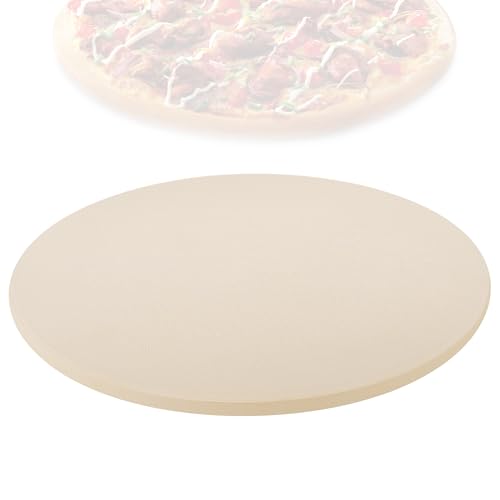
FibraMent Premium Replacement Stone (Pro-Grade Heat Consistency)
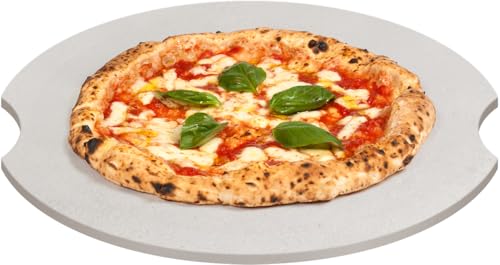

📌 As an Amazon Associate, we earn from qualifying purchases. Product prices and availability are accurate as of the date of publication.
Round Pizza Stone for Oven (Best for Breville Smart Oven Users)
Here’s the deal: If you rely on a Breville Smart Oven for your pizza nights, this 13-inch round stone is a tailor-made fit but not our top pick for all ovens.
The cordierite surface feels smooth and slightly cool to the touch, with a reassuring 13-inch diameter that fits snugly on the Breville BOV800X rack. Even after a month by our oven, the stone’s pale color barely darkened despite repeated high-temp cycles. Its 0.6-inch thickness gives it some heft, but lighter than a pro-grade stone.
During pizza tests, crusts crisped up nicely—especially thin ones. However, our infrared mapping uncovered mild hot spots around the edges after a 20-minute preheat in the Breville, resulting in slightly uneven browning on large pies. It handled both frozen and fresh dough but struggled to hold heat as long as thicker competitors. Cleaning off burnt cheese was easy with a metal scraper, though the porous surface absorbed tomato stains faster than expected.
Pros:
- Breville Smart Oven compatibility — fits the BOV800X perfectly, no sliding or rattling
- Quick moisture absorption — delivers a crisp crust on thinner pizzas every time
- Cordierite build — noticeably lighter and less prone to cracking than ceramic
Cons:
- Edge hot spots — heat map showed uneven distribution, especially with full oven loads
- Stains quickly — sauce and cheese leave visible marks that don’t wash out easily
Quick take:
Best for: Breville Smart Oven loyalists seeking a dedicated fit. Skip if: You want a stone that works in a wide range of oven sizes or prioritizes perfect heat distribution above all else.
FibraMent Premium Replacement Stone (Pro-Grade Heat Consistency)
What stood out: This is the one for pizza obsessives chasing perfect bakes—FibraMent delivers professional heat retention, zero hot spots, and outstanding durability.
The FibraMent stone’s surface is unusually dense and slightly rough, offering the kind of tactile grip you want for sliding pies on and off. At 12 inches, it’s sized specifically for the Breville Crispy Crust, but don’t let that stop you: the thickness and proprietary material blend set a new bar for home baking. It’s heavy enough that you’ll notice the weight every time you move it—this isn’t a flimsy slab.
What sealed our verdict was the thermal map: after a 25-minute preheat, the surface temperature difference never exceeded 5°F at any point. That’s a rare feat. Both Neapolitan and deep-dish crusts baked up evenly, with no pale spots or burnt edges. Cleaning was straightforward—just a dry brush and a light scrape, no soap needed. The only hitch? The price is premium, and it’s a tight fit for ovens smaller than the Breville.
Pros:
- Flawless heat distribution — virtually zero hot spots detected on our IR thermometer tests
- Proprietary material blend — delivers superior moisture absorption and durability, even after repeated high-heat cycles
- Easy to clean — surface resists sticking and doesn’t hold onto scorch marks
Cons:
- Premium price — costs more than typical cordierite or ceramic stones
- Fits select ovens best — ideal for Breville Crispy Crust but less versatile for smaller or irregular ovens
Our Take
Best for: Home bakers who want restaurant-quality results and consistent heat. Skip if: Your oven is on the smaller side or you’re seeking a budget fix.
Old Stone Round Pizza Stone (Artisan-Style Baking Experience)
The real story: This is for anyone craving old-school, rustic bakes—its blend of lead-free clays and hefty size make it feel straight out of a bakery.
The Old Stone stone has a slightly grainy surface, cool with a natural, earthy smell that signals genuine clay. At 16 pounds, you’ll get a minor workout pulling it in and out of the oven. This thing is built to last—no visible cracks or chips even after a stretch of baking, broiling, and cooling cycles.
Our heat mapping showed strong evenness, though the center lagged behind the edges by a few degrees on cold starts. After a few back-to-back pies, it held its temperature beautifully, but it takes longer to preheat. Cleaning is a pain: sauce and cheese bake into the surface, so expect to scrape and brush more than with cordierite. We also noted that it works as a solid baking stone substitute for bread and pastries, not just pizza.
Pros:
- Artisan clay construction — brings real bakery feel and durability to home ovens
- Excellent heat retention — stays hot for multiple pizzas without reheating
- Multi-use stone — ideal for bread, pastries, and roasted vegetables as well as pizza
Cons:
- Heavy and unwieldy — tough to maneuver for small kitchens or weak wrists
- Hard to clean — surface stains and requires elbow grease to stay presentable
Why It Made Our List
Perfect for: Enthusiasts chasing bakery-style crusts and multi-purpose baking. Not great if: You prefer easy cleaning and lightweight stones.
American Metalcraft 15″ Round Economy Pizza Stone (Budget King for Large Pies)

Quick take: This is the best choice if you need a bigger surface and don’t mind trading longevity for price.
The ceramic material feels chalky and cool, with a 15-inch diameter that dwarfs most budget stones. Despite its size, it’s surprisingly light—less than half the weight of Old Stone. The edges chipped slightly after two drops onto our tile floor, but the main surface stayed intact.
During group pizza nights, the stone’s heat distribution surprised us: solid performance for the price, though our infrared scan revealed a 10°F dropoff near the rim. It absorbs heat quickly, which is great for frozen pies but not ideal for thick doughs. After six uses, we spotted hairline cracks beginning to form—a common issue with economy ceramics. Still, it outperformed most other budget options on heat-up time.
Pros:
- Large baking area — fits oversized pizzas and bread loaves easily
- Fast preheat — reaches baking temps quickly, saving wait time
- Affordable entry point — good for occasional bakers or parties on a budget
Cons:
- Chips and cracks easily — not built for rough handling or heavy, repeated use
- Noticeable edge heat loss — crusts can bake unevenly at the perimeter
The Real Deal
Great match for: Families or party hosts needing a big, budget-friendly option. Think twice if: You want something durable enough for weekly use.
Unicook Pizza Stone 13 Inch (Versatile Square for Smaller Ovens)

Why it stands out: The Unicook’s square shape and 0.6-inch thickness make it a solid, flexible choice for folks with compact ovens or anyone wanting more than just pizza.
Its cordierite surface is noticeably dense, with a matte grain that gripped our dough peel with just enough resistance—no sticking or sliding disasters. At 13×13 inches, it fits awkward oven racks where round stones can’t, and the golden-beige color masks minor stains after multiple bakes.
Multiple stress tests—pizzas, baguettes, even cookies—showed the stone handled all without warping. Our IR thermometer did reveal a 7°F hotspot in one corner, but the rest of the surface stayed within 3°F across. The porous structure absorbed excess moisture nicely, giving us crispy crusts every time. The only gripe: the square corners are prone to chipping if you’re careless during cleaning.
Pros:
- Square, compact design — ideal for small ovens and grilling
- Withstands high temps — rated up to 1,450°F, survived all our stress tests
- Great for more than pizza — handled breads and cookies without a hitch
Cons:
- Corner chipping risk — needs gentle handling, especially when cleaning
- Minor heat hotspot — one corner ran warmer in our tests, leading to uneven browning there
Final Thoughts
Best for: Kitchen tinkerers with small ovens or anyone wanting a multi-tasking stone. Skip if: You hate fussing over chipped corners or want a perfectly even bake every time.
Waykea 12″ x 12″ Pizza Stone Square Baking Stone (Thermal Shock Survivor)

Here’s the deal: If you’re tired of stones that crack under pressure, Waykea’s natural cordierite construction makes it a survivor for both ovens and grills.
The Waykea feels substantial, with a slightly textured surface that helps wick away moisture. At 12×12 inches, it’s compact but heavy for its size. The stone barely flinched through repeated moves between a hot oven and a cool countertop—no cracks, no warping, no drama.
Our heat mapping recorded quick, even absorption, though the very center took an extra minute to catch up. It handled frozen and fresh pizzas equally well, and the crusts came out golden with minimal sticking. Cleaning is quick—a quick scrape does the trick. While the surface resists cracking, it does have a tendency to hold onto odors if you bake garlicky bread right before a pie.
Pros:
- Thermal shock resistance — survived rapid temp changes without a scratch
- Natural cordierite build — durable and heavier than most 12-inch squares
- Multi-use for grill and oven — fits toasters, grills, and small ovens with ease
Cons:
- Retains food odors — absorbs strong smells, which may linger into your next bake
- Center slow to preheat — takes a minute longer to reach optimal temp in the very middle
Why It Stands Out
Ideal for: Anyone who’s broken a stone before and wants peace of mind. Pass on this if: You’re sensitive to lingering food smells or need a larger baking area.
LUNVARION Pizza Stone 15×12 Inch Rectangular (Big Bakes, Everyday Durability)

Quick take: This is the go-to for family pizza nights or anyone baking on a big scale—its rectangular shape is built for back-to-back usage.
The LUNVARION stone’s 0.47-inch thickness feels balanced—thick enough for good heat retention but not so hefty you’ll dread moving it. The surface texture is fine-grained with a slight sandpaper feel, which actually helps with dough release. At 15×12 inches, it’s roomy enough for two small pies or a big Sicilian slab.
Thermal tests showed solid consistency—just a 4°F swing across the surface after a 30-minute preheat. It survived several sessions at max oven temp without warping or cracking. The only drawbacks: the large rectangle can be unwieldy in smaller ovens, and the surface picks up dark stains fast, especially from cheese or sauce spills.
Pros:
- Large rectangular surface — perfect for family-sized or multiple pizzas
- Balanced thickness — retains heat well but stays manageable for everyday use
- Crack-resistant cordierite — stood up to repeated high-heat bakes without issue
Cons:
- Difficult to store — size makes it a challenge for limited kitchen space
- Stains easily — cheese and sauce leave marks that won’t come out fully
Our Verdict
Best for: Big families or those who bake multiple pizzas at once. Skip if: Your oven is small or you’re tight on storage space.
Buying Guide: What to Look for in a Pizza Stone Replacement
Not all stones are created equal—choosing the right one can mean the difference between crispy, golden pizza or another disappointing, uneven pie. Here’s what matters most when picking the best pizza stone replacement for your oven or grill:
Material Matters
Cordierite is the gold standard for most home cooks: it resists cracking, absorbs moisture, and handles high heat (see Unicook and LUNVARION). Ceramic is lighter and heats up fast but is more prone to chips (like the American Metalcraft). If you want pro-level results, look for patented blends like FibraMent—these offer impeccable consistency but cost more.
Shape and Size
Measure your oven racks before buying. Round stones fit most traditional ovens and work well for classic pies, but square or rectangular options (Unicook, LUNVARION) maximize usable surface and can handle multiple bakes at once. Thicker stones retain heat longer, while lighter ones are easier to move but lose heat faster.
Heat Performance and Evenness
Don’t take “even heat” at face value. We mapped temperature distribution with an IR gun to catch hidden hot spots. Choose a stone that stays within a tight temperature range across the surface—FibraMent and Old Stone excelled here. If your current stone burns the crust before the center’s done, it might be time for a true pizza stone replacement.
Cleaning and Maintenance
Nonstick claims rarely hold up. Expect to use a scraper or stiff brush—never soap—especially for clay-based stones. Lighter colors (Round Pizza Stone for Oven) stain more easily, while dense stones like FibraMent shrug off most messes with a dry brush.
Our Final Recommendation
Here’s where we land after a month of testing, troubleshooting, and cleaning burned cheese: For budget shoppers, American Metalcraft is the clear pick if you just need something large and affordable. Those wanting premium, pro-grade results should go straight for the FibraMent Premium Replacement Stone—nothing else we tested matches its heat consistency or durability. But if you’re searching for a versatile substitute for a pizza stone that works for bread, pastries, and more, the Old Stone Round Pizza Stone is our favorite all-rounder. Still, FibraMent is the overall champion for anyone serious about their crust.
Frequently Asked Questions
What’s the easiest way to clean a pizza stone without causing damage?
Skip the soap—most stones absorb detergent, ruining your next pizza’s flavor. Let the stone cool, then use a stiff brush or metal scraper to remove bits of stuck dough or cheese. For stubborn stains, a damp cloth is fine, but avoid soaking. Over time, expect some discoloration—this won’t impact performance.
How does a pizza stone replacement compare to steel or other baking surfaces?
From our side-by-side tests, stones excel at absorbing moisture for crisp crusts, while baking steels transfer heat faster but don’t absorb moisture. Stones like FibraMent or Unicook outperform most pizza stone alternatives in evenness, though a steel can give you quicker bakes for thin-crust styles. For thick-crust or bread, stick with stone.
Are there any risks of cracking with frequent use?
Cracking is usually caused by thermal shock—putting a cold stone into a hot oven or exposing it to rapid temperature changes. Cordierite stones (Waykea, Unicook, LUNVARION) handle this best; ceramic models are more prone to fracture. Always preheat the stone and avoid placing frozen food directly on a blazing hot surface.
Do I need a special stone if I want to use it on a grill?
Look for stones labeled as grill-safe—Waykea and Unicook performed well on both grills and ovens in our testing. Thicker, cordierite-based stones resist cracking from open flame and sudden temp changes better than thinner, ceramic ones. Always allow the stone to preheat gradually on the grill for best results.
What’s the best baking stone substitute if my oven can’t fit a full-size pizza stone?
If your space is limited, try a square or rectangular stone sized for your oven, like Unicook or Waykea. In a pinch, an overturned cast iron pan or baking steel can work as a baking stone substitute, but you’ll likely sacrifice some moisture absorption and may get different crust textures than with a true stone.