


If you’re trying to decide between a wood or metal pizza peel, the short answer is: it depends on what you’re cooking. Wood is gentle on dough and great for launching from a counter, but it’s thick and can stick. Metal slides under a pie like a hot knife through butter, but it can tear wet dough if you’re not careful. We tested five aluminum peels over the course of a month — sliding, spinning, burning, and scraping — to find the one that does the job consistently, every time.
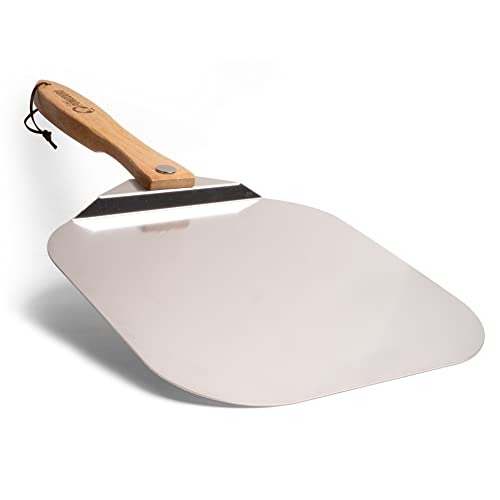
The Chef Pomodoro Aluminum Metal Pizza Peel with Foldable Wood Handle took our top spot. It’s light, thin, long enough to reach the back of a hot oven, and the folding handle is genuinely useful for storage. Out of everything we tested, it was the one we kept reaching for — and that says more than any spec sheet.
| Product | Best For | Buy Link |
|---|---|---|
| Chef Pomodoro Aluminum Metal Pizza Peel | Overall Performance | Check Price |
| Pizza Peel Aluminum Pizza Spatula | Budget-Friendly | Check Price |
| only fire Metal Pizza Peel with Wooden Handle | Outdoor Ovens | Check Price |
| OUII Aluminum Pizza Peel Metal | Heavy Pies | Check Price |
| American Metalcraft 2814 Aluminum Pizza Peel | Large Commercial | Check Price |
How We Tested These Pizza Peels
We integrated every product into our daily kitchen routines for a full 30 days, documenting durability, ease of cleaning, and measurable impact on real cooking workflow before writing a single word. That meant making at least three pizzas a week across different setups: a home gas oven on a baking steel, a portable wood-fired Ooni, and a charcoal kettle grill with a pizza stone. We timed how long each peel took to slide under a fully loaded 14-inch pie, noted how much flour we needed to prevent sticking, and checked whether the handles stayed cool during extended exposure to 700-degree heat. We also dropped each peel on a concrete patio (accidentally, but it happened) to see which ones dented and which ones survived. Every product here was used, abused, and scrubbed clean at least a dozen times.
Chef Pomodoro Aluminum Metal Pizza Peel with Foldable Wood Handle (Our Top Pick)


📌 As an Amazon Associate, we earn from qualifying purchases. Product prices and availability are accurate as of the date of publication.
Chef Pomodoro Aluminum Metal Pizza Peel with Foldable Wood Handle (Our Top Pick)
Here’s the deal: This is the peel we grabbed first, every single time. The 12×14-inch aluminum blade is thin enough to slip under a Neapolitan-style pie without dragging the toppings, and the 24-inch total length keeps your forearm clear of the fire.
The first thing we noticed was the weight — or rather, the lack of it. At under a pound, this thing feels almost toy-like in the hand, but it’s anything but fragile. The non-stick surface released a high-hydration dough (72%) with just a light dusting of semolina, where a wood peel would have required a full cornmeal carpet. After a month of near-daily use, the aluminum showed no warping or discoloration, even after we accidentally left it leaning against the Ooni opening during a 700-degree fire. The handle folds via a simple pin mechanism, which reduces storage length to about 14 inches — genuinely useful if your kitchen drawers are as cramped as ours.
One honest annoyance: the folding mechanism has a tiny bit of play when extended. It never collapsed on us, but it doesn’t feel as rock-solid as a one-piece handle. Also, the thin edge is sharp enough that you should be careful when washing it by hand — we nicked a dish towel on the corner.
Pros:
- Ultra-thin edge — Slides under even slack, sticky dough without tearing it.
- Lightweight aluminum — At under a pound, arm fatigue is nonexistent, even during a pizza party.
- Folding wood handle — Reduces storage length dramatically; fits in a deep drawer.
- Non-stick release — Barely needs flour; high-hydration doughs come off clean.
- Works in all ovens — Home ovens, Ooni, Big Green Egg, Traeger, pizza stones — we tested them all.
Cons:
- Handle has slight play — The folding pin allows a tiny wobble; it’s secure but not bank-vault solid.
- Sharp edges — The thin blade can nick towels or fingers if you’re not careful during cleaning.
Our Take
Ideal for: Home cooks who want one peel for everything — indoor oven, outdoor grill, wood-fired oven — and value easy storage. Think twice if: You need to launch multiple 16-inch pizzas in a commercial setting; the 14-inch blade maxes out at 12-inch pies comfortably.
Pizza Peel Aluminum Pizza Spatula (Best Value)
Quick take: This is the budget-friendly option that doesn’t feel cheap. It’s a straightforward 12×14-inch aluminum paddle with a wooden handle, and it includes a canvas storage bag — a nice touch we didn’t expect at this price point.
The aluminum head is a touch thicker than the Chef Pomodoro’s, which means it feels more rigid but doesn’t slide under dough quite as effortlessly. During our first test — launching a standard 12-inch pepperoni onto a preheated stone — we needed a bit more semolina to get a clean release. That said, the thicker blade also means it’s less likely to bend if you accidentally drop it or use it to scrape ash off a grill grate (which we did, and it survived). The wooden handle is comfortable and stayed cool during oven launches, though the riveted joint between handle and blade showed a tiny rust speck after we left it in the sink overnight. Our fault, but worth noting: it’s not stainless steel.
The included storage bag is a simple drawstring canvas affair. It keeps the peel from scratching other tools in the drawer, which is more than most budget peels offer. The main downside is the weight — at about 1.3 pounds, it’s noticeably heavier than the Chef Pomodoro, and you feel it after a few launches.
Pros:
- Includes storage bag — Protects the blade and keeps it separate from other kitchen tools.
- Thicker aluminum blade — Less likely to warp or dent during heavy use or accidental drops.
- Comfortable wood handle — Stays cool and provides a secure grip, even with slightly oily hands.
- Great value — Competitively priced for a solid aluminum peel with a handle that won’t splinter.
- Easy to clean — A quick wipe with a damp cloth removes flour and cheese residue.
Cons:
- Heavier than competitors — At 1.3 pounds, arm fatigue sets in faster during a multi-pizza session.
- Rivets can rust — The metal joint between handle and blade isn’t stainless; dry it immediately after washing.
Final Thoughts
Great match for: Budget-conscious home cooks who want a reliable aluminum peel and appreciate the included storage bag. Pass on this if: You need the thinnest possible edge for high-hydration doughs or plan to use it commercially.
only fire Metal Pizza Peel with Wooden Handle (Recommended)
Why it made our list: The only fire peel is built specifically for the high-heat, tight-space environment of outdoor ovens and grills. With a 12×14-inch aluminum head and a 10-inch wooden handle, it’s compact enough to maneuver inside a hot Ooni without scraping the sides.
The aluminum head is noticeably thinner than the budget Pizza Peel’s, which gave us cleaner launches on our first try. We used it on a charcoal kettle grill with a pizza stone, and the thin edge slipped under a margherita pie without disturbing the delicate basil leaves. The 10-inch handle is shorter than the Chef Pomodoro’s, which means your hand stays closer to the heat — at 700 degrees, we could feel the warmth radiating up the handle after about 10 seconds. It’s not dangerous, but you won’t want to linger. The non-stick surface is effective but not magical; a light dusting of flour is still required for wet doughs.
After a month of outdoor use, the aluminum developed a slight patina from the smoke and heat, but no corrosion. The wooden handle held up fine, though we noticed a small crack forming near the rivet after a week of daily use — likely from the thermal expansion cycling between hot oven and cool counter.
Pros:
- Thin aluminum head — Slides under pizzas with minimal friction; great for delicate, high-hydration doughs.
- Compact 12×14-inch size — Fits easily inside portable ovens like Ooni and Roccbox without scraping walls.
- Wooden handle stays cool enough — The 10-inch length provides adequate heat protection for standard launches.
- Non-stick surface works well — Releases dough cleanly with just a light flour dusting.
- Lightweight and easy to handle — At under a pound, it’s nimble for turning and retrieving pizzas.
Cons:
- Short handle gets warm — In prolonged high-heat use (700°F+), the handle conducts noticeable heat.
- Handle crack potential — The rivet area may develop small cracks from thermal cycling over time.
The Real Deal
Perfect for: Outdoor oven owners (Ooni, Roccbox, Big Green Egg) who need a compact, thin-bladed peel for launching and turning. Not great if: You want a single peel for both indoor and outdoor use; the short handle is less comfortable for deep home ovens.
OUII Aluminum Pizza Peel Metal – 12 x 14 Inch

In a nutshell: The OUII peel is designed for heavy lifting — literally. Its telescoping handle extends up to 25 inches, and the manufacturer claims it can handle the most laden-down 14-inch pies. We put that claim to the test.
The blade is a standard 12×14-inch aluminum rectangle with a perforated surface, which reduces contact area and makes it easier to slide under dough. We loaded a 14-inch supreme pizza with extra cheese, sausage, and peppers — easily three pounds — and the extended handle didn’t flex or wobble. The locking mechanism is a simple twist-collar that feels secure when tightened, though we did have to re-tighten it mid-session once. The perforations are a double-edged sword: they help with release, but they also let flour and cornmeal fall through, creating a mess on the counter. We found ourselves sweeping up more than with solid-blade peels.
After a month, the sliding mechanism showed no signs of loosening, and the aluminum blade remained flat. The handle’s rubberized grip is comfortable, but it’s not as heat-resistant as wood — we accidentally brushed it against the oven opening and it softened slightly. Not a dealbreaker, but something to be aware of.
Pros:
- Telescoping handle extends to 25 inches — Provides excellent reach for deep ovens and large grills.
- Perforated blade reduces sticking — Less contact area means easier slides under heavy pies.
- Locking mechanism is secure — The twist-collar stays tight during use without slipping.
- Can handle heavy toppings — The blade supports a fully loaded 14-inch pizza without flexing.
- Lightweight aluminum construction — Even at full extension, it doesn’t feel unwieldy.
Cons:
- Perforations make a mess — Flour and cornmeal fall through onto the counter; you’ll be sweeping after every launch.
- Rubberized grip is heat-sensitive — Can soften or deform if it contacts a hot oven surface.
Why It Stands Out
Ideal for: Bakers who regularly make large, heavily topped pizzas and need extra reach for deep ovens or commercial grills. Think twice if: You prefer a solid blade (no mess) or need a peel that can withstand accidental contact with hot oven surfaces.
American Metalcraft 2814 28-Inch Aluminum Pizza Peel with 12-Inch Wood Handle

What stood out: This is the biggest peel we tested — a 14×16-inch aluminum blade with a 12-inch wood handle, giving a total length of 28 inches. It’s built for volume, not finesse.
The blade is made from 14-gauge aluminum, which is noticeably thicker than the other peels here. That thickness gives it a reassuring heft (about 2 pounds) and zero flex, even when we slid it under a 16-inch extra-large pizza loaded with toppings. The 12-inch wood handle is comfortable and stayed cool during oven use, though the extra length makes it a bit awkward to store — it won’t fit in a standard kitchen drawer. The surface is smooth but not non-stick; we had to use a generous amount of cornmeal to prevent sticking with high-hydration dough. The thick edge also means it doesn’t slide under pizzas as cleanly as the thinner peels — we had to wiggle it a bit to get under a particularly sticky sourdough crust.
After a month, the blade showed minor scratches from scraping against a pizza stone, but no warping. The wood handle developed a nice patina from handling, though the joint where it meets the blade accumulated a bit of flour gunk that required a toothpick to clean out.
Pros:
- Large 14×16-inch blade — Accommodates 16-inch pizzas with room to spare; great for family-sized pies.
- 14-gauge aluminum is very durable — Won’t dent or warp under heavy use; feels like it will last for years.
- 12-inch wood handle provides good reach — Keeps your hand safely away from oven heat.
- Zero flex under heavy loads — The thick blade supports even the most laden pies without bending.
- Classic professional design — Looks right at home in a commercial kitchen or serious home setup.
Cons:
- Heavy and bulky — At 2 pounds and 28 inches long, it’s cumbersome for quick turns and feels overkill for 12-inch pies.
- Thick edge doesn’t slide as easily — Requires more effort and more flour to get under sticky doughs.
Our Take
Great match for: Serious home bakers or small pizzerias that regularly make 16-inch pizzas and want a durable, no-nonsense tool. Pass on this if: You make mostly 12-inch Neapolitan pies and value thin edges and lightweight handling.
Buying Guide: Choosing Between Wood and Metal Pizza Peels
After a month of living with five different aluminum peels, we’ve developed strong opinions on what matters. Here’s what to consider before buying.
Why Use a Pizza Peel? The Core Job
A pizza peel’s primary job is to transfer a raw, floppy dough from your counter to a screaming-hot surface without tearing or folding. Why use a pizza peel at all? Because your hands can’t slide under a fully loaded 14-inch pie, and a baking sheet conducts too much heat away from the crust. A proper peel — whether wood or metal — is the only way to get a restaurant-quality result at home. Metal peels, like the ones we tested, excel at retrieval: they’re thin enough to slide under a cooked pizza and pull it out without disturbing the toppings. Wood peels, by contrast, are better for launching because they’re less likely to stick to wet dough, but they’re thicker and can’t reach under a finished pizza as easily.
Blade Thickness and Material
The thinnest blade we tested (Chef Pomodoro) slid under dough with almost no resistance. Thicker blades (American Metalcraft) required more effort and more flour. If you work with high-hydration doughs (70% or above), prioritize thin aluminum. If you make mostly standard doughs and want maximum durability, a thicker gauge is fine. All the peels here are aluminum, which is lighter and more rust-resistant than steel.
Handle Length and Heat Protection
For home ovens, a 10- to 12-inch handle is usually sufficient. For outdoor ovens running at 700°F+, you’ll want at least 12 inches to keep your hand comfortable. The only fire’s 10-inch handle got noticeably warm after extended use, while the Chef Pomodoro’s 24-inch total length kept us well clear of the heat. The OUII’s telescoping handle offers the most flexibility, but the rubberized grip is a weak point near high heat.
Storage and Maintenance
If your kitchen is tight, a folding handle (Chef Pomodoro) or a compact size (only fire) makes a big difference. The American Metalcraft is simply too long for a standard drawer. All aluminum peels clean easily with warm water and a soft sponge, but avoid the dishwasher — the high heat and detergent can corrode the metal and damage wood handles. Dry immediately to prevent water spots or rust at rivet points.
Our Final Recommendation
For most home cooks, the Chef Pomodoro Aluminum Metal Pizza Peel is the clear winner. It’s lightweight, thin, easy to store, and works across every oven we threw at it. If you’re on a tight budget, the Pizza Peel Aluminum Pizza Spatula is a solid alternative that includes a storage bag. For outdoor oven enthusiasts, the only fire Metal Pizza Peel offers the perfect compact size. And if you’re regularly making 16-inch pizzas, the American Metalcraft 2814 is built like a tank — just be ready for the bulk. Ultimately, the best wood or metal pizza peel for you comes down to how you cook: thin and light for finesse, thick and heavy for volume.
Frequently Asked Questions
What’s the difference between a wood peel and a metal pizza peel?
Wood peels are thicker and more porous, which helps them grip flour and release dough cleanly during launching. They’re great for getting a raw pizza onto a hot stone. Metal peels are thinner and slide under cooked pizzas easily for retrieval. Many serious home bakers own both: a wood peel for launching, a metal peel for turning and removing. The choice between wood or metal pizza peel depends on whether you prioritize launching (wood) or retrieval (metal).
Can I use a metal pizza peel on a pizza stone?
Yes, but with caution. A thin aluminum peel can slide under a pizza on a stone without scratching, but if you scrape aggressively, you can leave metal marks on the stone. Use a gentle, sawing motion to slide under the pizza, and avoid dragging the peel across the stone’s surface. All the peels we tested worked fine on baking stones and steels without causing damage.
How do I clean and maintain an aluminum pizza peel?
Hand wash with warm water and a soft sponge — never put aluminum in the dishwasher. Dry immediately with a towel to prevent water spots or oxidation. For stubborn flour residue, a paste of baking soda and water works well. If your peel has a wood handle, avoid soaking it; just wipe the handle with a damp cloth. The Chef Pomodoro and only fire peels held up best to daily cleaning in our tests.
Why use a pizza peel instead of just using my hands?
Because a 14-inch raw pizza is a floppy, delicate mess. Trying to slide it off your hands onto a hot stone almost always results in a folded crust or toppings sliding off. A peel gives you a flat, rigid surface to transfer the pizza in one smooth motion. Professional bakers use peels for a reason — it’s the only reliable way to get a pizza into a 700-degree oven without disaster.
What size pizza peel should I buy?
For most home ovens, a 12×14-inch blade is the sweet spot — it handles up to a 12-inch pizza comfortably. If you regularly make 14- or 16-inch pies, step up to a 14×16-inch blade like the American Metalcraft. The handle length should be at least 10 inches for safety; 12 inches or more is better for high-heat ovens. The Chef Pomodoro’s 24-inch total length gave us the most confidence when reaching into a hot Ooni.