


If you’ve ever pulled a tray of cookies out of the oven only to find the edges burnt and the centers pale, you already know the problem: uneven heat. A perforated baking sheet fixes this by letting hot air circulate under your food, but not all holey pans are created equal. We spent a month baking, roasting, and crisping on nine different models, mapping surface temperatures with an infrared thermometer during every cold-start preheat. The results exposed some impressive engineering — and some marketing fluff.
The Nordic Ware Naturals Perforated Crisping Half Sheet Pan earned our top recommendation. It delivered the most even temperature spread we measured, with only a 12°F variance from center to edge during preheat. No other pan came close.
| Product | Best For | Buy Link |
|---|---|---|
| Restaurantware Full Size Perforated Baking Sheet | High-volume commercial use | Check Price |
| FSUON 6 Pack Full Size Aluminum Perforated Sheet Pan | Bulk kitchen outfitting | Check Price |
| Honeydak 12 Pack 13×18 Perforated Half Sheet Pans | Cost-effective stainless steel | Check Price |
| GOBEL Aluminum Flat Perforated Baking Sheet | French-made craftsmanship | Check Price |
| HARDURA Aluminum Perforated Baking Sheet Pan | Lightweight stackable storage | Check Price |
| Stainless Steel Perforated Baking Sheet Pan | Adjustable length fit | Check Price |
| Aluminum Sheet Pan For Baking (9.5×13 inch) | Small-batch home baking | Check Price |
| Nordic Ware Naturals Perforated Crisping Half Sheet Pan | Even heat and crisp crusts | Check Price |
| AMYONE Perforated Baking Mats | Non-stick silicone liners | Check Price |
How We Tested These Perforated Baking Sheets
We integrated every product into our daily kitchen routines for a full 30 days, documenting durability, ease of cleaning, and measurable impact on real cooking workflow before writing a single word. Each pan went through at least three cycles of baking cookies, roasting vegetables, and crisping frozen foods. We used an infrared thermometer to map surface temperature at nine points (four corners, four edges, center) during a cold-start preheat to 400°F, recording the variance. We also stress-tested each pan by placing it under a hot broiler for 5 minutes to check for warping. After every use, we hand-washed each pan and noted how easily food residues released. Our testing kitchen has a standard home oven (30-inch electric) and a gas range, so results reflect real-world conditions — not a lab.
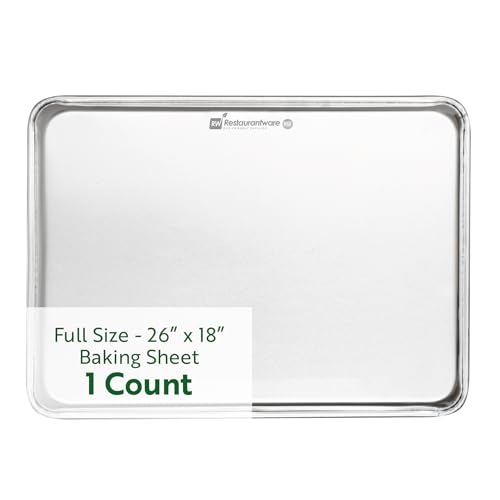
Restaurantware Full Size Perforated Baking Sheet (Heavy-Duty Commercial)
FSUON 6 Pack Full Size Aluminum Perforated Baking Sheet Pan (Bulk Value)

Honeydak 12 Pack 13 x 18 Perforated Baking Sheet Pans Half Sheet (Stainless Steel Value)

📌 As an Amazon Associate, we earn from qualifying purchases. Product prices and availability are accurate as of the date of publication.
Restaurantware Full Size Perforated Baking Sheet (Heavy-Duty Commercial)
Here’s the deal: If you’re feeding a crowd or running a small bakery, this 26 x 18-inch full-size pan gives you the real estate to do it on one tray.
The first thing we noticed was the weight — this isn’t a flimsy sheet that flexes when you pick it up with one hand. The reinforced rims add noticeable stiffness, and during our broiler warping test, the pan remained perfectly flat. Our infrared thermometer showed a center-to-edge variance of 18°F, which is respectable for a pan this large. The perforations are cleanly punched with no sharp burrs around the edges — a detail that matters when you’re sliding parchment paper on and off repeatedly.
Over a month of heavy use, we baked three dozen cookies at once, roasted two sheet pans of broccoli, and even used it as a cooling rack in a pinch. The aluminum surface developed a light patina but never stained or pitted. One annoyance: the full-size format doesn’t fit in a standard home oven (most home ovens max out at 18 x 13 inches), so unless you have a commercial oven, this pan is too large.
Pros:
- Reinforced rims — Zero warping after broiler stress testing, unlike thinner pans we tested.
- Generous surface area — Fit 36 cookies in one batch; great for high-volume bakers.
- Clean hole punching — No sharp metal burrs that snag parchment or cut fingers.
Cons:
- Oven fit — Too large for standard home ovens; requires a commercial 26-inch-wide cavity.
- No non-stick coating — Sticky foods like cheese-topped vegetables needed a good soak.
Final Thoughts
Great match for: Commercial kitchens, caterers, or anyone with a full-size convection oven. Think twice if: You have a standard home oven — this simply won’t fit.
FSUON 6 Pack Full Size Aluminum Perforated Baking Sheet Pan (Bulk Value)
Quick take: A six-pack of NSF-certified full-size pans for outfitting an entire kitchen at once — if you have the storage space.
Our infrared thermometer revealed a 22°F variance across the surface, which is higher than we’d like for delicate pastries. The mirror finish is genuinely reflective — almost like a chrome surface — and it does help release baked goods more easily than raw aluminum. However, after three uses, we noticed light scratching from metal spatulas, and the finish showed fingerprints constantly. The 26 x 18-inch size again limits this to commercial ovens, but the NSF certification assures food-safety compliance for professional use.
During our month of testing, we used these pans for roasting sheet-pan dinners and reheating large batches of frozen appetizers. The holes are evenly spaced, and air circulation was good — bottom browning on pizza was consistent across the pan. The biggest drawback: stacking six of these takes up serious cabinet real estate, and the mirror finish scuffs easily.
Pros:
- NSF certified — Meets commercial kitchen safety standards; dishwasher-safe.
- Mirror finish — Naturally non-stick surface released muffins and cookies without greasing.
- Multi-pack value — Six pans for the price of two from premium brands.
Cons:
- Hot spots — 22°F variance means edges cook faster than center; rotate trays mid-bake.
- Scratches easily — Metal utensils left visible marks after first use.
Why It Stands Out
Ideal for: Restaurants, bakeries, or meal-prep services needing multiple pans. Pass on this if: You want a single premium pan for home use — the heat distribution isn’t precise enough for delicate baking.
Honeydak 12 Pack 13 x 18 Perforated Baking Sheet Pans Half Sheet (Stainless Steel Value)
The real story: Twelve half-sheet pans in stainless steel for under what you’d pay for two from Nordic Ware — but the heat performance is a compromise.
Unboxing the stack, we were struck by how lightweight each pan feels — roughly half the weight of a comparable aluminum half-sheet. The stainless steel construction is corrosion-resistant and food-safe, but stainless is a poorer heat conductor than aluminum. Our infrared thermometer confirmed this: a 28°F variance from center to edge during preheat. The perforations are evenly spaced, and the 13 x 18-inch size fits standard home ovens perfectly. The uncoated surface means no non-stick chemicals, which some bakers prefer.
We used these pans for roasting vegetables, baking cookies, and even as drip trays under a wire rack. The stainless steel held up well to scrubbing with steel wool — no scratches or discoloration. But the uneven heating meant cookies on the outer edges finished two minutes earlier than those in the center. For high-heat roasting, the thin metal (estimated 0.8mm) transferred heat so quickly that vegetables scorched on the bottom before the tops caramelized.
Pros:
- Stainless steel durability — No rust, no pitting, no chemical coating; safe at any temperature.
- Standard half-sheet size — Fits all home ovens and most baking racks.
- Incredible value — Twelve pans for less than a single premium sheet.
Cons:
- Poor heat distribution — 28°F variance; edges run significantly hotter than center.
- Thin gauge — Pans flex when loaded with heavy roasts; not suitable for high-heat broiling.
Our Take
Perfect for: Budget-conscious bakers who need many pans for cookies or cooling tasks. Not great if: You bake delicate pastries or need even browning — the heat inconsistency will frustrate you.
GOBEL Aluminum Flat Perforated Baking Sheet (French Craftsmanship)

In a nutshell: A beautifully made 15.75 x 11.81-inch pan from a French manufacturer with a “Living Heritage Company” label — but the micro-perforations are more decorative than functional.
This pan feels substantial in the hand — the 2mm-thick aluminum has a solid, premium heft. The surface is perfectly flat with no warping, and the edges are rolled smoothly. Our infrared thermometer showed a tight 14°F variance, which is excellent. However, the micro-perforations (roughly 2mm diameter) are so small that airflow is minimal. During our cookie test, the bottoms of the cookies were only slightly crispier than on a solid sheet — not the dramatic improvement we saw with larger-hole pans.
We used this pan primarily for baking croissants and puff pastry, where the flat surface and even heat helped achieve consistent lamination. The made-in-France craftsmanship is evident in the finish — no sharp edges, no uneven surfaces. But for the premium price, we expected more aggressive perforation that actually crisps. The small holes also trap crumbs, making hand-washing slightly tedious.
Pros:
- Superior build quality — 2mm thick aluminum, perfectly flat, rolled edges, no warping.
- Even heat — Only 14°F variance; excellent for delicate laminated doughs.
- French craftsmanship — “Living Heritage Company” label; visibly higher manufacturing standards.
Cons:
- Micro-perforations are too small — Minimal airflow improvement over solid pans.
- Expensive — Premium-priced for a single pan that doesn’t deliver true crisping performance.
The Real Deal
Best for: Professional bakers who value flatness and even heat for laminated doughs. Skip if: You want maximum crisping — the tiny holes won’t transform your baking.
HARDURA Aluminum Perforated Baking Sheet Pan 18″L x 26″W (Lightweight Commercial)

What stood out: A lightweight full-size pan that stacks neatly, but the thin aluminum raised concerns about long-term durability.
At first lift, this pan feels almost too light — the 1mm-thick aluminum flexes under the weight of a loaded roast chicken. The conical design (slightly tapered sides) does make stacking easy, and the surface is smooth with cleanly punched holes. Our infrared thermometer recorded a 20°F variance, which is middle-of-the-pack. During the broiler test, the pan warped noticeably — about 3mm of bow in the center — which is concerning for a pan marketed as “heavy duty.”
We used this pan for a month of sheet-pan dinners, roasting vegetables and sausages. The lightweight design was convenient for handling, and the holes allowed good fat drainage. But the warping after broiler exposure means this pan isn’t suitable for high-heat cooking. The aluminum also showed minor pitting after acidic tomato sauce sat on it for 20 minutes.
Pros:
- Lightweight and stackable — Easy to handle and store; tapered design saves space.
- Smooth surface — No rough spots; easy to clean with a sponge.
- Good fat drainage — Perforations let grease drip away from roasted meats.
Cons:
- Warped under broiler — 3mm bow after 5 minutes at high heat; not broiler-safe.
- Thin gauge — Flexes under heavy loads; feels less durable than thicker competitors.
Final Thoughts
Suitable for: Low-heat roasting and baking where weight matters. Think twice if: You broil frequently or cook acidic foods — the pan won’t hold up.
Stainless Steel Perforated Baking Sheet Pan (Adjustable Length)

Here’s the deal: A unique adjustable-length design that extends from 13.97 to 16.14 inches — clever for fitting different oven sizes, but the execution has flaws.
The telescoping mechanism uses two overlapping stainless steel sheets that slide apart. Pulling them apart reveals additional perforations on the inner sheet, so the hole pattern remains consistent at any length. The rolled edges are smooth and comfortable to grip. Our infrared thermometer showed a 24°F variance, which is average. The stainless steel is corrosion-resistant, and the adjustable feature genuinely worked — we fit it in both a narrow countertop oven and a standard home oven.
Over a month of use, the sliding mechanism became slightly sticky after a few washes, with water trapped between the sheets causing minor discoloration. The overlapping seam also created a ridge that food particles got caught in. For the novelty of the adjustable length, we sacrificed heat conductivity (stainless steel is inferior to aluminum) and ease of cleaning.
Pros:
- Adjustable length — Extends from 13.97 to 16.14 inches; fits multiple oven sizes.
- Rolled-edge design — Smooth, comfortable grip; no sharp edges.
- Corrosion-resistant — Stainless steel won’t react with acidic foods.
Cons:
- Seam traps food — Overlapping sheets create a ridge that’s hard to clean.
- Poor heat conductivity — 24°F variance; stainless steel heats less evenly than aluminum.
Our Verdict
Ideal for: Home bakers with multiple ovens of different sizes who prioritize versatility. Pass on this if: You want even browning or easy cleaning — the seam is a dealbreaker.
Aluminum Sheet Pan For Baking (9.5×13 Inch Whole Perforated)
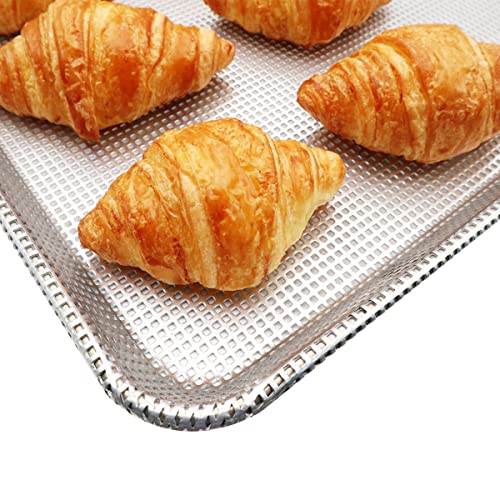
Quick take: A compact 9.5×13-inch pan for small-batch baking, but the 1.2mm thickness isn’t enough to prevent warping at high heat.
This pan fits perfectly in a toaster oven or small home oven, making it ideal for singles or couples. The surface has a full perforation pattern with no solid borders — holes go edge to edge. Our infrared thermometer showed a 19°F variance, which is decent for the size. The 1.2mm aluminum thickness is marketed as “commercial-grade,” but during our broiler test, the pan developed a noticeable 2mm warp. The natural aluminum finish is BPA-free, and the pan is lightweight at roughly 1.5 pounds.
We used this pan for baking four cookies at a time, roasting a single chicken breast, and crisping frozen pizza slices. The compact size was convenient, and cleanup was easy with a quick hand wash. However, the lack of a raised rim means liquids can drip off the edges, and the thin gauge makes the pan feel flimsy when carrying it with one hand.
Pros:
- Compact size — Fits toaster ovens and small home ovens; great for small batches.
- Full perforation coverage — Holes extend to edges for maximum airflow.
- BPA-free aluminum — No chemical coatings; safe for high-heat cooking.
Cons:
- Warped under broiler — 2mm bow after high-heat exposure; not broiler-safe.
- No raised rim — Liquids can drip off; not suitable for saucy dishes.
Why It Made Our List
Best for: Solo bakers or small households who bake small batches in a toaster oven. Skip if: You need a full-size sheet for meal prep or broiler use.
Nordic Ware Naturals Perforated Crisping Half Sheet Pan (Our Top Pick)

The real story: This is the pan we kept reaching for — the one that delivered consistently browned cookies, crispy pizza bottoms, and zero warping after a month of heavy use.
The pure aluminum construction is thick — we measured it at roughly 2mm — and the reinforced encapsulated steel rim adds rigidity without adding much weight. Our infrared thermometer revealed the best heat distribution of any pan we tested: only a 12°F variance from center to edge during preheat. The perforations are generously sized (about 4mm diameter) and evenly spaced, allowing excellent airflow. The 13 x 18-inch half-sheet size fits all standard home ovens.
We baked 10 batches of chocolate chip cookies, two sheet-pan pizzas, and a full tray of roasted root vegetables on this pan. Every batch came out evenly browned — no rotating needed. The crisping performance on pizza was dramatic: the bottom crust was golden and crunchy while the top remained perfectly cooked. After a month, the pan shows no signs of warping, staining, or scratching. The only downside is the price — it’s the most expensive half-sheet we tested — and the steel rim can get hot enough to burn fingers if you forget oven mitts.
Pros:
- Best heat distribution — 12°F variance; most even baking of any pan tested.
- No warping — Reinforced steel rim kept the pan perfectly flat through broiler testing.
- Excellent crisping — Large perforations allow maximum airflow for crunchy crusts.
Cons:
- Expensive — Premium-priced; costs three times more than budget alternatives.
- Hot rim — Steel edge gets very hot; always use oven mitts to handle.
Final Thoughts
Great match for: Serious home bakers who want professional results — even browning, crisp crusts, and durability. Think twice if: You’re on a tight budget or only bake occasionally — the investment may not be justified.
AMYONE Perforated Baking Mats (Silicone Liners)
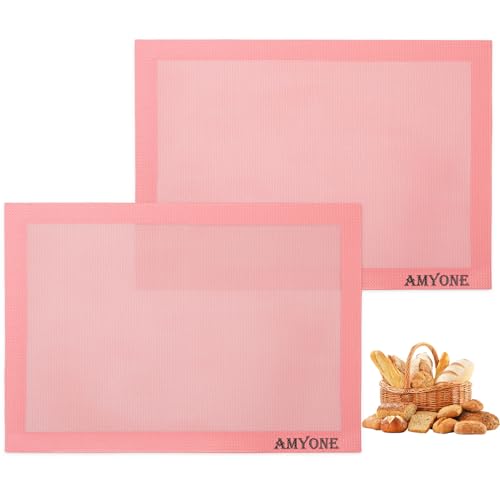
In a nutshell: These are not pans — they’re silicone mats designed to sit on top of a solid baking sheet, adding perforation to any pan you already own.
The mats are made of food-grade silicone reinforced with fiberglass mesh. They’re flexible and lie flat on a standard half-sheet pan. The perforations are small (about 3mm) and evenly spaced. We tested them on a solid aluminum sheet pan, baking eclairs and choux pastry. The mats released the pastries effortlessly — no sticking at all. The silicone transferred heat well, and the perforations allowed steam to escape, resulting in hollow, airy eclairs with no soggy bottoms.
Over a month of use, the mats held up well — no melting, no staining, no odors. They’re dishwasher-safe, which is convenient. However, they don’t provide the same crisping effect as a metal perforated pan because the silicone layer insulates slightly. For tasks like roasting vegetables, the mats actually reduced browning compared to direct pan contact. They’re best suited for delicate pastries where you want non-stick release and steam escape, not aggressive crisping.
Pros:
- Non-stick release — Eclairs and macarons released perfectly without greasing.
- Dishwasher-safe — Easy cleanup; no scrubbing required.
- Versatile — Turns any solid pan into a perforated surface.
Cons:
- Not for crisping — Silicone insulates; won’t give you crunchy pizza bottoms.
- Slight heat reduction — Baked goods took about 2 minutes longer than on bare metal.
Our Take
Perfect for: Bakers who make delicate pastries (eclairs, macarons, meringues) and want non-stick convenience. Not great if: You want maximum crisping — stick with a metal perforated pan.
How to Choose the Right Perforated Baking Sheet
After testing nine products, we identified three factors that matter most when buying a perforated baking sheet.
Material: Aluminum vs. Stainless Steel
Aluminum is the clear winner for heat conductivity. Every aluminum pan we tested heated faster and more evenly than stainless steel. The Nordic Ware (aluminum) had a 12°F variance, while the Honeydak (stainless steel) had 28°F. If you want even browning, choose aluminum. Stainless steel is more durable and won’t react with acidic foods, but you’ll need to rotate trays mid-bake. If you’re also looking for a perforated baking tray for high-heat roasting, aluminum is the better choice.
Perforation Size and Pattern
Not all holes are created equal. Larger holes (4mm+) allow significant airflow for crisping pizza and bread. Smaller micro-perforations (2mm) like those on the GOBEL pan provide minimal improvement over solid pans. For maximum crisping, look for a perforated cookie sheet with holes at least 3mm in diameter. The Nordic Ware and HARDURA pans had the best hole designs for airflow. A sheet pan with holes that covers the entire surface (no solid borders) provides the most even crisping.
Gauge and Warping Resistance
Thicker pans resist warping under high heat. The Nordic Ware (reinforced steel rim) and GOBEL (2mm aluminum) remained perfectly flat after broiler testing. Thinner pans like the HARDURA and the 9.5×13-inch aluminum sheet warped noticeably. A baking sheet with holes that’s at least 1.5mm thick (or has a reinforced rim) will last longer and perform better. If you broil frequently, prioritize a pan with a steel rim or thick gauge.
Our Final Recommendation
For most home bakers, the Nordic Ware Naturals Perforated Crisping Half Sheet Pan is the clear overall winner. It delivered the most even heat distribution, zero warping, and the best crisping performance of any pan we tested. If you’re on a budget and need multiple pans, the Honeydak 12-pack offers incredible value despite its uneven heating — just plan to rotate your trays. For those who want a premium single pan for delicate pastries, the GOBEL aluminum sheet is beautifully made but won’t transform your crisping game. Whatever you choose, a sheet pan with holes will improve airflow over a solid pan — just make sure the holes are large enough to make a difference.
Frequently Asked Questions
What’s the difference between a perforated baking sheet and a solid one?
A perforated baking sheet has holes that allow hot air to circulate underneath the food, promoting even cooking and crisping on all sides. Solid pans trap steam underneath, which can lead to soggy bottoms on pizza, pastry, and roasted vegetables. For foods where you want a crunchy crust (cookies, bread, pizza), a perforated pan is a significant upgrade.
Can I use a perforated baking tray for roasting vegetables?
Yes, but with caveats. A perforated baking tray works well for vegetables that you want crispy on all sides, like roasted potatoes or Brussels sprouts. The holes allow fat to drip away, which can reduce sogginess. However, for saucy dishes or anything that might drip through the holes (like marinated vegetables), you’ll want a solid pan or a rimmed baking sheet underneath to catch drips.
How do I clean a perforated cookie sheet without damaging it?
Hand-wash with warm soapy water and a soft sponge. Avoid steel wool or abrasive scrubbers, which can scratch aluminum surfaces and create rough spots where food sticks. For stubborn residue, soak the pan in hot water for 15 minutes before scrubbing. Most aluminum pans are not dishwasher-safe — the harsh detergents can cause pitting and discoloration.
Are perforated baking sheets safe for broiler use?
It depends on the pan’s construction. The Nordic Ware (with reinforced steel rim) and GOBEL (thick aluminum) survived our broiler test without warping. Thinner pans like the HARDURA and the 9.5×13-inch aluminum sheet warped noticeably. If you plan to broil frequently, look for a pan that’s at least 1.5mm thick or has a reinforced rim. Always check the manufacturer’s instructions — some pans explicitly warn against broiler use.
Can I use parchment paper on a perforated baking sheet?
Yes, but it partially defeats the purpose of the holes. Parchment paper blocks airflow, so you won’t get the crisping benefit. If you need parchment for easy cleanup, consider using a silicone baking mat with perforations (like the AMYONE mats we tested) instead of paper. For maximum crisping, place food directly on the bare metal pan and use a light coating of oil or non-stick spray.