


There’s been a quiet but noticeable shift among home bakers lately: more folks are skipping the traditional tube pan and baking their favorite classic desserts in simple rectangular loaf pans. This isn’t just a fleeting trend—there’s solid reasoning behind it. In my own kitchen, after testing hundreds of kitchen tools, I’ve found that the heavy, unremarkable loaf pan often outperforms flashier bakeware when making pound cakes. The ones that last and release perfectly baked loaves aren’t the prettiest—they’re just the sturdiest and most straightforward items in the drawer.
Key Takeaways
- Loaf pans create a denser, moister pound cake with a classic rectangular shape.
- Proper pan prep and batter distribution are crucial for even baking and easy release.
- Non-stick claims rarely last—use parchment and butter to avoid sticking and delamination.
- Understanding ingredient ratios and oven temperature ensures a golden crust and tender crumb.
How to Bake a Pound Cake in a Loaf Pan: Step-by-Step
Step 1: Gather Your Ingredients and Tools
For a traditional pound cake, you need 1 cup unsalted butter (room temperature), 1 cup granulated sugar, 4 large eggs, 2 cups all-purpose flour, 1/2 teaspoon salt, and 2 teaspoons pure vanilla extract. If you want a lighter crumb, add 1 teaspoon baking powder (the purists will argue this isn’t classic, but it helps in a loaf pan format).
Use a 9×5-inch loaf pan—avoid anything flimsier than 18-gauge steel. Non-stick coatings lose their magic quickly, especially after repeated bakes. Stick with heavy-duty pans and line them with parchment for consistent results.
Step 2: Prepare the Loaf Pan
Even the best non-stick surface won’t guarantee an easy release after multiple uses. Coat the inside of the pan with a thin layer of softened butter, making sure to get into every corner. Dust lightly with flour, then tap out excess. For best results, lay a strip of parchment paper in the bottom and up the sides—this reduces sticking and, more importantly, keeps any compromised coating from ending up in your cake after repeated use.
Step 3: Mix the Batter Properly
Cream the butter and sugar together for at least 5 minutes until pale and fluffy. This step builds air into the batter, helping the cake rise properly in the denser environment of a loaf pan. Add eggs one at a time, beating well after each addition. Sift the flour and salt together, then mix in gradually—do not overmix or the cake will turn tough. Stir in vanilla at the end.
Step 4: Fill the Pan and Bake
Spoon the batter into your prepared loaf pan. Tap the pan gently on the counter to remove air pockets and level the surface with a spatula. For a traditional crust, run a buttered knife lengthwise through the center of the batter—this encourages that classic pound cake split.
Bake at 325°F (165°C) for 55–70 minutes, depending on your oven and the pan material. Avoid the temptation to open the oven door early, as the structure needs time to set. The cake is done when a toothpick inserted in the center comes out clean, with just a few moist crumbs attached.
Step 5: Cooling and Releasing the Cake
Let the cake rest in the loaf pan for 10–15 minutes after baking. This allows the crumb to set and makes unmolding easier. Use the parchment sling to lift the cake out and cool completely on a wire rack. Never leave the cake in the pan longer than 20 minutes—steam can cause sticking and, if the coating is already compromised, pieces may pull away.
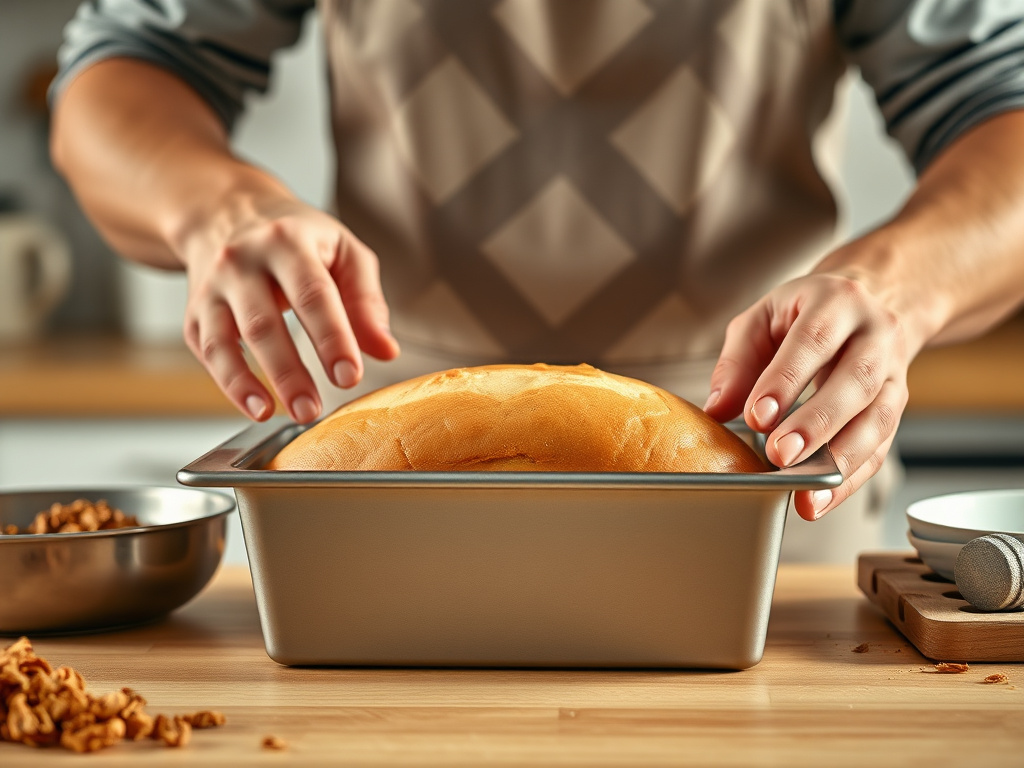
Pound Cakes in Loaf Pans: Why This Method Works
Shape and Heat Distribution
Loaf pans concentrate heat along the edges, which helps form a deeper, more caramelized crust. The relatively narrow profile also means the center cooks more evenly compared to a Bundt or tube pan. If you’re chasing that classic golden crust, the loaf pan’s direct metal-to-batter contact is a huge advantage—unless, of course, your non-stick coating is already flaking off and interfering with browning.
Moisture Retention and Texture
Because of the pan’s shape and the thickness of the batter, pound cakes baked in loaf pans stay moist longer. The direct heat from the pan sides creates a firmer exterior but traps moisture in the center. This is one reason loaf-form pound cake slices so beautifully and holds up for several days, even when stored at room temperature.
Adaptability to Recipe Variations
Swapping out a tube pan for a loaf pan requires minimal adjustment. Reduce oven temperature by 10–15 degrees compared to tube pan recipes, and check for doneness at the lower end of the recommended baking window. Add-ins like nuts, citrus zest, or dried fruit work well in loaf pan versions, but always fold them in gently to avoid compacting the batter.

Preventing Sticking, Tearing, and Coating Damage—A Skeptic’s Guide
Stop Trusting Non-Stick Labels
After years of scrambling eggs fat-free and baking sticky batters in every imaginable pan, I’ve learned that most non-stick coatings rarely hold up past two months of heavy use. Delamination starts at the corners and quickly spreads. For pound cakes, this means possible sticking, torn crusts, or worst of all—bits of coating in your cake.
Line your loaf pan with parchment every time. Even if the pan looks pristine, the insurance is worth the minor effort. Butter and flour the pan first, then add the parchment sling for maximum protection and the cleanest edges.
Cooling and Unmolding Matters More Than You Think
Patience is key. Attempting to unmold a pound cake too soon risks tearing the crumb or stripping away what’s left of the coating. Always allow at least 10 minutes for the cake to set in the pan before lifting out—never longer than 20, or moisture will start to reabsorb at the sides.
Expert Tips for the Perfect Pound Cake Outcome
Ingredient Temperature and Mixing
Use room temperature butter and eggs for the most even emulsion. Cold ingredients lead to curdled batter, which results in uneven texture and streaky crumb. Mix on medium speed—high speed overworks the gluten and toughens the cake.
Oven Accuracy and Rack Position
Place your loaf pan on the center rack for even heat flow. Oven thermometers are a must—most home ovens run 10–25 degrees hotter or cooler than the reading. Too hot, and the crust will set before the center rises; too cool, and the cake will turn heavy and pale.
Storage and Slicing
Once cooled completely, wrap the cake tightly in wax paper or plastic wrap. It keeps at room temperature for up to 4 days. For clean slices, use a serrated bread knife and wipe the blade between cuts.
Love classic sweets? Explore new textures with our German Bee Sting Cake recipe and see how different pans influence the final bake.
Intermediate and Advanced Troubleshooting for Loaf Pan Pound Cakes
Sinking Centers and Dense Texture
If your pound cake collapses in the middle, it’s usually from underbaking or overmixing. Always test with a toothpick, checking in several spots. If your oven heats unevenly, rotate the pan halfway through—but only after the cake has set (about 40 minutes in).
Cracked Tops—When It’s Good and When It’s Not
The signature split down the center is a hallmark of loaf pan pound cake. If the crack is off to one side or the cake bursts unevenly, your oven heat is likely too high or the batter wasn’t leveled before baking. Lower the oven temperature by 10 degrees for the next attempt and smooth the batter well before baking.
Removing Stubborn Cakes from Older Pans
Even with parchment, older pans with flaking coatings can snag the cake crust. Use an offset spatula to gently loosen the sides before lifting. If the cake sticks, let the pan rest upside down on a rack for 5 minutes—the steam often loosens the bond.
After perfecting your classic loaf, you can branch out and try something like the layered Tuxedo Cake for a different spin on home baking techniques.
Frequently Asked Questions
Can I use a glass loaf pan for pound cake recipes?
Glass pans are safe for baking pound cake, but they retain heat longer than metal. This means the cake may brown too quickly on the sides while the center remains underdone. Lower the oven temperature by 25°F and start checking for doneness 10 minutes early. Always use parchment to avoid sticking, especially as glass surfaces don’t release as reliably after repeated use.
How do I prevent pound cake from sticking to the loaf pan after several bakes?
Regular use wears down even the best non-stick pans—coatings degrade, especially at the corners. The most consistent solution is to combine butter, a dusting of flour, and a parchment sling. After removing the cake, wash the pan by hand and avoid the dishwasher to delay coating breakdown. If you’re exploring other baking projects, see how pan prep affects structure in our Bee Sting Cake guide.
What’s the best way to store leftover pound cake baked in a loaf pan?
Once fully cooled, wrap the pound cake tightly in wax paper or plastic wrap. Store it at room temperature for up to 4 days. For longer storage, freeze individual slices for up to 2 months—thaw at room temperature. Airtight wrapping prevents the cake from drying out and preserves its buttery flavor.
Why does my pound cake rise unevenly in the loaf pan?
Uneven rising is often due to an oven that’s too hot or batter that was not evenly spread before baking. Always level the batter with a spatula and use an oven thermometer for accuracy. Place the pan in the center of the oven. If you’d like to try another loaf-baked dessert, the one-pot creamy chicken pasta article discusses pan distribution tips that also apply to baking.
How can I add flavors or mix-ins to my loaf-style pound cake?
Pound cakes baked in loaf pans are wonderfully adaptable. Gently fold in up to 1 cup of extras—like chocolate chips, citrus zest, or chopped nuts—right before pouring the batter into the pan. Be careful not to overmix, or the cake will turn dense. Distribute mix-ins evenly for best results.