


Did you know that nearly 50% of home cooks unknowingly use pots and pans that don’t perform properly on induction cooktops? The sizzle you expect from a high-heat burner can vanish if you’re cooking with the wrong material. Having tested hundreds of kitchen products, I can tell you the tools built for longevity are rarely flashy—they’re the simplest, heaviest, and most unassuming pans in the drawer. Knowing what works on induction isn’t just about new gadgets; it’s about understanding the science and feel of your cookware.
Key Takeaways
- Strong magnetic attraction is the clearest sign your cookware works on induction stoves.
- Heavier, flat-bottomed pans (especially cast iron and stainless) deliver the best results on induction for pro-level searing.
- Simple magnet and water tests—done in seconds—will confirm your pan’s compatibility without guesswork.
The Science of Induction Cooking: Why Compatibility Matters
How Induction Heats Your Pan
Induction cooktops use electromagnetic fields to heat cookware directly—no open flames, no glowing coils. When you set a pan on an induction burner, an alternating current passes through a copper coil beneath the glass. This generates a magnetic field that induces tiny electrical currents (called eddy currents) in the base of your pan. These currents cause the metal to heat up rapidly and evenly.
But here’s the catch: Not every metal responds to these magnetic fields. Only those with enough iron content—ferrous metals—can convert the energy into heat efficiently. That’s why pure copper, glass, or aluminum pans won’t get hot on induction unless they have a magnetic steel base.
Why Thermal Mass and Flatness Matter
For high-heat searing, you want thermal mass—a pan that can store and deliver heat without dropping temperature when you lay on a cold steak. Induction cooktops excel here, but only if your pan is compatible and flat-bottomed. A warped or thin pan can cause hot spots, uneven browning, and disappointing crusts (the cardinal sin for a searing purist).

Step-By-Step: Testing Your Cookware for Induction Use
Step 1: The Magnet Test (10 Seconds)
Grab a strong refrigerator magnet—one with bite, not a flimsy souvenir. Press it firmly against the bottom of your pan:
- Strong attraction: Your pan is induction-ready. This is most reliable.
- Weak or no pull: The pan likely won’t work. Skip it for induction burners.
This works because induction cookers require ferrous (magnetic) metals. Most cast iron, carbon steel, and many stainless pans pass this test. Pure aluminum or copper, unless layered with magnetic steel, will fail.
Step 2: Inspect the Bottom for Symbols or Labels
Check the pan’s underside for induction symbols: a coil or zigzag line is typical. Some brands write “induction” or use “IH” (for induction heating). However, not all manufacturers label their cookware, especially older or commercial pans. That’s why the magnet test remains the gold standard.
Step 3: The Water Boil Test (3 Minutes)
If you’re still unsure, pour half a cup of water into the pan. Place it on the induction burner and set it to high. If the water boils rapidly (usually in under 2 minutes for most induction stoves), your pan is compatible. If nothing happens, or heating is sluggish, your pan isn’t making the electromagnetic connection required.
Step 4: Assess the Weight and Flatness
Heavy, thick-bottomed pans (especially cast iron and tri-ply stainless) perform best. Their weight means more thermal mass—essential for that deep brown crust on a steak or chicken thigh. Flatness is critical. Even a slight wobble reduces contact with the cooktop, limiting energy transfer and causing uneven heating.
If you want a pan that sears like a restaurant skillet, focus on these traits. Lightweight, warped, or thin pans simply can’t compete, no matter what the label claims.
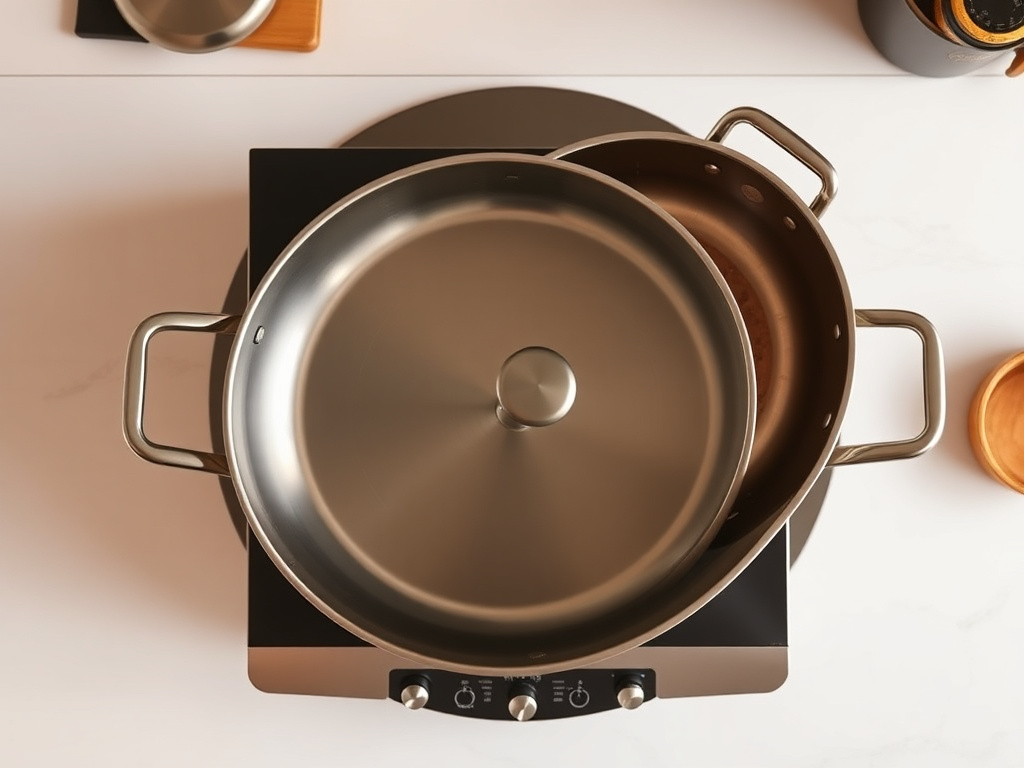
Common Cookware Materials: What Works—and What Fails—on Induction
Cast Iron: The King of Induction Searing
Nothing beats cast iron for thermal mass and browning. These pans are pure ferrous metal, so they work perfectly on induction. Their weight means less temperature drop when you add cold ingredients. If you care about true steakhouse-level crusts, this is where you start.
Stainless Steel: Check the Core
Not all stainless pans are created equal. Many are “tri-ply,” with an aluminum core sandwiched between stainless steel. If the bottom layer is magnetic (try the magnet test), you’re good to go. Some high-end pans use non-magnetic stainless for corrosion resistance—great for acid, terrible for induction.
Aluminum and Copper: Only If Labeled Induction-Ready
Pure aluminum and copper are not magnetic. Some modern pans fuse a thin magnetic steel plate onto the base, making them compatible. Always check with a magnet. If it doesn’t stick, the pan won’t work on induction, period.
Nonstick Pans: Magnetism Still Rules
Nonstick coatings don’t affect induction performance. What matters is the base material. Many nonstick pans are aluminum with a magnetic steel disc welded on. Test with a magnet at the center. If it sticks, even a nonstick pan can sear at induction heat (though I’d always reach for seasoned cast iron first for a true crust).
Optimizing Searing and Browning on Induction Stovetops
Maximize Preheat for True Sear
Induction burners heat pans faster than gas or standard electric. For a deep Maillard crust, preheat your pan to at least 425°F (218°C) before adding oil or meat. Use a surface thermometer or watch for oil to shimmer—don’t let it smoke unless you want a bitter flavor.
Heavy pans (cast iron, thick stainless) hold this heat, so when you add cold protein, the temperature drop is minimal. That’s the secret to an even, golden crust, whether you’re making apple cider chicken thighs or a classic steak.
Flat-Bottom Pans—Why They Matter
Induction cooktops require full contact between the pan and the glass for maximum efficiency. Even a slight bulge or wobble reduces heating power and leaves you with pale, uneven browning. Always check your pan for flatness before a high-heat sear.
Don’t Overcrowd the Pan
Even with the right cookware, crowding the pan cools the surface and sabotages browning. For restaurant-quality results, give each piece of meat space—no touching. If you’re cooking for a crowd, work in batches. This is crucial whether you’re crisping chicken thighs or browning the base for creamy chicken pasta. Induction’s fast recovery helps, but thermal mass is still king.
How to Maintain and Troubleshoot Your Induction-Ready Cookware
Keep the Bottom Clean and Dry
Residue or oil buildup on the pan’s base can act as an insulator, reducing conductivity and causing uneven heating. Always wipe the bottom of your pans before setting them on the cooktop. A clean, dry surface ensures the magnetic field does its job.
Check for Damage or Warping
After repeated high-heat cycles, even good pans can warp slightly. Lay your pan upside down on a flat counter and check for gaps. If it rocks or spins, it’s time to retire it from induction use. Warped pans lose contact and efficiency, ruining your browning and risking scratches to the cooktop glass.
Don’t Slide—Lift Instead
Induction cooktops are made of toughened glass, but dragging heavy cast iron or steel pans across the surface can scratch or damage the glass over time. Always lift to move or adjust pans. This keeps your cooktop (and your pans) in top shape.
Frequently Asked Questions
How can I quickly check if any pot or pan will work with an induction stove?
The fastest way is with a fridge magnet—if it sticks firmly to the bottom, your pan is suited for induction. For pans with a magnetic core only in the center, make sure your burner matches the pan size. If you want to explore more about pan choices for serious browning, read our expert skillet guide for steak frying.
Does all stainless steel cookware work on induction?
No, only stainless pans with a magnetic (ferrous) base will work. Some stainless alloys are not magnetic, especially those designed for corrosion resistance. Always test with a magnet—even high-end stainless cookware can sometimes fail this test.
Can I use enameled cast iron on induction?
Absolutely. Enameled cast iron is just regular cast iron with a glassy coating. It has the same magnetic properties, so it’s perfect for induction. Just make sure the bottom is flat for maximum contact and heat transfer.
Why does my induction burner make clicking or buzzing sounds with certain pans?
Some pans with thin or layered bases can vibrate slightly as the magnetic field interacts with the metal. This is harmless but can be annoying. Using heavier, thicker-bottomed pans often reduces or eliminates the noise, and ensures better heat distribution for perfect searing.