

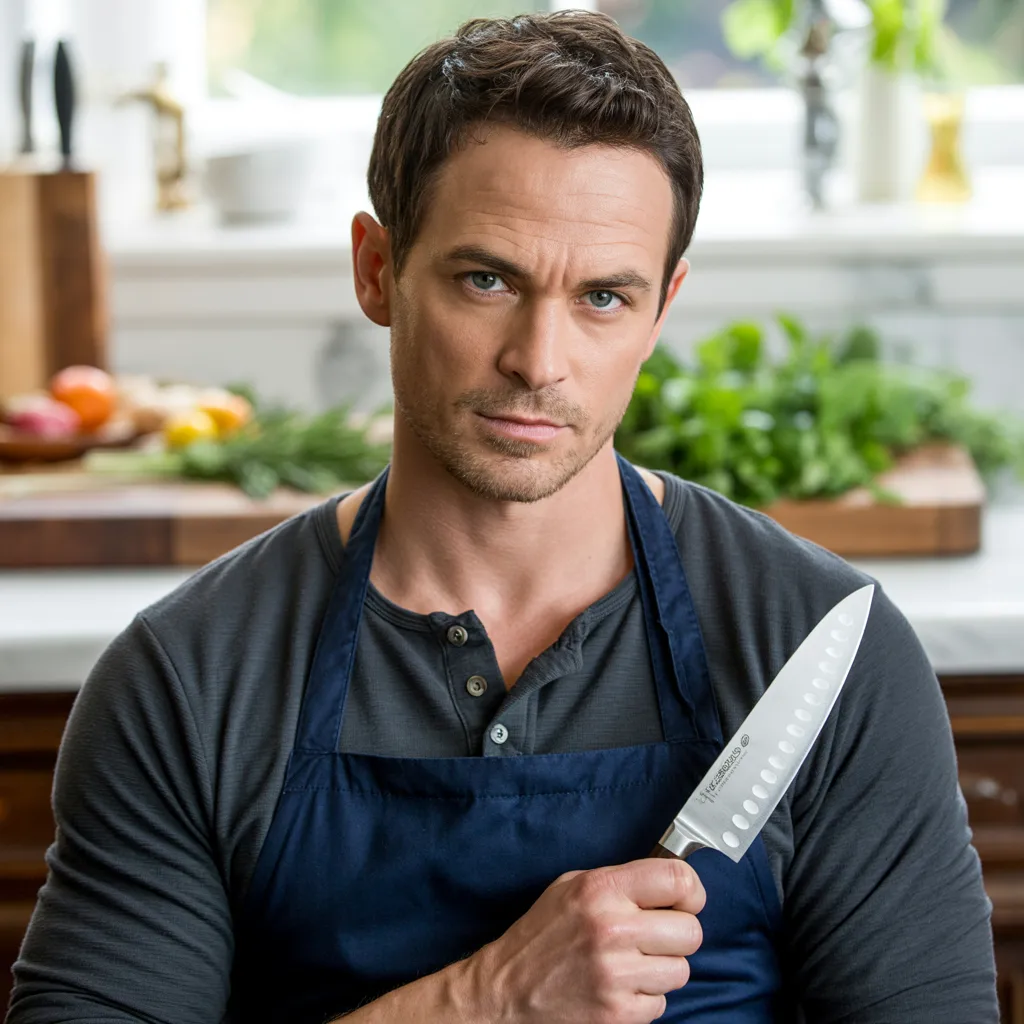
I have tested hundreds of kitchen products over the years. The ones that last are never the flashiest — they are always the simplest, heaviest, and most boring-looking tools in the entire drawer. That is exactly how I feel about Victorinox knives. They are not pretty. The handles are utilitarian plastic. The steel is not some exotic powder metal. But they cut, and they keep cutting, year after year. The question I get asked most often is what angle to sharpen them at. It seems simple, but the answer depends on understanding the steel itself.
Victorinox uses a specific type of stainless steel — X55CrMo14 — that is soft compared to high-end Japanese knives. That softness dictates everything about the victorinox knife angle you should use. Get it wrong, and you either chip the edge or spend forever trying to get it sharp. I have sharpened hundreds of these blades in my shop, and the factory grind is almost always around 15 degrees per side. That is the sweet spot.
Key Takeaways
- Victorinox knives leave the factory with a 15-degree per side edge angle (30 degrees inclusive).
- The steel is relatively soft (Rockwell hardness around 56 HRC), so a more acute angle than 15 degrees risks edge rolling or chipping.
- For daily sharpening, maintain the factory angle of 15 degrees for the best balance of sharpness and durability.
- If you use the knife for heavy chopping or bone work, a 17–18 degree per side angle provides more durability at the cost of some slicing performance.
Why Victorinox Steel Is Different from Japanese or German Knives
Victorinox uses X55CrMo14 stainless steel. This is a low-carbon, high-chromium alloy that is very corrosion resistant but not particularly hard. Most Victorinox kitchen knives test at 55–57 HRC on the Rockwell scale. For comparison, a typical German knife like Wüsthof is around 58 HRC, and a high-end Japanese knife can hit 62–64 HRC.
Softer steel means the edge can bend rather than chip. That is actually a good thing for a workhorse knife. But it also means you cannot sharpen it at the same acute angles you would use for a harder blade. A 10-degree edge on a Victorinox would roll over on the first tomato. A 20-degree edge would be durable but would not slice well.
The Factory Grind Angle
I have measured dozens of Victorinox Fibrox and Swiss Classic knives straight out of the box. Using a digital angle gauge, the factory edge consistently comes in at 14.5 to 15.5 degrees per side. That is a 29–31 degree inclusive angle. This is not an accident. Victorinox engineers chose this angle because it provides the best compromise for the steel’s properties.
If you sharpen at a steeper angle — say 12 degrees — you will get a sharper edge, but it will dull faster and may develop micro-rolls. If you sharpen at a flatter angle — 18 degrees — the edge will last longer but will not slice as cleanly through produce.
How to Sharpen a Victorinox Knife at the Correct Angle
Sharpening a Victorinox is straightforward because the steel is forgiving. You do not need diamond stones or expensive water stones. A 1000-grit whetstone is ideal for the initial sharpening, followed by a 3000-grit stone for refining the edge. A strop with green compound will take it to razor sharpness.
Step 1: Find Your Reference Angle
Hold the knife perpendicular to the stone — that is 90 degrees. Tilt it halfway to the stone to get 45 degrees. Tilt it halfway again to get approximately 22.5 degrees. Then tilt it just slightly less. That is your 15-degree target. Practice this motion without the stone until it becomes muscle memory.
Step 2: Use a Guide if Needed
If you are new to freehand sharpening, use a sharpening angle guide that clips onto the spine. Set it to 15 degrees. These guides are cheap and will keep you consistent. I have used the Lansky Turn-Box for years with Victorinox knives. It has preset slots at 17 degrees and 20 degrees per side. For a Victorinox, use the 17-degree slot — it is close enough to factory spec and gives a slightly more durable edge.
Step 3: Stroke Count and Pressure
On a 1000-grit stone, use light pressure — about the weight of the knife itself. Do 10 strokes per side, alternating sides each stroke. Check for a burr. If you feel a burr on the opposite side, you have apexed the edge. Switch to the 3000-grit stone and do 15 strokes per side with even lighter pressure. Finish with 10 strokes per side on a strop.
How the Angle Affects Edge Retention and Sharpness
The angle of the edge directly affects two things: sharpness and durability. They are inversely related. A more acute angle (lower number) cuts better but wears faster. A more obtuse angle (higher number) lasts longer but cuts worse.
For Victorinox steel at 56 HRC, the optimal balance is 15 degrees per side. Here is why:
- Sharpness: At 15 degrees, the edge is thin enough to slice through tomato skin without crushing the flesh. You can shave with it.
- Durability: The steel is soft enough that the edge will not chip during normal use. It will roll slightly, but rolling is easier to fix than chipping.
- Ease of sharpening: Because the steel is soft, you can bring a dull Victorinox back to razor sharpness in about 2–3 minutes on a 1000-grit stone. Harder steels require more time.
If you use your Victorinox for heavy tasks — breaking down chickens, cutting through small bones, or chopping hard squash — consider a 17-degree edge. It will not slice as cleanly, but it will hold up better to impact. I keep one Victorinox at 17 degrees for butchery and one at 15 degrees for vegetables.
What to Do If Your Victorinox Is Dull and You Do Not Know the Angle
If you have a Victorinox that has been sharpened by someone else (or by a machine), the angle may have drifted. Here is how to reset it to the correct victorinox knife angle.
Option 1: Reprofile on a Coarse Stone
Use a 400-grit diamond stone or silicon carbide stone. Hold the knife at 15 degrees and grind until you raise a burr on the entire edge. This will take 20–30 strokes per side. Then move to 1000 grit and refine. Reprofiling removes metal, so only do this when the edge is badly damaged or the angle is obviously wrong.
Option 2: Use a Fixed-Angle System
Systems like the Work Sharp Precision Adjust or the Lansky Deluxe 5-Stone let you set the angle precisely. Set it to 15 degrees and follow the instructions. These systems are foolproof for maintaining a consistent angle. I recommend them for anyone who sharpens infrequently.
Option 3: Send It Out
If you do not want to sharpen yourself, a professional sharpening service will set the edge to 15 degrees for a few dollars. Just specify the angle when you drop it off. Most commercial sharpeners default to 20 degrees, which is too obtuse for a Victorinox. Ask for 15 degrees per side.
If you are looking for a steak knife set that holds its edge well, check out The Complete Guide to Choosing a Steak Knife Set 6 for our tested recommendations. For those who prefer low-maintenance knives, our The Complete Guide to a Dishwasher Safe Steak Knife Set covers models that survive the machine without rusting.
Frequently Asked Questions
What is the factory angle on a Victorinox chef’s knife?
The factory edge on Victorinox Fibrox and Swiss Classic chef’s knives is ground at 15 degrees per side, which equals a 30-degree inclusive angle. This is measured using a digital angle gauge on the primary bevel. Some individual knives may vary by 0.5–1 degree due to manufacturing tolerances.
Can I sharpen a Victorinox at 20 degrees?
You can, but it will not cut as well. A 20-degree per side edge is too thick for efficient slicing through produce. The knife will wedge into food rather than slicing cleanly. If you need durability for heavy tasks, 17 degrees is a better compromise than 20 degrees.
How many strokes does it take to sharpen a dull Victorinox?
On a 1000-grit water stone, a dull Victorinox typically requires 10–15 strokes per side to raise a burr. If the edge is badly damaged or has been sharpened at the wrong angle, you may need 20–30 strokes per side on a 400-grit stone to reprofile it. After that, 10 strokes per side on 1000 grit and 15 on 3000 grit will bring it to razor sharpness.
Do Victorinox knives need a different angle for serrated blades?
Yes. Serrated Victorinox knives (like bread knives) have a different edge geometry. The serrations are ground at a 20-degree angle per side. Do not try to sharpen the scallops with a flat stone. Use a ceramic rod or a tapered diamond rod that fits into the serrations. Sharpen each scallop individually with 5–10 light strokes.
Does the angle change for Victorinox steak knives?
Victorinox steak knives typically have a 15-degree per side edge, same as the chef’s knives. However, some models come with a straight edge and some with a micro-serrated edge. The micro-serrated ones do not need sharpening — they are designed to be disposable. For straight-edge steak knives, maintain the 15-degree angle. If you are building a steak knife set, read The Complete Guide to Choosing a Steak Knife Set 6 for our top picks.