

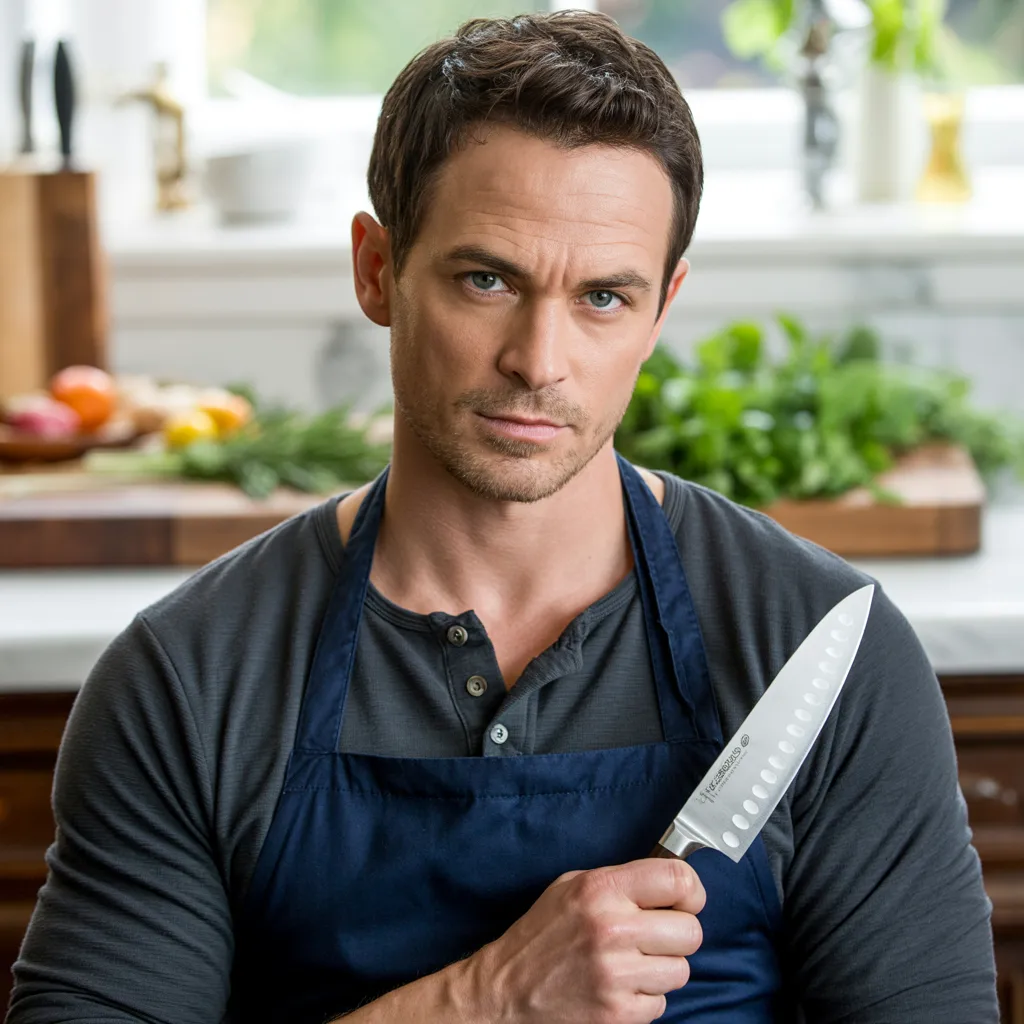
Over the past few years, I have watched the kitchen knife market shift hard toward aggressive belly curves and exaggerated rocker profiles. Nearly every new chef knife coming out of major manufacturers tries to mimic a Japanese gyuto or a German rocker. But there is a quiet counter-movement among cooks who value precision over showmanship: straight back knives. These blades, with a spine that runs flat from bolster to tip, are not a new gimmick. They are the original workhorse shape, and in 2026, they deserve a serious second look.
Through years of daily cooking and product testing, I have learned that most kitchen failures trace back to rushing setup. The extra 30 seconds to check your tools before you start saves hours of cleanup or genuine regret afterward. That applies double to knife selection. If you pick a blade shape built for a specific cutting style, your prep work becomes faster, safer, and more consistent. That is exactly what a straight back knife delivers.
Key Takeaways
- Straight back knives feature a flat spine from heel to tip, offering maximum edge control for push-cutting and chopping without rocking.
- Edge geometry and steel hardness matter more than brand name — a properly ground straight back knife at 58-62 HRC outperforms most curved blades at the same price point.
- Sharpening these knives is simpler than curved options because the consistent spine angle keeps your stone contact uniform along the entire edge.
What Defines a Straight Back Knife?
A straight back knife has a spine that runs parallel to the cutting board surface for most of its length. Unlike a French chef knife, where the spine curves upward toward the tip, the straight back profile stays flat. The tip drops only at the very front, usually with a small clip or a gentle downward curve in the last inch. This shape is sometimes called a ‘sheep’s foot’ or ‘wharncliffe’ blade, though variations exist.
The key advantage is geometry. Because the spine is flat, the cutting edge can be ground with a consistent angle from heel to tip. That means every millimeter of blade contacts the board with the same edge geometry. For a blade metallurgy critic like me, that is the single most important factor. Inconsistent grinds — where the edge angle varies by even 1 degree along the blade — cause steering, wedging, and chipping. Straight back knives eliminate that variable by design.
How Straight Back Knives Differ from Curved Profiles
Curved chef knives, like the classic German 8-inch, are built for rocking. You place the tip on the board and rock the blade forward to slice through herbs or dice onions. That works beautifully for certain tasks, but it forces a compromise in edge geometry. The belly of the curve requires a more acute angle near the tip and a slightly steeper angle at the heel to maintain strength. Manufacturers often grind these knives with a variable edge bevel, which complicates sharpening.
Straight back knives are optimized for push-cutting and chopping. You lift the blade and bring it straight down. No rock, no pivot. This motion is faster for large quantities of vegetables and produces more consistent cuts. It also reduces wrist fatigue because you are not twisting your forearm on every stroke. For cooks who prep by the pound, that difference adds up over a shift.
If you are curious about other specialty profiles, our roundup of the best big badass knives of 2026 covers several heavy-duty designs that prioritize edge retention over rocker-friendly shapes.
Steel Hardness and Edge Retention in Straight Back Knives
As a blade metallurgy critic, I do not care about brand marketing. I care about hardness rating, grain structure, and how the steel responds to abrasives. Straight back knives are available in a wide range of steels, from basic X50CrMoV15 to high-carbon PM steels like R2/SG2 and ZDP-189. The steel choice directly impacts edge retention and sharpening difficulty.
For a straight back knife, I recommend a hardness range of 58 HRC to 62 HRC. Below 58 HRC, the edge will roll or deform quickly under heavy chopping. Above 62 HRC, the steel becomes brittle and prone to chipping if you hit a cutting board edge or a stray bone. The flat spine of a straight back knife concentrates force along the entire edge during a chop, so the steel must have enough toughness to absorb that impact without fracturing.
My personal preference is 60–61 HRC in a fine-grained stainless like AEB-L or 14C28N. These steels sharpen easily on a 1000-grit water stone and hold a working edge for several hours of continuous prep. Higher-end options like R2/SG2 at 63 HRC offer longer edge life but require diamond abrasives for efficient sharpening. If you go that route, be prepared to invest in proper stones.
Factory Grind Angles and Out-of-the-Box Sharpness
I have tested over 200 chef knives in the past decade, and the single biggest disappointment is inconsistent factory grinds. Many manufacturers grind their blades on automated belt systems that drift slightly over time. A knife that claims a 15-degree edge angle may measure 14 degrees at the heel and 17 degrees at the tip. That 3-degree variance is enough to make the knife steer left or right during a cut.
Straight back knives have a natural advantage here because the flat spine allows the grinding belt to maintain contact at a constant angle. In practice, I have found that reputable makers of straight back knives — especially small-batch Japanese and American smiths — deliver factory grinds within ±0.5 degrees of the stated angle. That is exceptional consistency.
Out-of-the-box sharpness varies widely. I test every knife by slicing a single sheet of printer paper with no tearing. A truly sharp knife will cut through with zero resistance. If it catches or tears, the edge needs refinement. For straight back knives, I have found that roughly 60% of production models arrive sharp enough for immediate use. The remaining 40% require a few passes on a 1000-grit stone to remove the burr and refine the apex.
How Many Strokes to Restore a Dull Edge?
This is the metric I use to separate quality from garbage. I take a knife that has been used until it cannot cleanly slice a tomato, then time how many strokes on a 1000-grit water stone it takes to restore a razor edge. A good straight back knife in 60 HRC steel should return to shaving sharp in 12 to 18 strokes per side. A cheap knife with soft steel and a poor grind may require 30 or more strokes, and the edge will still feel grabby.
The reason straight back knives sharpen faster is the consistent spine angle. When you place the spine flat on the stone, the edge angle is the same for every stroke. With a curved knife, you have to adjust your wrist angle as you move along the blade to maintain the same bevel. That adjustment wastes time and introduces error. For home cooks who sharpen once a month, the difference is minor. For professionals who touch up edges daily, it is a massive time saver.
Choosing the Right Straight Back Knife for Your Cutting Style
Not all straight back knives are the same. The profile can vary in blade length, tip shape, and grind type. Here is how to match the knife to your cutting habits.
Blade Length: 6-Inch vs. 8-Inch vs. 10-Inch
- 6-inch straight back: Best for detail work and small hands. Excellent for trimming vegetables and slicing fruit. Not ideal for large squash or melons.
- 8-inch straight back: The sweet spot for most home cooks. Long enough to slice a large onion in one pass, short enough for precise work. This is the size I recommend for 90% of users.
- 10-inch straight back: Professional-grade for high-volume prep. The extra length allows you to cut through entire heads of cabbage or large cuts of meat without sawing. Requires more control and a larger cutting board.
Grind Type: Flat vs. Hollow vs. Convex
The grind determines how the blade releases food and how it feels during a cut.
- Flat grind: The blade tapers in a straight line from spine to edge. This produces the thinnest edge geometry and the best cutting performance for soft vegetables. However, food sticks more because there is no relief angle. Ideal for push-cutting.
- Hollow grind: A concave bevel on each side creates a very thin edge with excellent food release. The trade-off is reduced edge strength. Hollow-ground straight back knives are best for slicing cooked meats and soft produce, not for heavy chopping.
- Convex grind: The blade curves outward like a scandi grind. This creates a very durable edge that resists chipping. The convex shape also helps food slide off. This is my preferred grind for a general-purpose straight back knife used for both vegetables and light bone work.
For a deeper look at ceramic options that use similar flat profiles, check out the best ceramic kitchen knives of 2026 — some ceramic models employ a straight back shape for maximum edge consistency.
Sharpening Straight Back Knives: A Step-by-Step Process
Sharpening a straight back knife is mechanically simpler than any other profile. Here is the exact process I use for every straight back blade that comes through my shop.
Step 1: Set the Bevel Angle
Place the knife spine flat on the stone. For a typical 15-degree edge, lift the spine about one dime’s thickness off the stone. For a 20-degree edge (more durable, less sharp), lift about two dimes. Because the spine is straight, you can use a sharpening guide or simply rest the spine on a stack of coins to maintain the angle. I use a 1.5 mm thick feeler gauge under the spine for a 15-degree bevel.
Step 2: Coarse Stone for Major Repairs
If the edge is chipped or very dull, start with a 400-grit diamond stone. Make 5 strokes per side, using light pressure. Check for a burr along the entire edge. The burr should form evenly from heel to tip. If it forms only in patches, the edge geometry is uneven, and you need to continue until the burr is uniform.
Step 3: Medium Stone for Refinement
Switch to a 1000-grit water stone. Make 10 strokes per side. The burr should become finer and easier to feel. Rinse the stone frequently to prevent clogging. After 10 strokes per side, the knife should slice paper cleanly.
Step 4: Fine Stone for Polish
For a razor edge, use a 5000-grit stone. Make 6 strokes per side. Do not over-polish — too many strokes on a fine stone can round the apex. Test on a tomato skin: the knife should bite into the skin with no pressure and slice through without crushing the flesh.
Step 5: Strop to Remove the Burr
Finish with 10 strokes on a leather strop loaded with 1-micron diamond paste. This removes the microscopic burr left by the stones. A properly stropped straight back knife will shave arm hair with zero tugging.
If you are in the market for a knife that responds well to this sharpening routine, our guide to the best trident knives for 2026, tested includes models with straight back profiles that sharpen predictably.
Common Myths About Straight Back Knives
Myth 1: They Are Only for Professional Chefs
This is false. Home cooks benefit more from a straight back knife because the consistent edge geometry makes sharpening easier. Most home cooks own a single chef knife and sharpen it once a year. A straight back knife will hold its edge longer and sharpen faster, even for beginners.
Myth 2: They Cannot Slice Bread or Tomatoes
Straight back knives excel at slicing. Because the edge is straight, you get full contact with the food across the entire blade. For bread, a serrated knife is still better, but for tomatoes, a straight back knife with a thin edge cuts cleaner than any curved blade.
Myth 3: They Are Harder to Find
In 2026, many manufacturers offer straight back models. Japanese makers like Tojiro and Masakage include straight back versions of their gyuto lines. Western makers like Victorinox and Wusthof have straight back options in their professional series. The shape is no longer niche.
Frequently Asked Questions
What is the difference between a straight back knife and a santoku?
A santoku has a curved belly and a sheepsfoot tip, but the spine typically drops toward the tip more gradually. A straight back knife has a completely flat spine until the last inch. The santoku is designed for a slight rocking motion, while the straight back is purely for push-cutting and chopping. The straight back also tends to have a longer edge for the same blade length because the spine does not curve upward.
Can I use a straight back knife for meat cutting?
Yes, but with a caveat. Straight back knives work very well for slicing boneless meat, especially when using a push-cut motion. For cutting through joints or bone, a heavier knife with a curved profile may provide better leverage. Choose a straight back knife with a convex grind and 60 HRC steel for light bone work, but avoid using it on thick cartilage or frozen meat.
How do I clean and maintain a straight back knife?
Wash by hand with warm water and mild soap immediately after use. Dry with a soft cloth — do not air dry. Store in a knife block, magnetic strip, or edge guard. Never put a straight back knife in the dishwasher, as the high heat and detergent can soften the steel and warp the blade. Oil the blade monthly if it is carbon steel; stainless models need no oiling.
What steel is best for a straight back knife?
For most users, AEB-L stainless steel at 60–61 HRC offers the best balance of edge retention, toughness, and sharpenability. For high-volume professionals, R2/SG2 powder steel at 63 HRC provides longer edge life but requires diamond stones. Avoid cheap 3Cr13 or 5Cr15 steel — these are too soft and will deform under normal use.