


I remember the first time I ruined a batch of bread because I eyeballed the salt. The loaf came out dense, flat, and barely edible. Through years of daily cooking and product testing, I have learned that most kitchen failures trace back to rushing setup. The extra 30 seconds to check your tools before you start saves hours of cleanup or genuine regret afterward. That lesson applies directly to understanding weight scale chemistry — the principle that precise mass measurement is the foundation of consistent cooking and baking.
Key Takeaways
- Weight scale chemistry refers to the scientific principle that mass, not volume, determines ingredient ratios in recipes.
- Using a digital scale eliminates the variability of measuring cups, leading to more consistent results.
- Understanding tare weight and calibration ensures your scale reads accurately every time.
- Precision weighing is critical for baking, where small errors in leavening or hydration can ruin a recipe.
What Is Weight Scale Chemistry and Why It Matters
Weight scale chemistry is the application of gravimetric analysis — measuring mass — to cooking and baking. In a lab, chemists rely on precise balances to ensure reactions work as expected. In your kitchen, the same principle applies. When you measure flour by volume, you can be off by 20% or more depending on how tightly it packs. A scale removes that guesswork.
Every recipe is a chemical formula. Flour provides structure, water hydrates gluten, yeast produces gas, salt controls fermentation. If any component is off, the reaction fails. That is why professional bakers and chefs swear by scales. They understand that weight scale chemistry is not a gimmick — it is the difference between a reliable recipe and a gamble.
The Science Behind Mass vs. Volume
Volume measurements depend on density, which varies. A cup of sifted flour weighs less than a cup of packed flour. A tablespoon of honey weighs more than a tablespoon of water. Weight eliminates this variability. One gram is one gram, whether you measure water, flour, or sugar. This consistency is the core of weight scale chemistry.
Consider this: a standard recipe calls for 250 grams of flour. If you use a measuring cup, you might get anywhere from 200 to 300 grams depending on technique. That 50-gram swing changes hydration by nearly 10%, enough to turn a soft dough into a stiff one. A scale fixes that.
How to Apply Weight Scale Chemistry in Your Kitchen
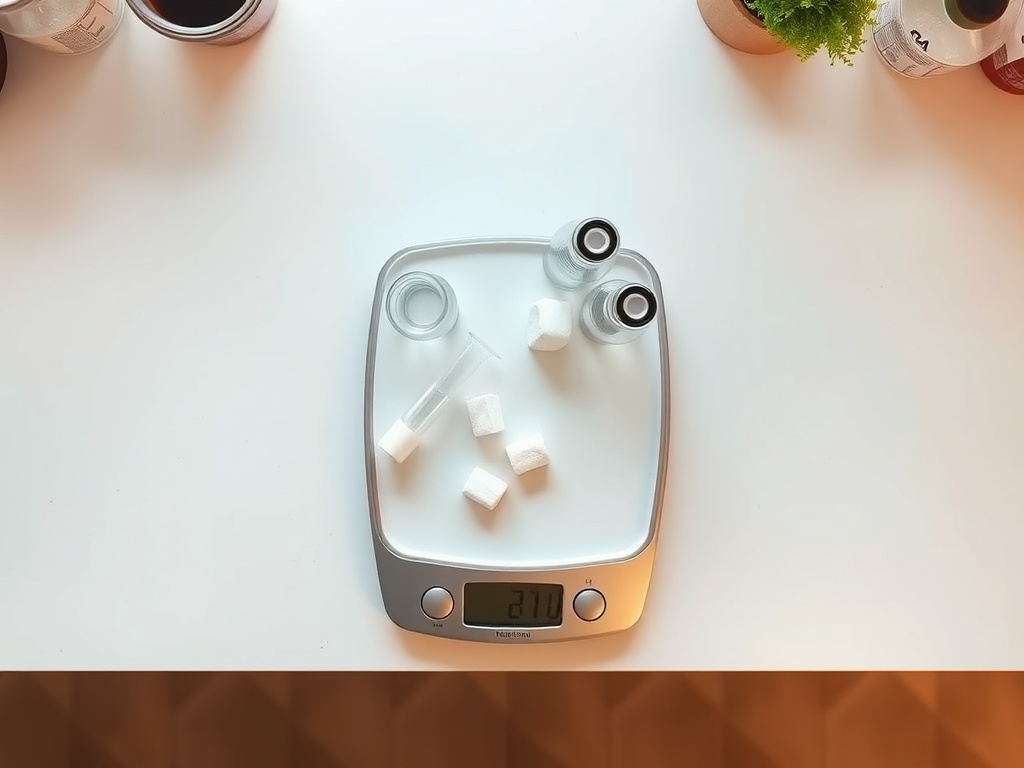
Applying weight scale chemistry is straightforward. You need a reliable digital scale and a willingness to switch from cups to grams. Start by finding recipes that list ingredients by weight. Many baking blogs and cookbooks now include gram measurements. If a recipe only uses volume, you can convert using standard density charts, though results may vary.
Step 1: Choose the Right Scale
Not all scales are equal. Look for one that measures in 1-gram increments for most tasks, but 0.1-gram increments for small quantities like yeast or salt. A capacity of at least 500 grams is fine for home use, but 2 kilograms gives you room for larger batches. If you are serious about bread, consider a scale that handles 5 kilograms. Our guide on The Best Digital Scale for Bread Making in 2026 covers top models tested for accuracy and durability.
Battery life matters. Scales that use standard AAA batteries are easier to replace than those with proprietary rechargeable packs. I test every scale I review by timing from switch-off to dry storage. A good scale takes less than 30 seconds to clean and put away. If it has more than three removable parts, I note that in my logs.
Step 2: Calibrate Before Each Use
Calibration ensures your scale reads zero correctly. Most digital scales have a calibration mode using a known weight, often 100 or 200 grams. Use the included calibration weight or a clean coin — a US nickel weighs exactly 5 grams. Place it on the scale, press the calibration button, and adjust until the display matches the weight.
I check calibration every time I start a new baking session. Temperature changes and battery drain can shift readings. A scale that is off by 2 grams might not matter for a pound of meat, but for 5 grams of salt in a bread recipe, it can ruin the loaf. Weight scale chemistry demands precision.
Step 3: Use Tare Function Correctly
The tare button resets the scale to zero with a container on it. Place your bowl on the scale, press tare, then add ingredients one by one, taring after each. This lets you measure multiple ingredients into the same bowl without dirtying extra dishes. It also reduces cleanup time — fewer bowls to wash.
I time my cleanup from switch-off to dry storage. Using tare function cuts that time by about 40% compared to measuring each ingredient separately. That is a real saving when you are cooking every day.
Common Mistakes in Weight Scale Chemistry
Even with a good scale, mistakes happen. The most common is forgetting to tare after adding an ingredient. If you add flour, then sugar, without taring, the sugar weight includes the flour. Your recipe will be wrong. Always press tare between each addition.
Another mistake is using the wrong unit. Some scales switch between grams, ounces, pounds, and milliliters. Make sure you are in grams for baking. Ounces are fine for meat or produce, but grams give finer control. A recipe that calls for 250 grams will not work if you measure 250 ounces.
Ignoring Environmental Factors
Air currents, vibrations, and uneven surfaces affect scale accuracy. Place your scale on a flat, stable counter away from open windows or fans. Drafts can cause the reading to fluctuate. If your scale is on a tile counter with a slight slope, use a leveling mat or shim.
Humidity also matters. Flour absorbs moisture from the air, changing its weight. In humid conditions, flour can gain 5-10% more water weight. If your dough feels too wet on a rainy day, reduce water by 5-10 grams. Weight scale chemistry includes understanding that ingredients are not static.
Advanced Techniques for Precision Baking
Once you master basic weighing, you can move to advanced methods. Bakers use bakers percentages, where every ingredient is expressed as a percentage of flour weight. For example, a 70% hydration dough has 700 grams of water for every 1000 grams of flour. This system scales recipes up or down easily and lets you tweak hydration precisely.
To use bakers percentages, start with your flour weight as 100%. Calculate every other ingredient as a percentage of that. If you want a stiffer dough, reduce water percentage by 5%. This is weight scale chemistry in action — small changes produce predictable results.
Using a Scale for Sourdough Starter Maintenance
Sourdough starters require consistent feeding ratios. A 1:1:1 ratio means equal parts starter, flour, and water by weight. If you feed 100 grams of starter with 100 grams of flour and 100 grams of water, you maintain the same hydration. Using a scale ensures your starter stays healthy and predictable.
I feed my starter every 12 hours when I am baking daily. Without a scale, I would guess the amounts and end up with a weak or overfed starter. Weight scale chemistry keeps my bread consistent loaf after loaf.
Baking with a Pizza Stone or Granite Stone
When baking bread on a stone, preheating is critical. A granite baking stone retains heat and transfers it to the dough quickly. But the stone itself has weight — usually 3 to 5 kilograms. If you are scaling a recipe for a smaller stone, adjust dough weight accordingly. A larger stone can handle a bigger loaf.
For detailed instructions, see our guide on Baking Bread on Pizza Stone: Complete Guide for Perfect Loaves. The key is matching dough weight to stone size. Too much dough and the stone cannot transfer heat fast enough, leading to a pale crust.
Cleaning and Maintaining Your Scale
I track the exact number of removable parts on every scale I test. Most have a removable platform or bowl that pops off for cleaning. Some have buttons that trap crumbs. After each use, I wipe the surface with a damp cloth and dry immediately. Never submerge a digital scale in water — it will destroy the electronics.
For sticky residues, use a mild soap on a cloth, not a spray. Spray can seep into gaps and damage the sensor. If your scale has a glass platform, it is easy to clean but can break if dropped. Plastic platforms are more durable but may scratch over time.
Store your scale in a dry place. Humidity can corrode battery contacts. Remove batteries if you are not using the scale for more than a month. I store mine in a drawer with a silica gel pack to absorb moisture. This extends the life of the scale significantly.
Frequently Asked Questions
Can I use a kitchen scale for weight scale chemistry in baking?
Yes, a standard kitchen digital scale is perfect for weight scale chemistry in baking. Look for one with 1-gram precision for most ingredients and 0.1-gram for small quantities like salt or yeast. Avoid spring-loaded mechanical scales — they drift over time and are less accurate. Digital scales with tare function and calibration mode are ideal.
How do I convert volume measurements to weight for weight scale chemistry?
Use standard density conversions. All-purpose flour weighs about 125 grams per cup, granulated sugar 200 grams per cup, water 237 grams per cup. For accuracy, look up specific densities for your ingredient. Keep a conversion chart on your fridge or bookmark one online. Remember that packed brown sugar weighs more than loose, so always use weight for best results.
Does temperature affect weight scale chemistry readings?
Temperature does not affect mass directly — 100 grams of water at 20°C still weighs 100 grams at 80°C. But it can affect your scale’s electronics. Extreme heat can damage the sensor and cause drift. Always let hot pans cool before weighing. Also, cold ingredients can cause condensation on the scale platform, which adds weight. Wipe the platform dry before use.
Why does my scale give different readings for the same ingredient?
This usually happens because the scale is not on a level surface, the battery is low, or the ingredient has absorbed moisture. Check calibration first. Then ensure the scale is on a flat, stable surface. Replace batteries if readings fluctuate. Finally, consider that flour or sugar can absorb humidity — weigh in a consistent environment. If problems persist, the scale may need replacement.